
Home › Pipe Production Applications › Water Supply, Drainage & Urban Gas Pipe Production Lines
A conduit pipe making machine for water, drainage and urban gas pipe is chosen by diameter: spiral welded lines for mains from Φ219 to Φ1620 mm, high-frequency welded lines for smaller pipe.
In This Line
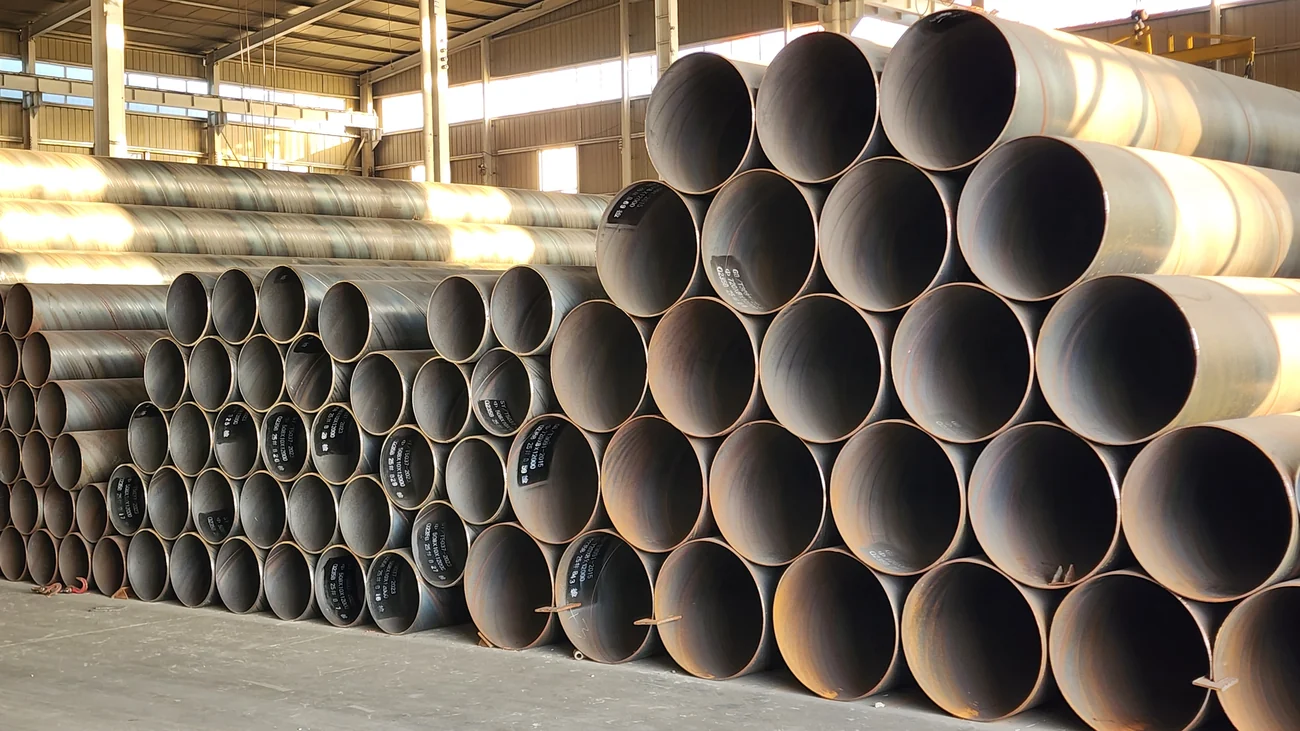
Which line fits is decided by the target diameter and wall, not by the application name.
What Is Water Supply, Drainage & Urban Gas Pipe Production Lines
Water supply, drainage and urban gas pipe production lines are welded pipe mills set up for low-pressure fluid pipe. Our spiral welded lines, in a Φ820 class and a Φ1620 class, list water supply and drainage pipelines, urban gas transmission pipelines and other low-pressure fluid lines among their uses; smaller pipe is made on high-frequency welded lines.
No separate machine exists for water pipe: the mill is chosen by the diameter and wall the plant intends to make. Long-distance oil and gas transmission pipe is a different case, with its own inspection chain, covered under oil & gas line pipe production.
Target Pipe Sizes and Wall Thickness for This Application
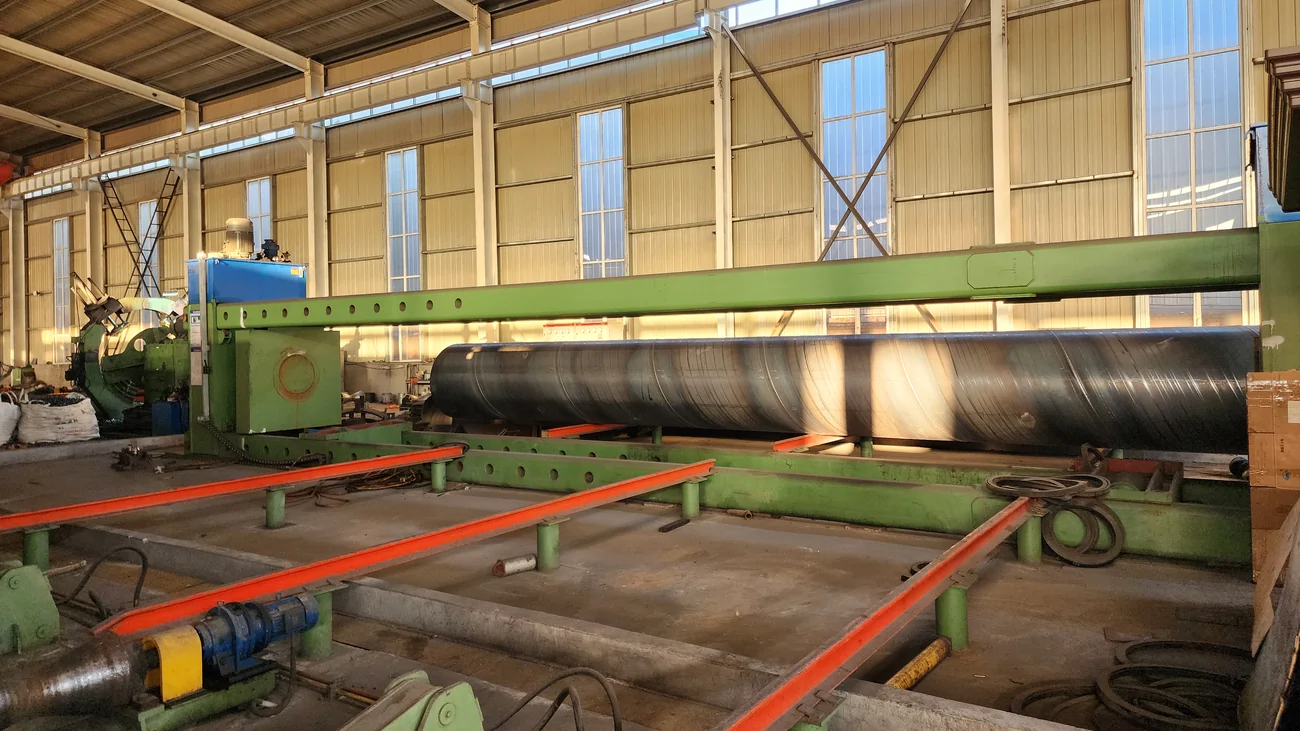
Spiral welded lines cover the mains in two classes: Φ219–820 mm with walls of 3–12 mm, and Φ219–1620 mm with walls of 5–16 mm, in 8–12 m lengths. Hot-rolled strip is formed into a spiral at a set forming angle, welded inside and out by submerged arc and flying-cut; both lines run intermittently. The full specification is on the ssaw spiral welded pipe mill page.
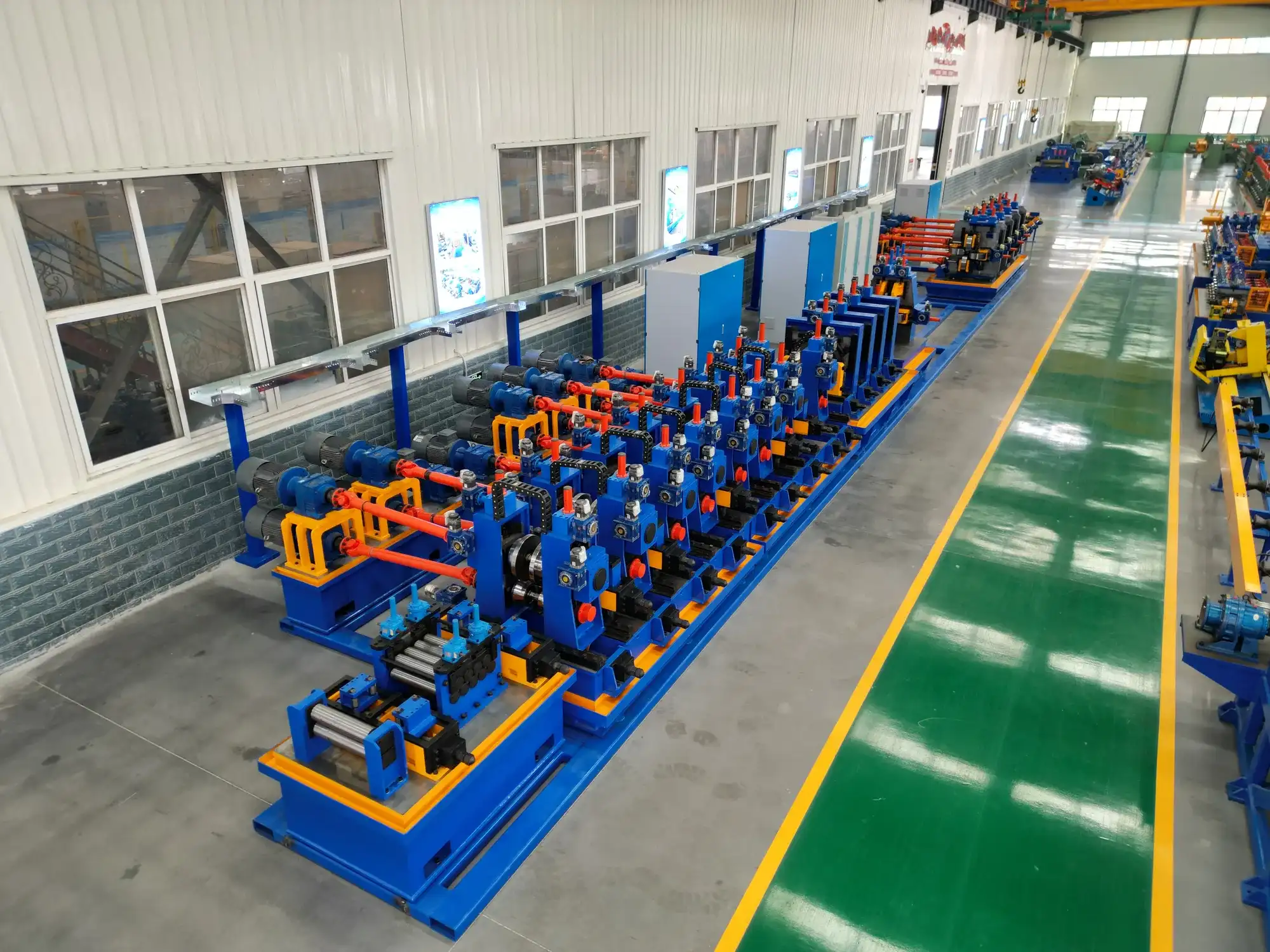
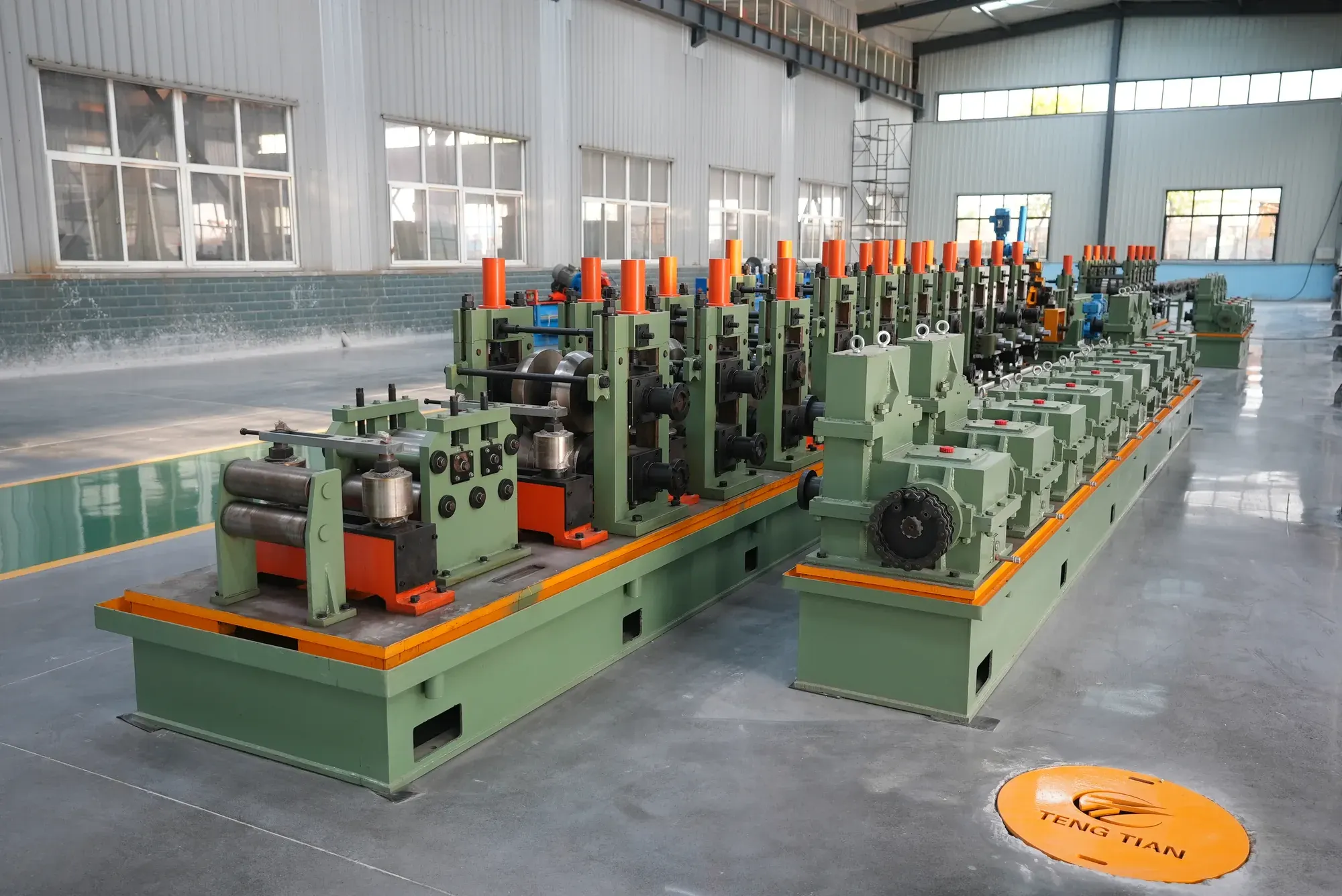
High-frequency welded lines cover Φ10 to Φ630 mm in twelve steps, walls 0.5 to 16 mm; the steps and their welder ratings are listed under tube mill & welded pipe production line. Fluid pipe is normally round, though square and rectangular sections come off the same mills.
| Route | Outside diameter | Wall thickness | Pipe length | Standards listed | Uses listed in the line specification |
|---|---|---|---|---|---|
| Spiral welded, Φ820 class | Φ219–820 mm | 3–12 mm | 8–12 m | GB/T 9711, GB/T 5037 | Water and gas transmission, oil and gas pipelines |
| Spiral welded, Φ1620 class | Φ219–1620 mm | 5–16 mm | 8–12 m | GB/T 9711, API SPEC 5L | Low-pressure fluid, urban gas transmission, water supply and drainage pipelines |
| High-frequency welded, HG32–HG630 | Φ10–630 mm | 0.5–16 mm | Set per order | Buyer’s project specification | Selected by the diameter and wall to be made |
Mill Model and Welder Power Band
- By finished pipe outside diameter. This is the first thing to settle: you pick the machine from the pipe you intend to make.
- By section shape. Round, square or rectangular.
- By automation level. Semi-automatic or fully automatic PLC.
- By whether an inspection chain is required. The classification is whether the line carries in-line NDT and post-processing at all; an ordinary welded line does not, an API line does.
On the high-frequency route, welder power follows the mill step, from 150 kW on HG32 to 1500 kW on HG630. The spiral lines weld by submerged arc inside and out, so they carry no high-frequency welder rating.
Applicable Standards and Inspection Requirements
Pipe from the Φ820 spiral class is made to GB/T 9711 and GB/T 5037; the Φ1620 class lists GB/T 9711 and API SPEC 5L. Every spiral pipe passes X-ray and hydrostatic testing before release, and the Φ1620 class adds off-line ultrasonic inspection. On the high-frequency route, test pressure and inspection for water or gas pipe follow the buyer’s own project specification, with final inspection as the catching step on an ordinary line.
Worked Output Example
- Spiral route — about 62 tonnes per 8-hour shift on the Φ820 class and about 120 tonnes on the Φ1620 class, with forming and welding at 0.5–3 m/min.
- High-frequency route — line speed and shift output are confirmed at quotation against pipe size, steel grade and cut length.
- Material yield — 93% or more achievable on high-end configurations, with actual yield also depending on the buyer’s own operation and scheduling.
Standard lines ship within 90 working days of the deposit, with plant-level customisation scheduled from our own manufacturing base. The spiral lines have a manufacturing lead time of 120 days for the Φ820 class and 150 days for the Φ1620 class.
The line is dismantled into units and shipped in containers: heavy frames are braced and secured, while precision parts and wear items travel in wooden cases together with a spare-parts pack.
Our engineers travel to site to guide installation, commissioning and operator training; the buyer provides the installation crew and covers the engineers’ travel, lodging and daily allowance, and support continues online after handover. Our after-sales team handles enquiries.
Payment is 30% by T/T on signing, 65% by T/T before shipment and 5% after installation and commissioning, or by L/C at sight; prices are quoted ex-works (EXW).
Importers sourcing one of these lines for a local plant can start from the page for importers & trading companies.
Water supply and drainage pipe mill
A water supply and drainage pipe mill, also sold as a conduit pipe making machine or conduit pipe manufacturing machine, is not a separate machine type. For mains from Φ219 to Φ1620 mm it is a spiral welded line, built with water supply and drainage pipelines among its listed uses; for smaller pipe it is a high-frequency welded line from the HG range, chosen by the diameter and wall to be made.
Gas pipe production line
An urban gas pipeline mill is the same choice of line: the Φ1620 spiral class lists urban gas transmission pipelines among its uses, and smaller gas distribution pipe comes off the high-frequency range. Test pressure and inspection for gas pipe come from the buyer’s own project specification, and they matter more for gas than for water.
From the Workshop
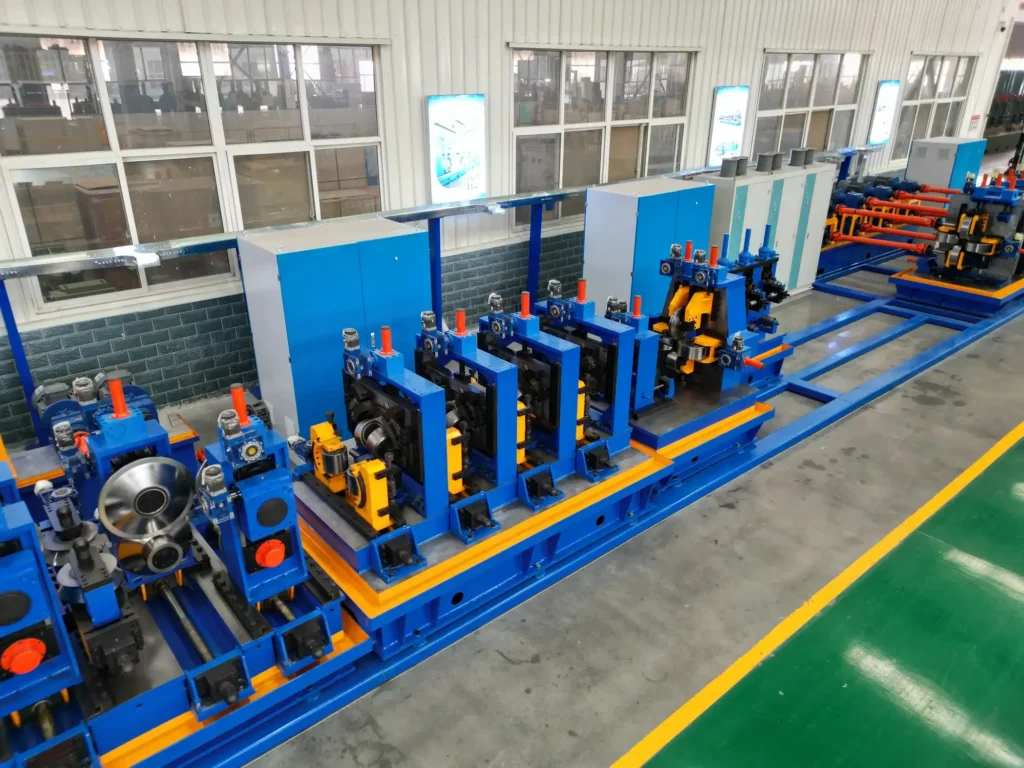
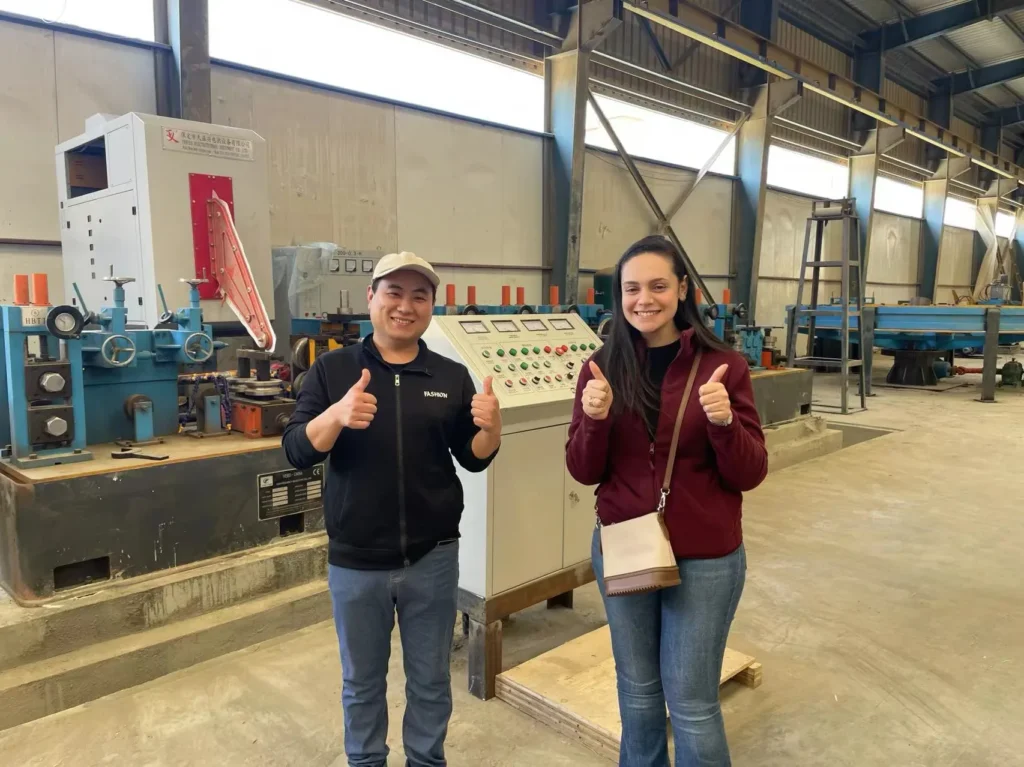
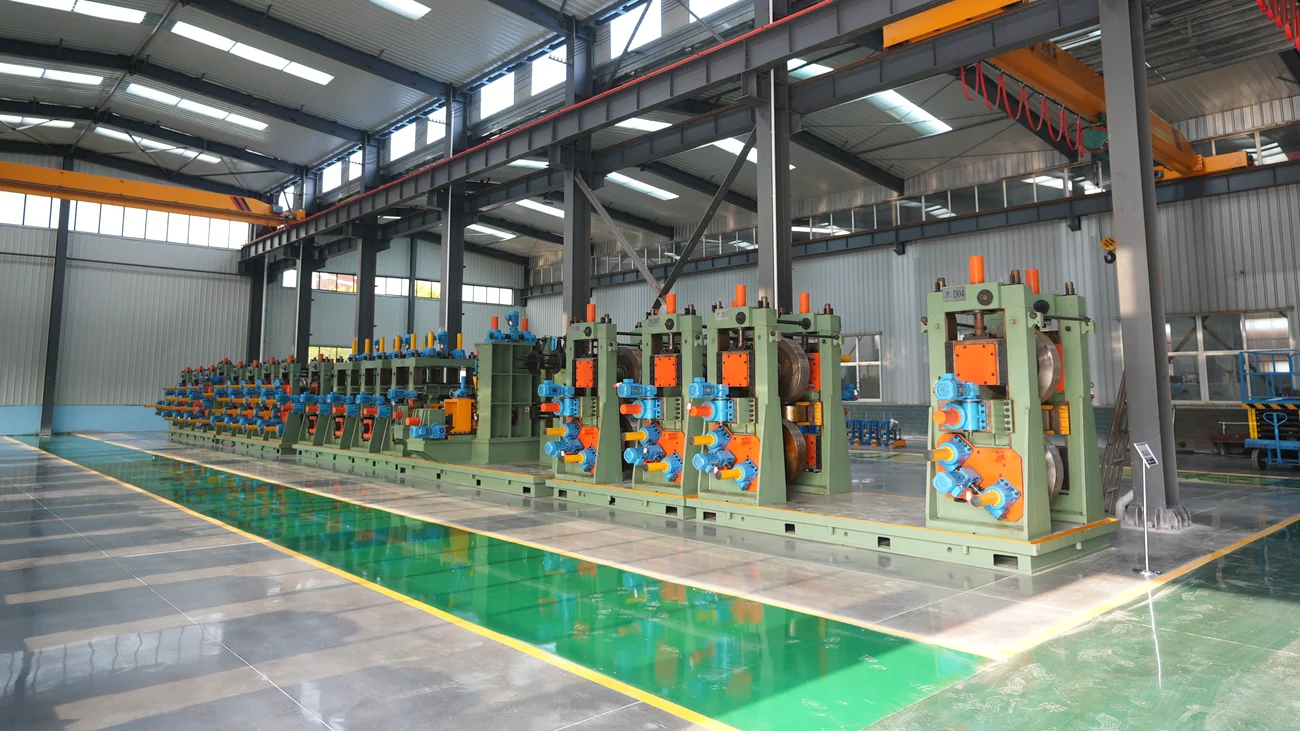 Structural & Scaffolding Tube Production
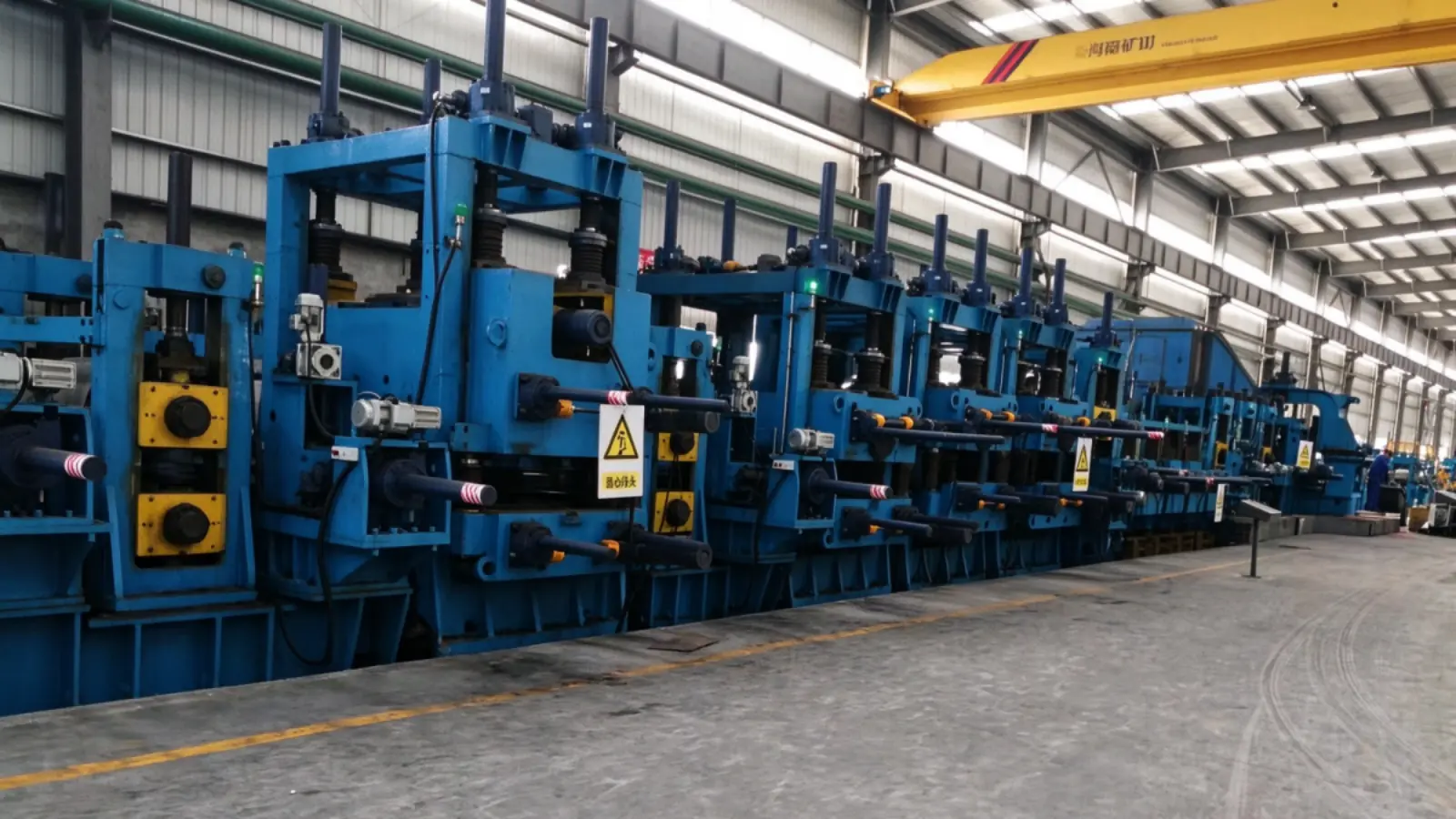 Oil & Gas Line Pipe Mill
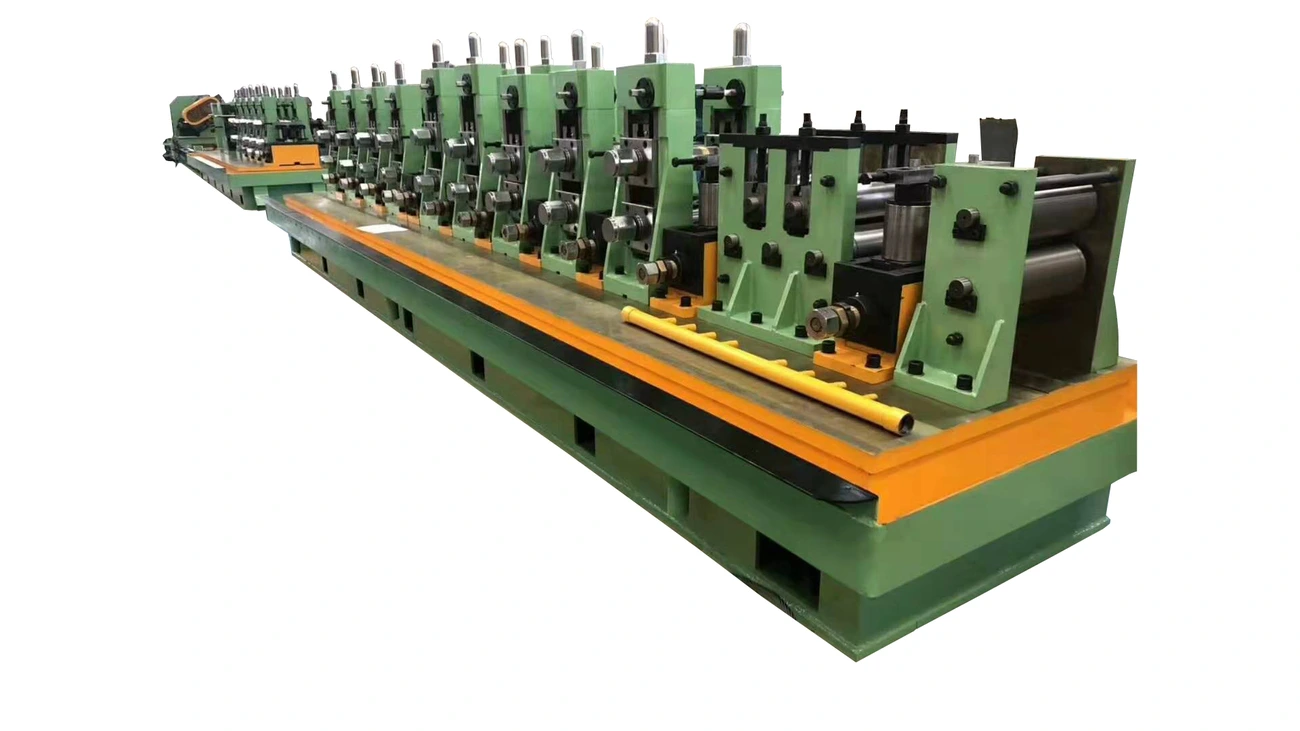 Furniture & Fence Tube Production
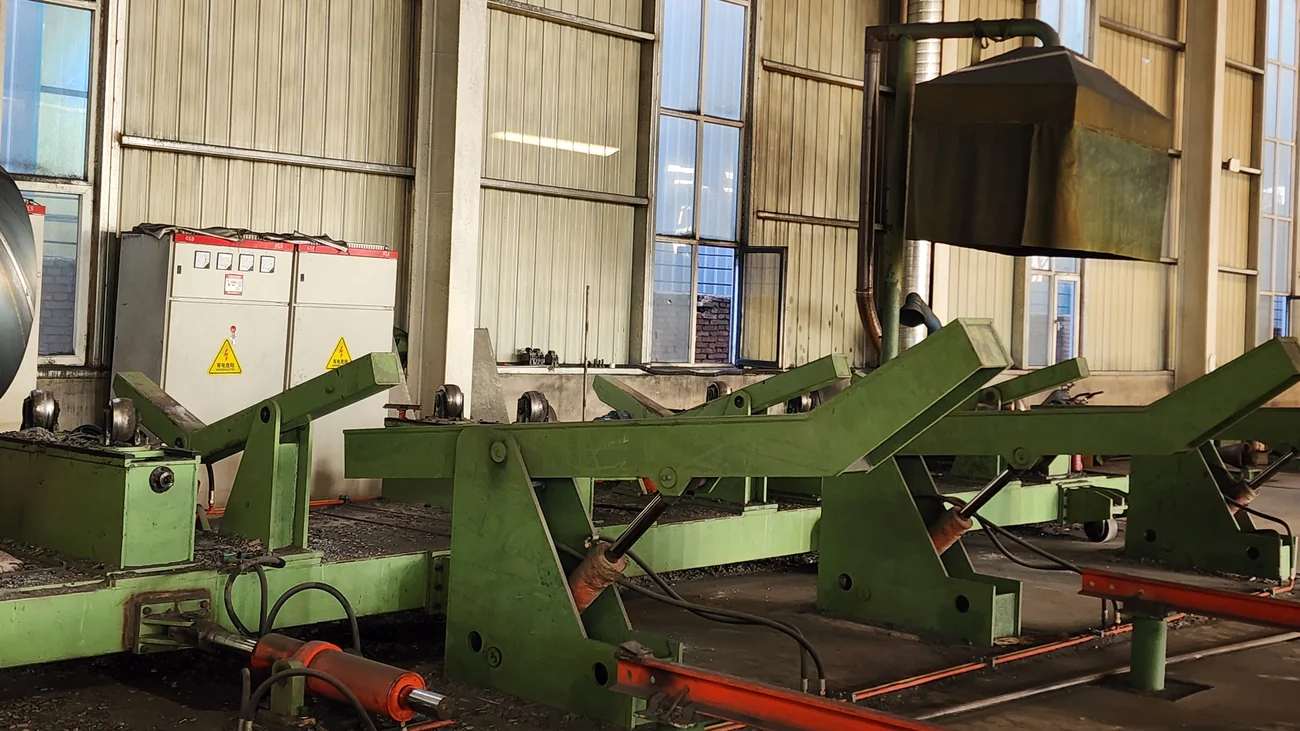 SSAW Spiral Welded Pipe Mill
Send Your Enquiry
Tell us the pipe outside-diameter range, the wall thickness and the output you need. An engineer reads every enquiry — it does not land in a general sales inbox.