
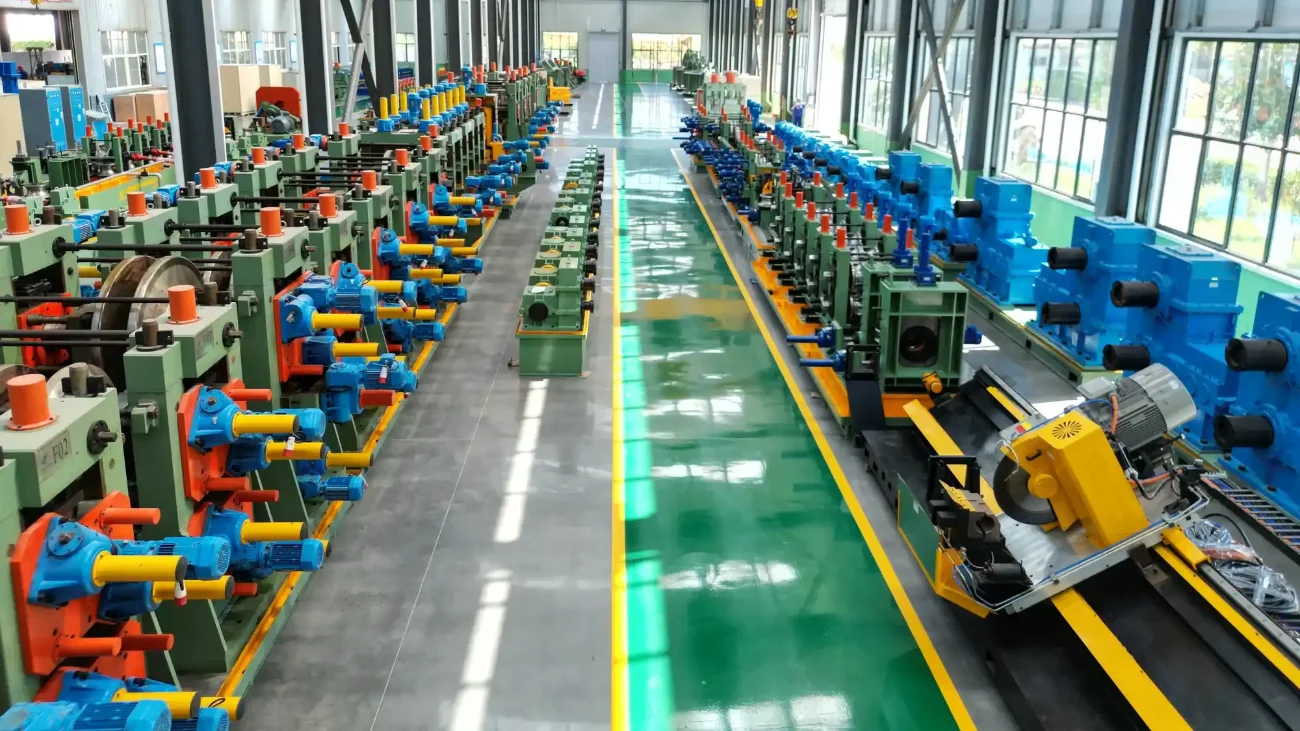
A tube and pipe mill glossary defines the process terms used on welded pipe lines — forming, welding, sizing and tolerance — as they apply to high-frequency tube mills, spiral welded pipe lines and the equipment that runs with them. The full process, step by step, is set out in the welded pipe guide.
How to Use This Glossary
Each term belongs to a type of line, and most figures belong to a size band, so a number should always be read together with the line and the band it comes from. Straight-seam pipe from Φ10 to Φ630 mm is made on a high-frequency welded tube mill; spiral welded pipe lines run from Φ219 to Φ1620 mm, so the two overlap between Φ219 and Φ630 mm, and within Tengtian’s range only the spiral line goes above Φ630 mm.
The terms are grouped by stage: forming and geometry first, then measurement and tolerance. How welded pipe compares with seamless pipe is covered in seamless pipe vs welded pipe.
| Item | High-frequency welded tube mill | Spiral welded pipe line |
|---|---|---|
| Pipe made | Straight-seam welded pipe, round or square | Spiral-seam welded pipe |
| Outside diameter | Φ10 to Φ630 mm, in twelve bands from HG32 to HG630 | Φ219 to Φ1620 mm |
| Wall thickness | 0.5 to 16 mm | Up to 16 mm |
| Forming | Progressive roll passes close the strip into a round open blank | Three-roll bending with external sizing; forming angle 39° to 80° |
| Welding | High-frequency current heats the edges; squeeze rolls press them together without filler | Double-sided automatic submerged-arc welding, inside and outside |
The Eight Kinds of Line Behind These Terms
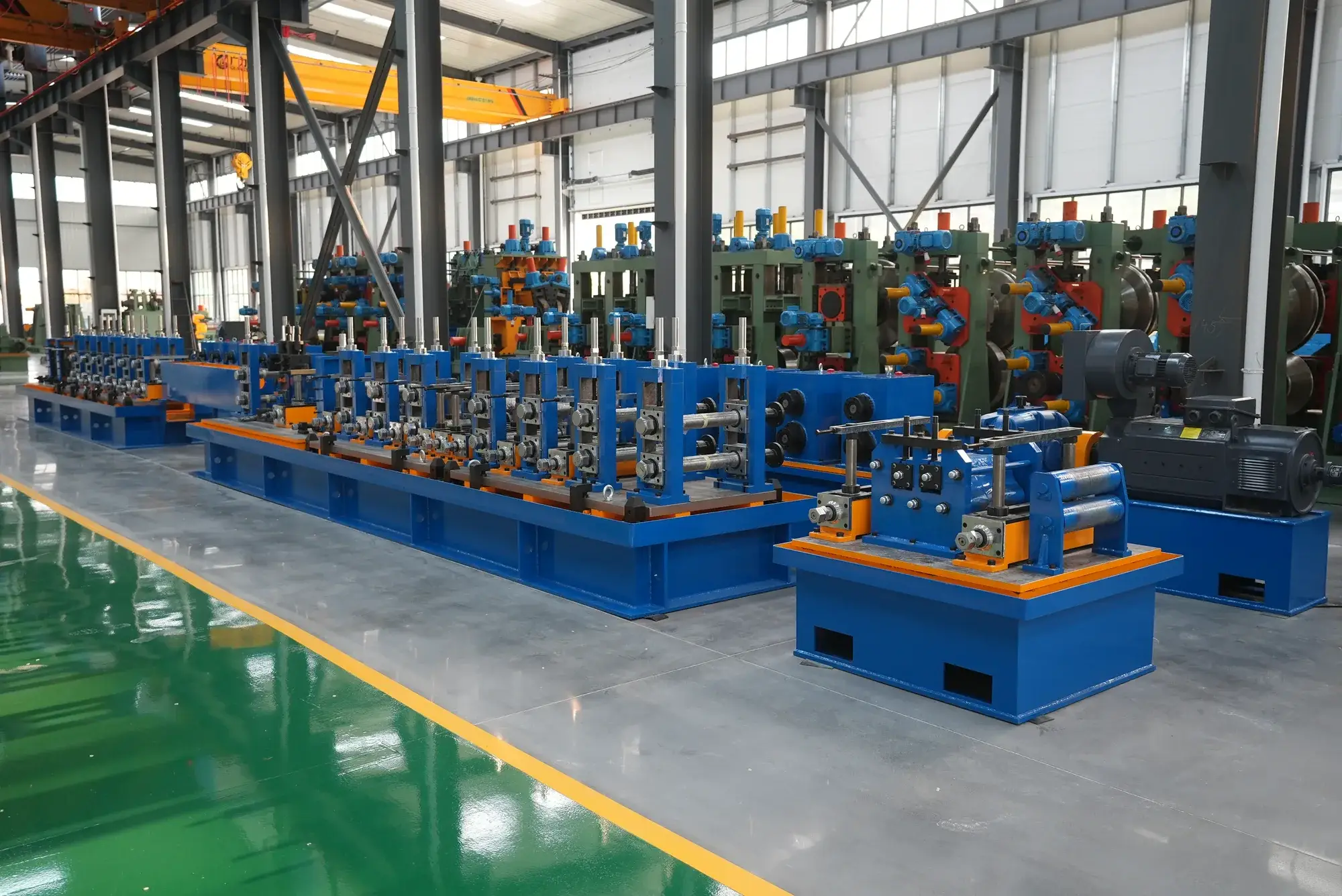
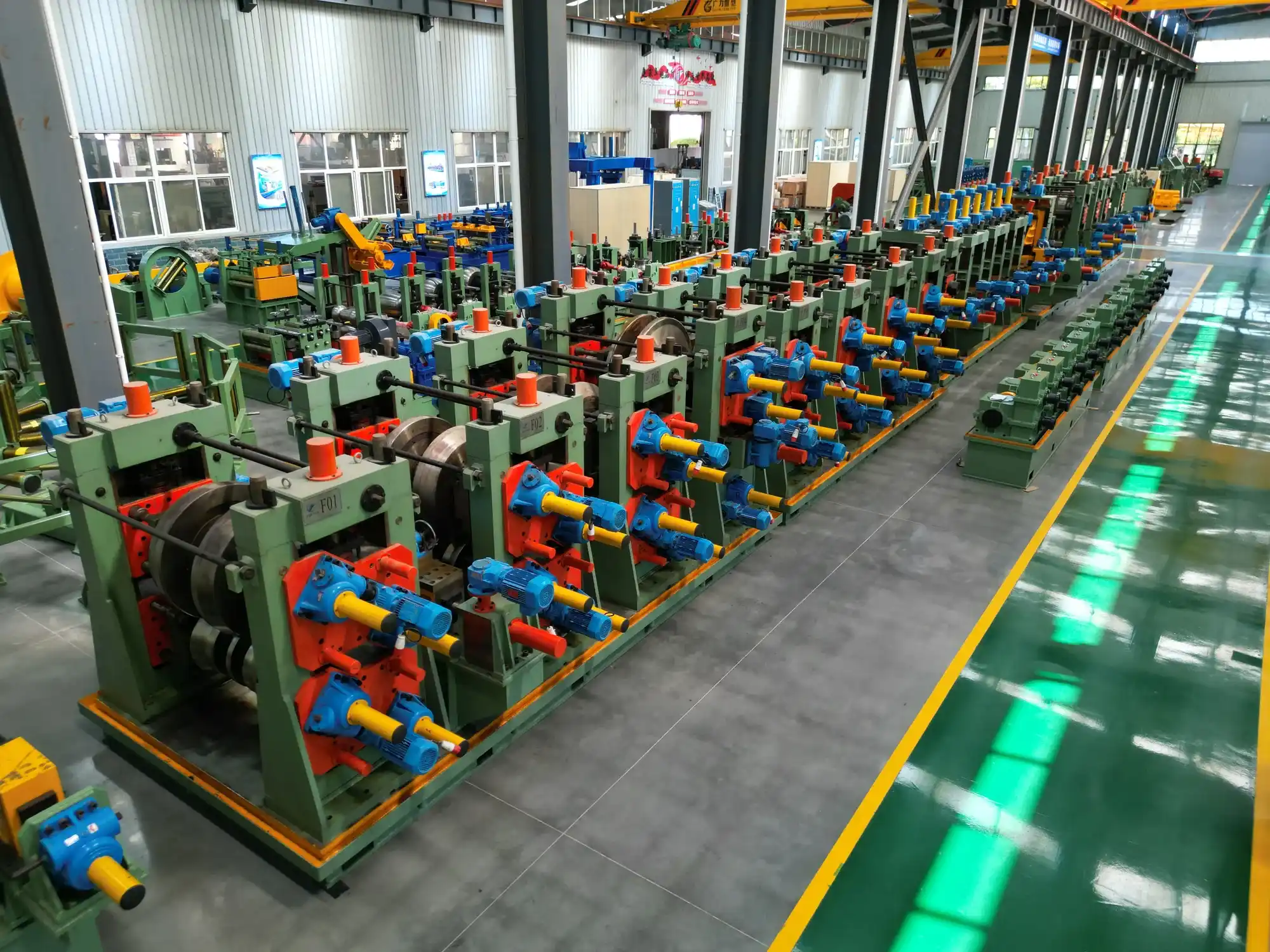
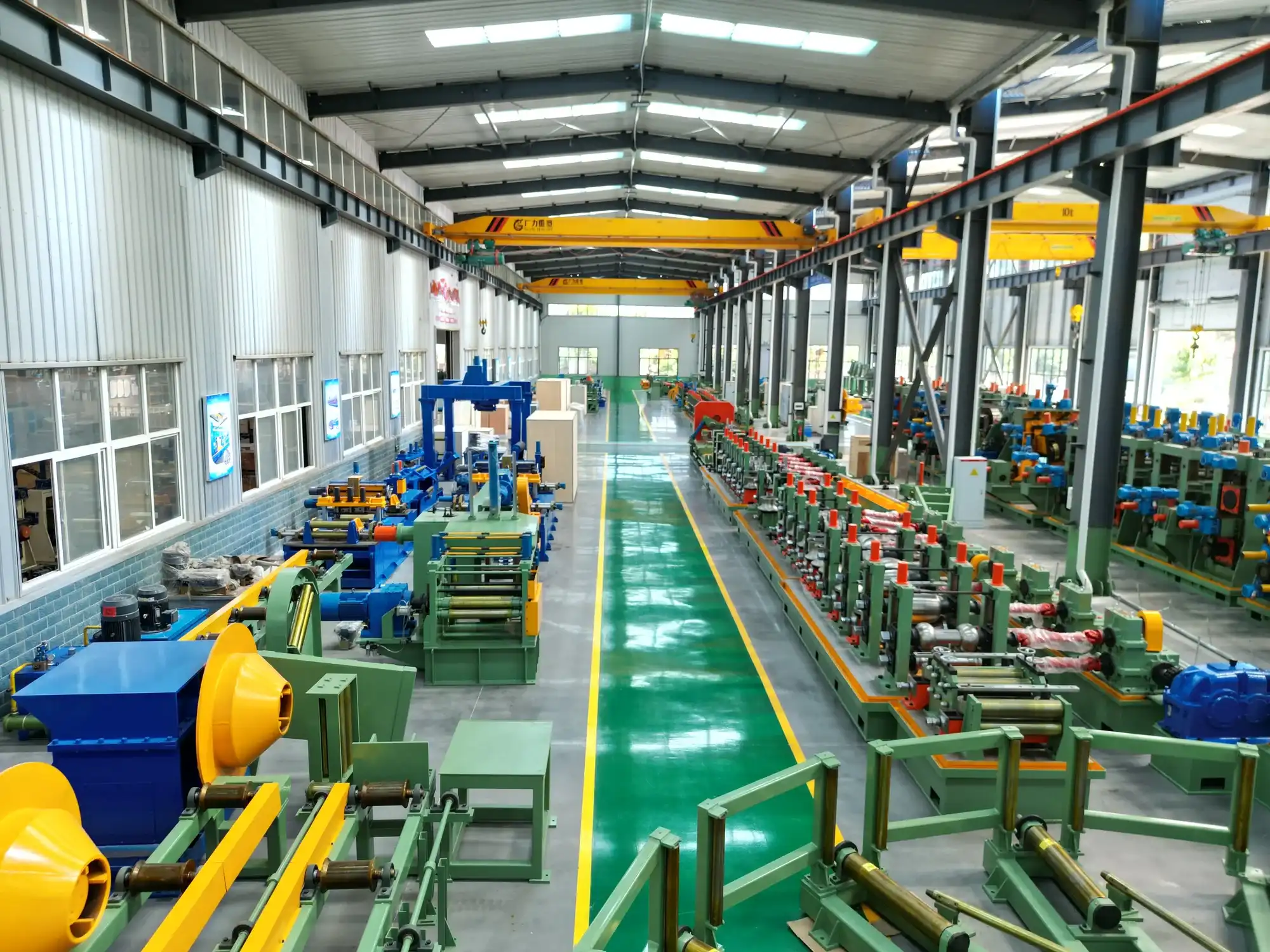
A high-frequency welded tube mill, which we build as the tube mill & welded pipe production line, is a continuous forming, welding and sizing set that takes coil and produces straight-seam welded pipe, round or square, across twelve bands from HG32 to HG630 at Φ10 to Φ630 mm and 0.5 to 16 mm wall.
An SSAW spiral welded pipe mill is a front-swinging submerged-arc set that winds steel strip into large-diameter pipe and welds it inside and out, covering Φ219 to Φ1620 mm by changing the forming angle rather than the rolls.
A direct forming square tube mill makes different square sizes from one combined mould set, changing size by servo adjustment with no roll change, from 30 by 30 to 500 by 500 mm. An API line pipe mill adds medium-frequency annealing, straightening, end facing, hydrostatic testing, ultrasonic testing and eddy-current inspection to a welded line.
A slitting and cut-to-length line uncoils, levels, slits or cuts and recoils wide strip to supply narrow coil or cut sheet to a downstream mill. A roll forming machine cold-forms C, Z and omega purlin sections without welding. An H-beam production line welds beams by high frequency. An auto spray paint line sprays the outer surface of finished steel pipe.
Forming and Geometry Terms
Forming and geometry terms name what happens to the strip between the uncoiler and the cut-off saw: how it is bent, how its edges are heated and joined, and how the welded tube is brought to size.
Roll forming — the progressive bending of flat strip into a round or square open blank by continuously rotating rolls. Pass count, roll gap and roll form govern shape accuracy and seam alignment; the process is explained in what is the roll forming process, and replacement rolls are covered under tube mill rolls & spare parts.
Forming angle — on a spiral welded pipe line, the angle between 39 and 80 degrees at which strip enters the forming machine. That angle, not a roll change, sets the finished pipe diameter.
Three-roll bending with external sizing — the forming method of a spiral welded pipe line.
Skin effect and proximity effect — the reason high-frequency current concentrates at the open edges of the blank and heats only that line.
Pressure welding — the heated edges are pressed together by squeeze rolls and joined without filler; this is how the seam of ERW pipe is made, as set out in what is ERW pipe.
Sizing and straightening — the post-weld stage that brings the cooled tube to final diameter and straightness; where it sits in the line is shown in how a tube mill works.
Measurement Method and Tolerance
On a slitting line, two tolerance values describe the finished strip.
Slit width accuracy — plus or minus 0.2 mm.
Camber — the sideways bow of a slit strip along its length: not more than 0.5 mm per 1000 mm, for strip 200 mm wide and over.
Both apply within the line’s coil envelope of 1 to 12 mm thickness, 800 to 2000 mm width and coil weight up to 32 tonnes.
From the Workshop
Send Your Enquiry
Tell us the pipe outside-diameter range, the wall thickness and the output you need. An engineer reads every enquiry — it does not land in a general sales inbox.