
In This Line
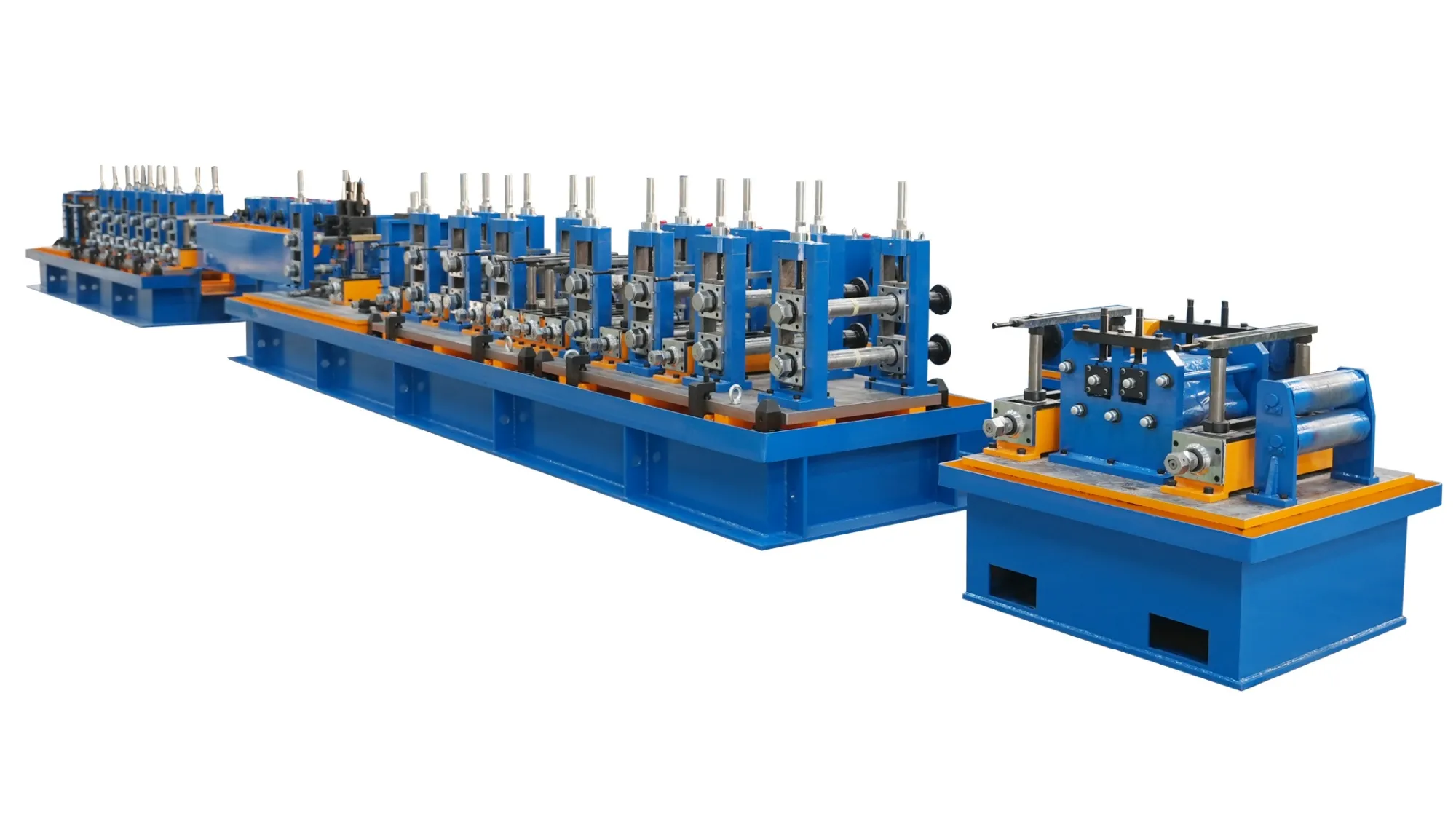
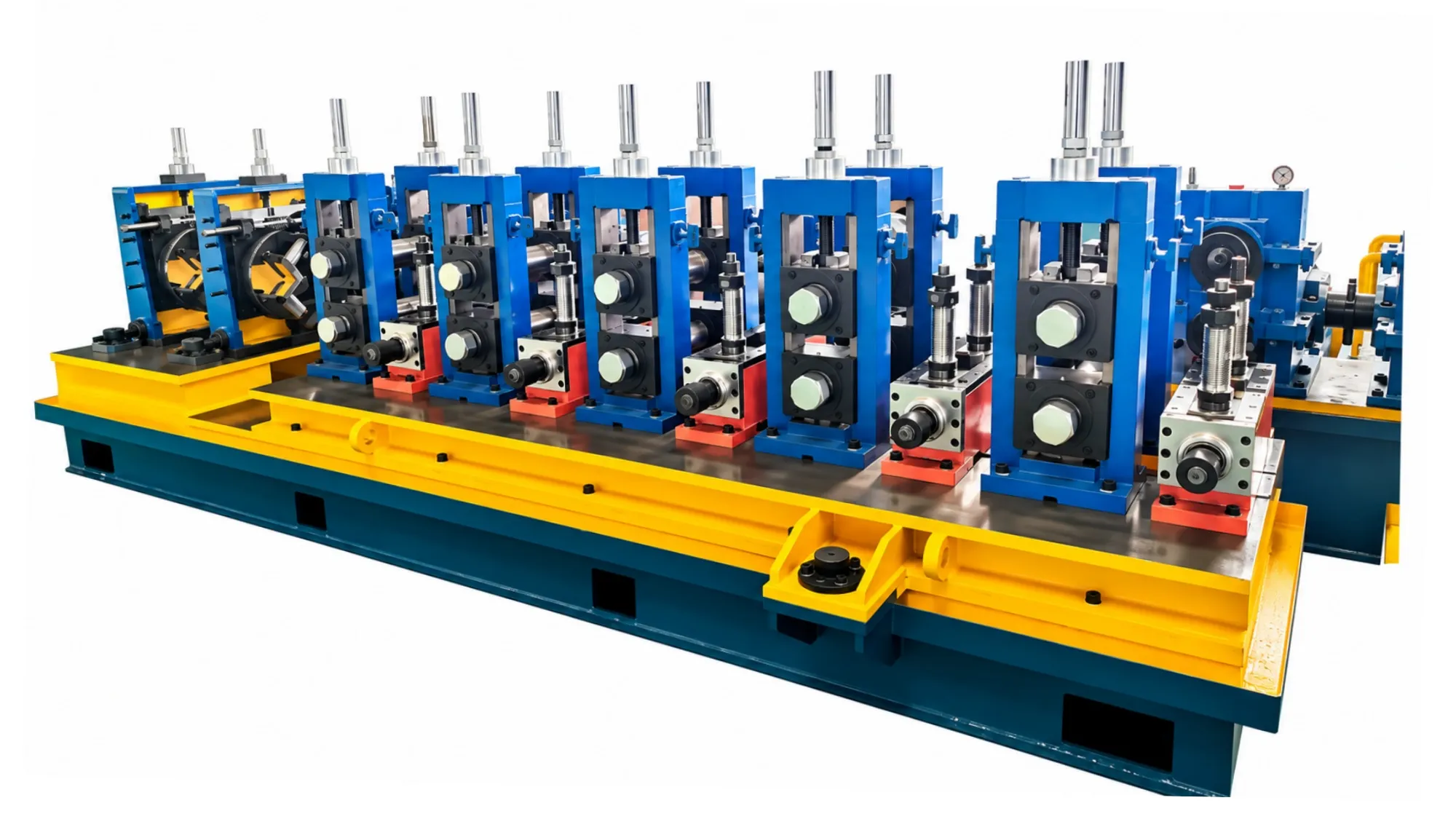
Twelve model steps cover Φ10–630 mm in round and square section, with rectangular pipe listed for HG32 and HG50.
Technical Specifications
- Finished pipe — outside diameter: Φ10–630 mm, covered by twelve model steps (HG32 Φ10–32 · HG50 Φ16–50.8 · HG76 Φ25–76 · HG89 Φ32–89 · HG114 Φ45–114 · HG165 Φ60–165 · HG219 Φ114–219 · HG273 Φ114–273 · HG325 Φ165–325 · HG426 Φ165–426 · HG508 Φ219–508 · HG630 Φ325–630)
- Finished pipe — wall thickness: 0.5–16 mm across the series
- Finished pipe — section shape: round and square on every model step; rectangular is also listed for HG32 and HG50
- Welding process: high-frequency induction welding, whole series
- Forming technology: conventional roll forming, or direct forming square
- Automation: semi-automatic, or full-automatic under PLC control
- High-frequency welder power: HG32 150 kW · HG50 200 kW · HG76 250 kW · HG89 300 kW · HG114 300 kW · HG165 400 kW · HG219 500 kW · HG273 600 kW · HG325 600 kW · HG426 800 kW · HG508 1000 kW · HG630 1500 kW
- Material yield: can reach 93% or more on some high-end lines
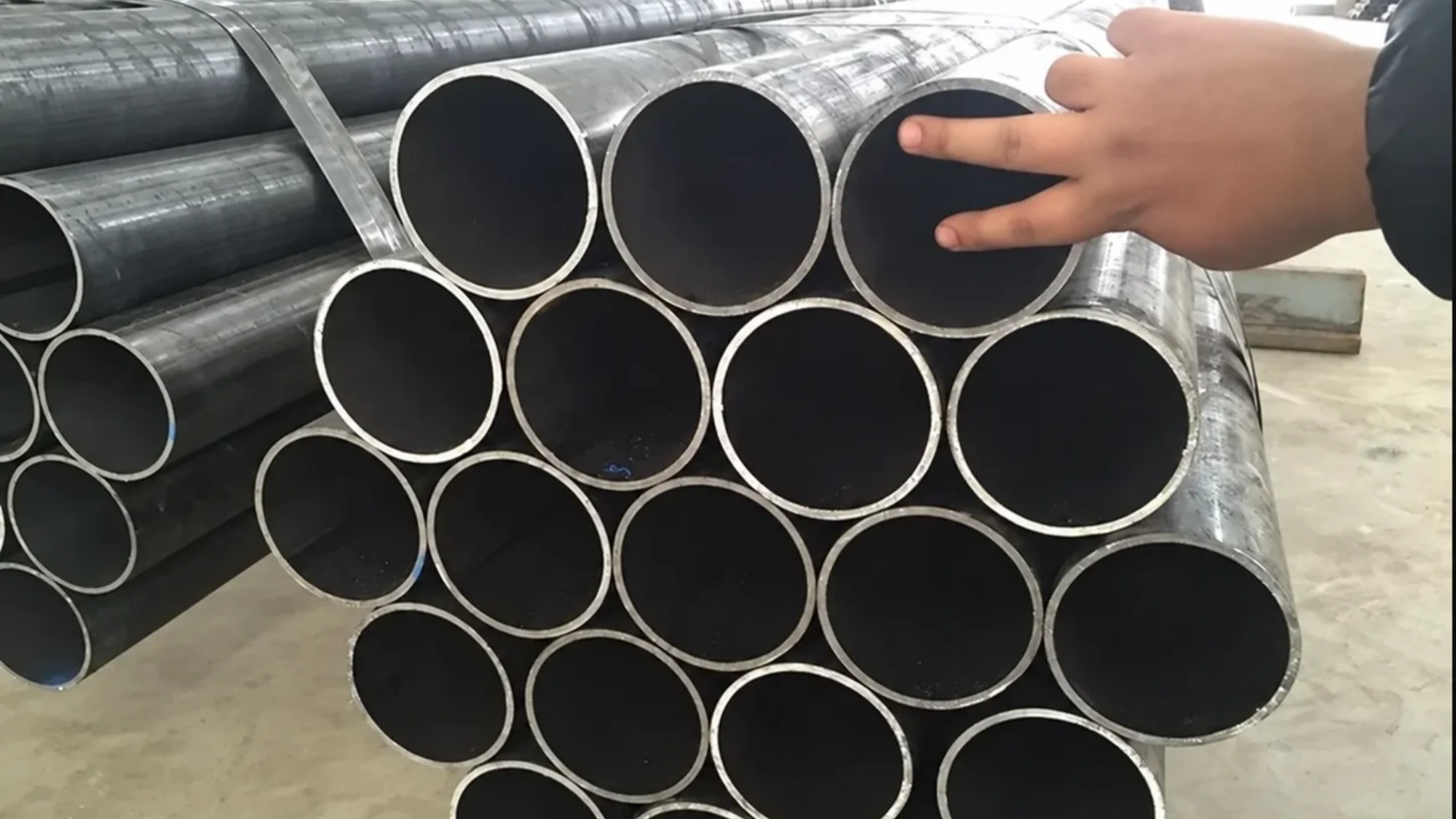
The pipe produced on these lines is carbon steel, including pipe for fluid transport.
Tube Mill Machine Configuration and Scope of Supply
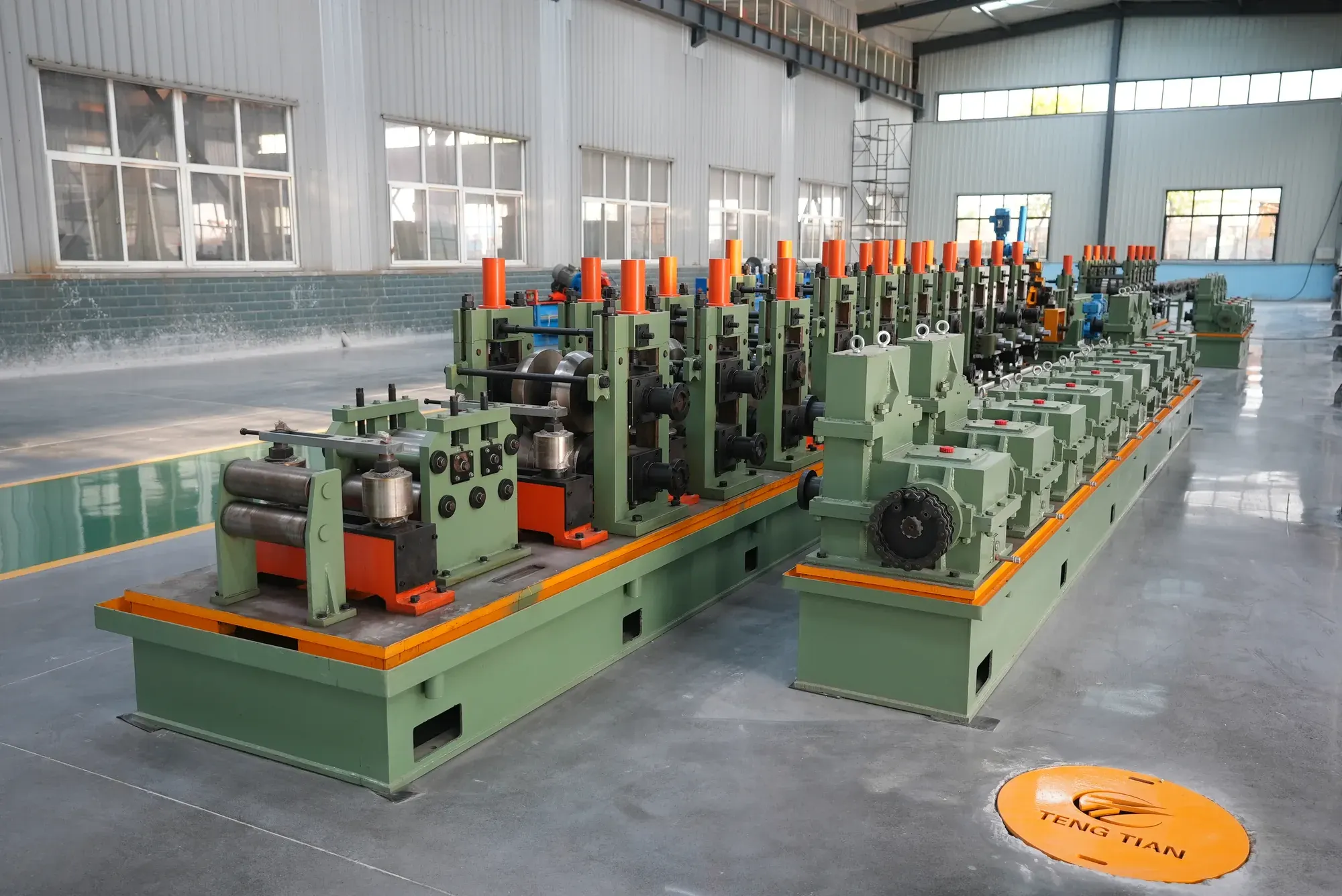
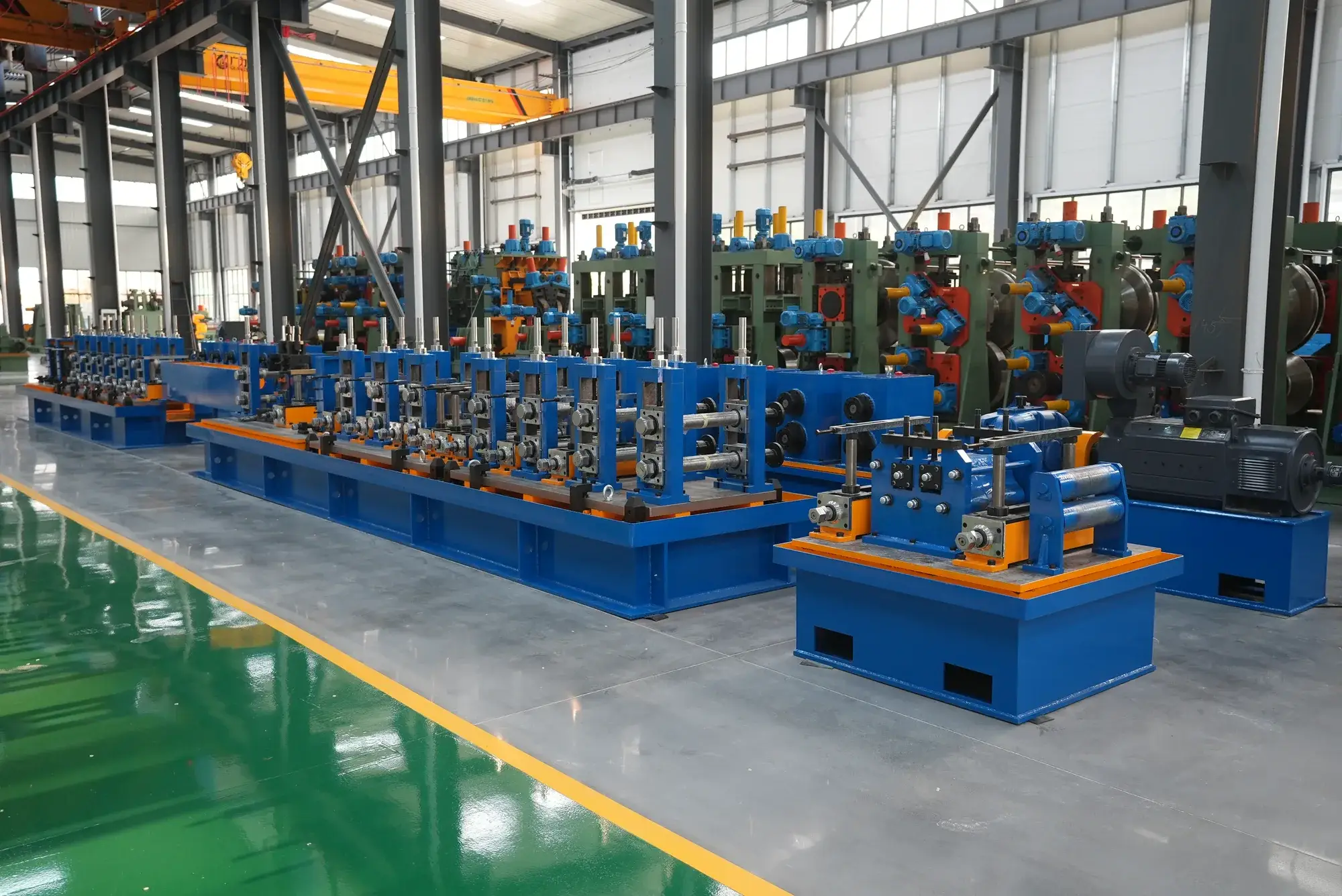
The shear-welder and the accumulator are the two units that turn a batch machine into a continuous one. Without them the mill stops at every coil change; with them the join is made off-line while buffered strip keeps the forming stands fed. That is why they appear in the standard train rather than as options. What a buyer is actually purchasing in a tube mill machine is a sequence, and the value of the sequence is that it does not stop. A full line is made up of eight units, and two of them exist purely to protect continuity. On HG32 to HG76 the coil car and the leveller are not part of the standard train.
- Coil car and uncoiler — from HG89 upward a coil car sets the coil onto the uncoiler; on every model the uncoiler’s pneumatically expanding four-link mandrel holds the coil so it neither wanders nor slackens on the way in.
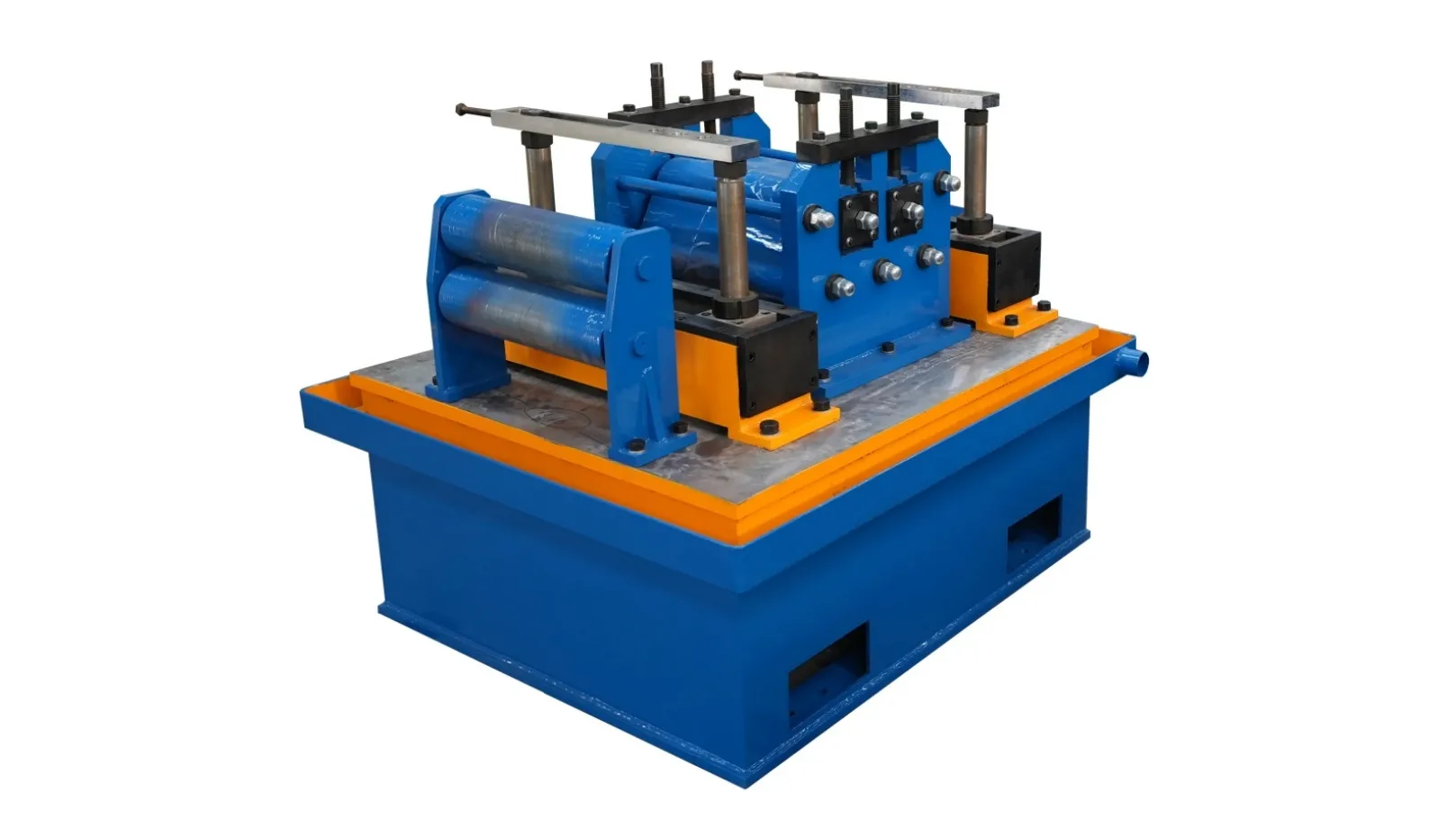
- Five-roller leveller (HG89 and above) — flattens the head and body of the strip. Residual curvature here becomes seam wander later, so this is a precondition rather than a refinement.
- Automatic shear-welder — crops the irregular head and tail of each coil and butt welds one coil to the next.
- Spiral accumulator — stores strip so the forming mill keeps running while the next coil is being joined.
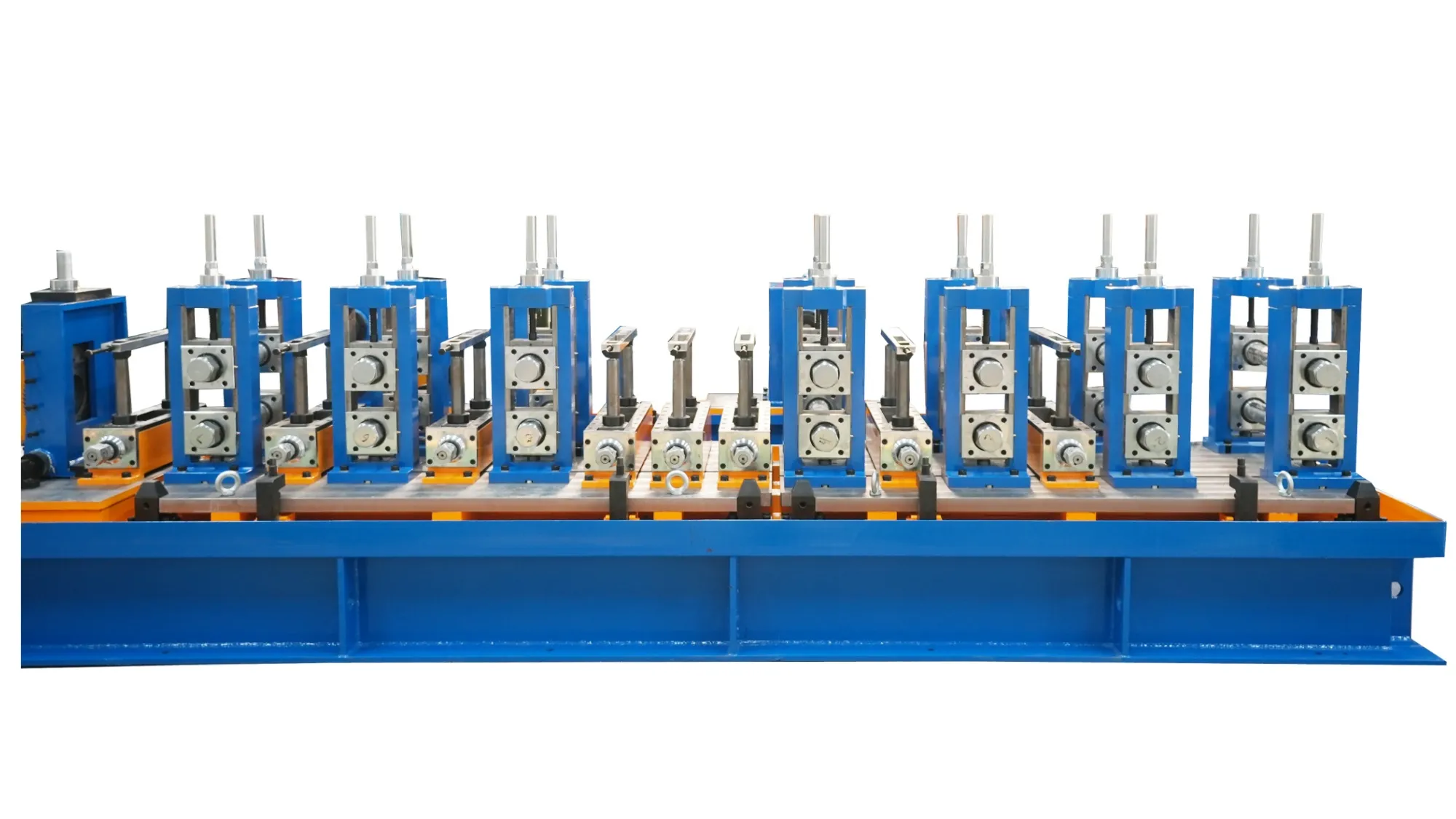
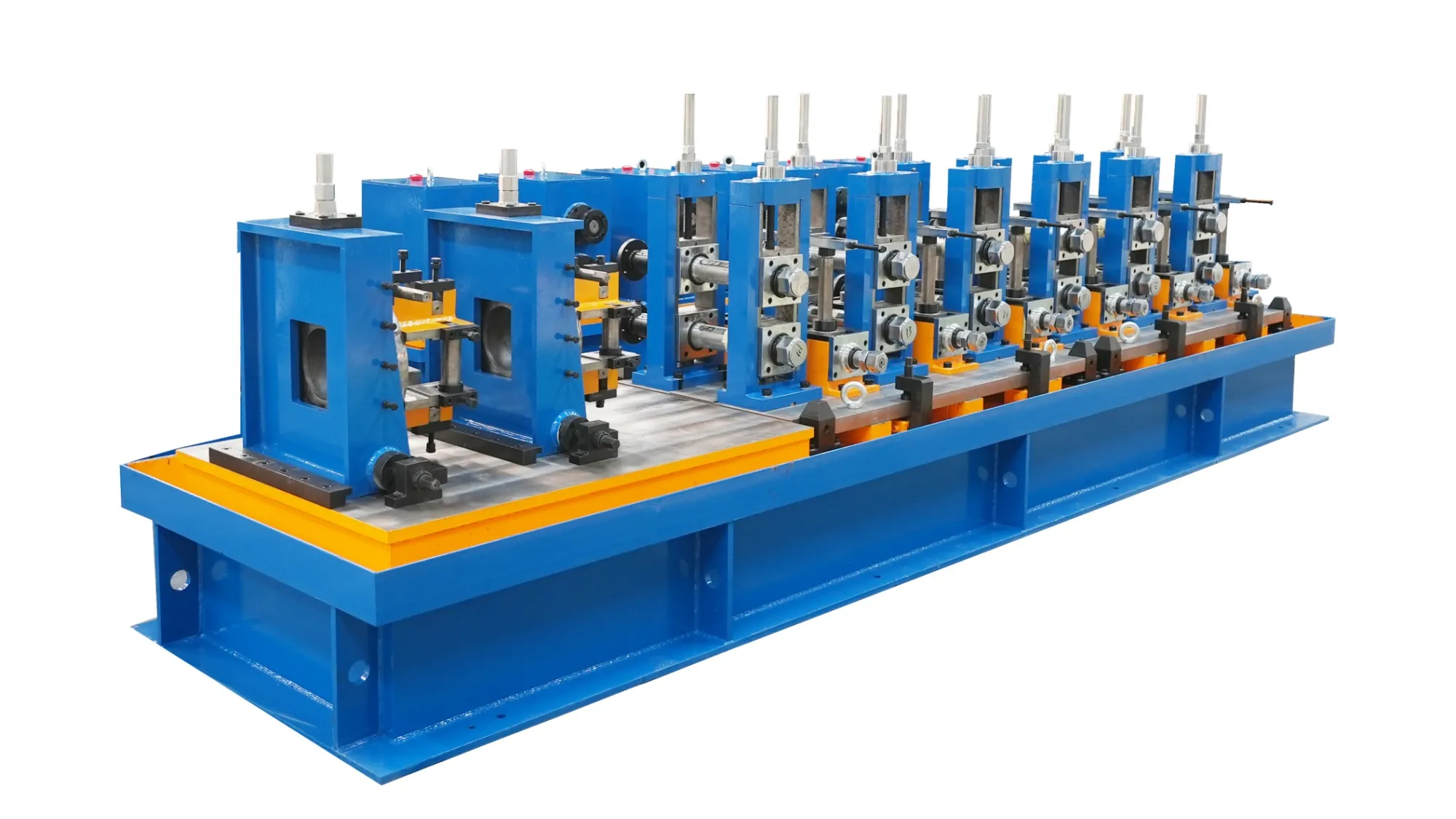
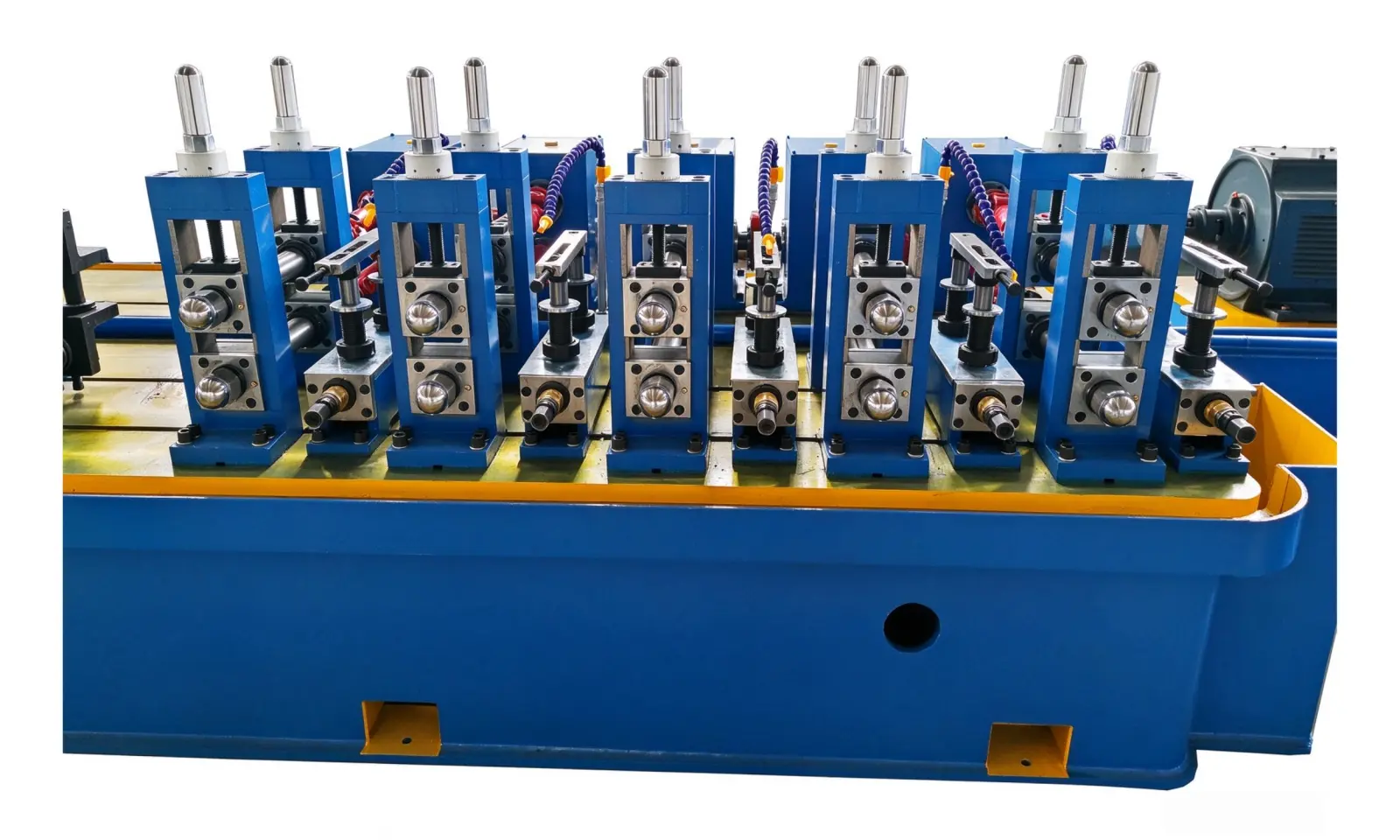
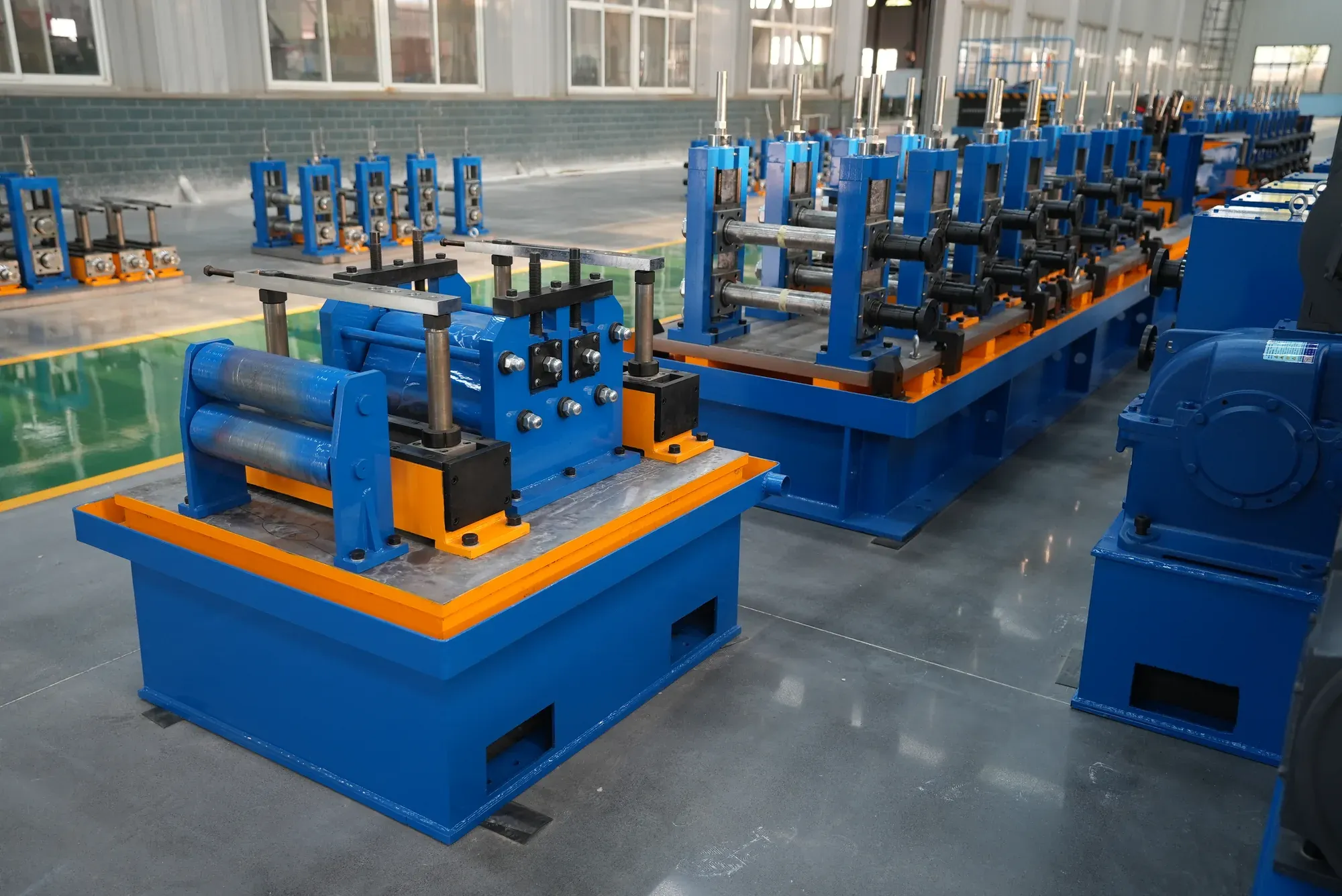
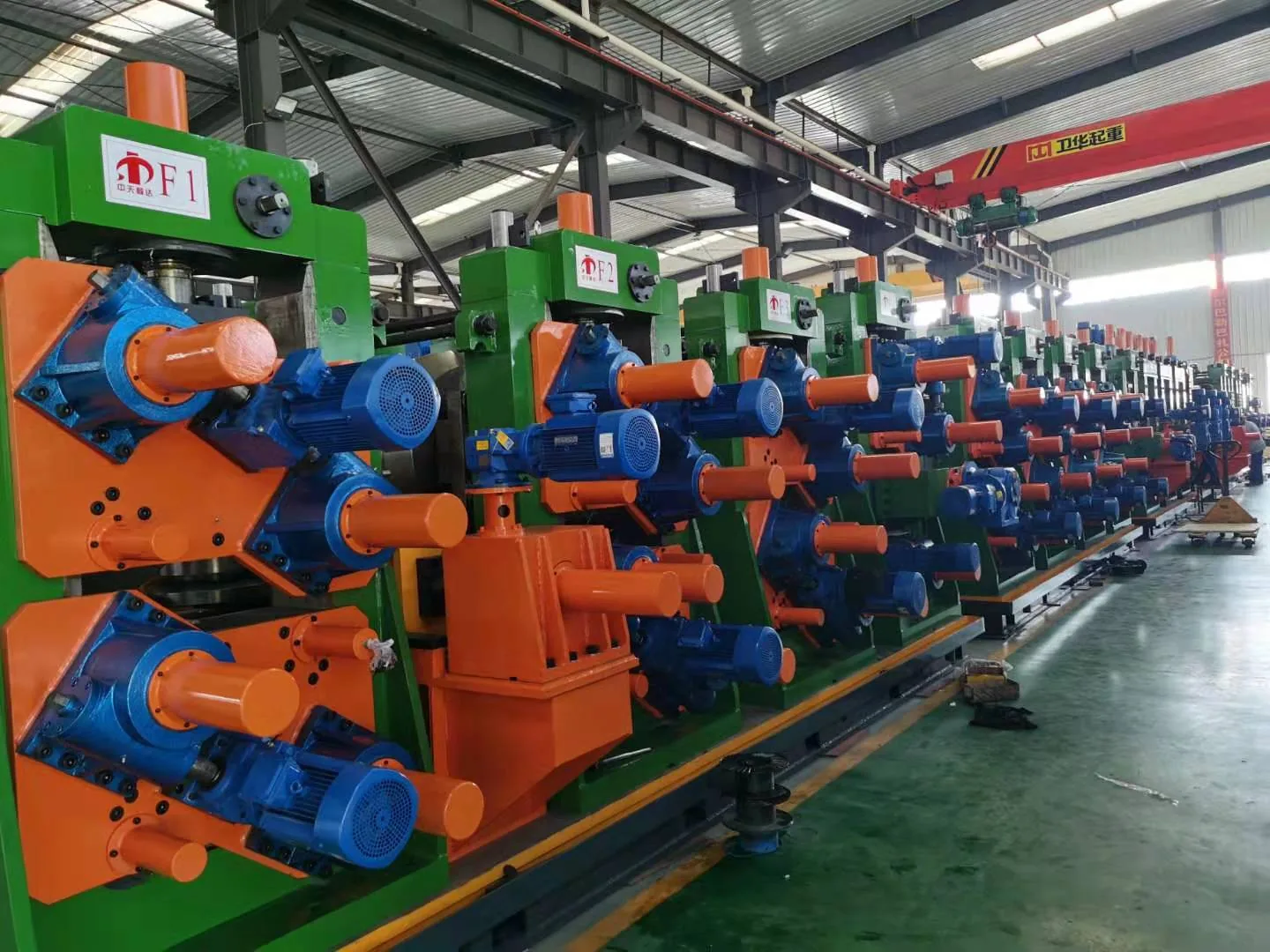
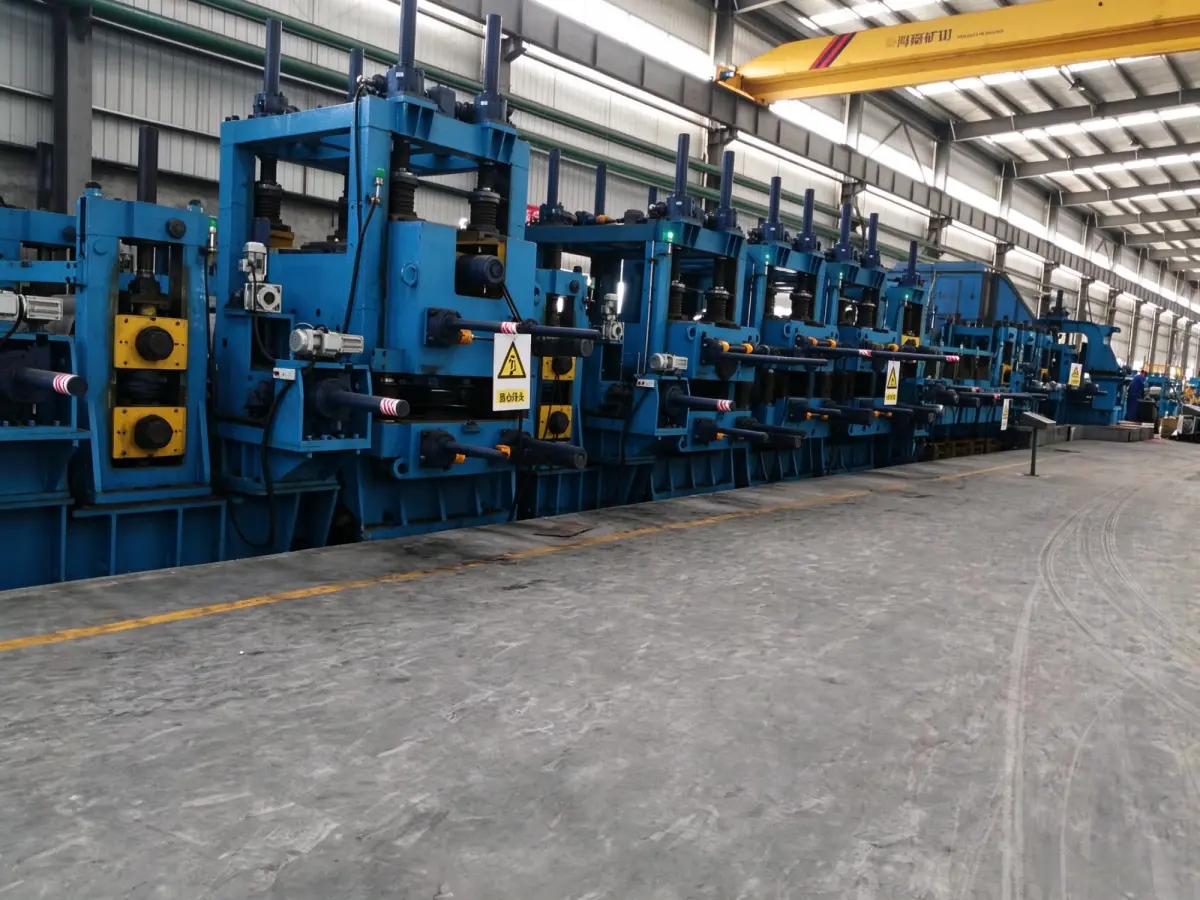
- Forming and sizing mill — the core unit, where rolls bend flat strip progressively into an open tube and, after welding, sizing stands bring it to final diameter.
- High-frequency induction welder — supplies the welding energy, matched to the pipe range.
- Flying saw — cuts to length while pipe is still being delivered at speed.
- PLC and variable-frequency control — ties line speed, sequence timing and cut length into one controller.
Underneath the unit list, the physics is short enough to state plainly. Rolls form the strip step by step into an open tube. High-frequency current, concentrated at the open edges by skin and proximity effect, heats them to welding temperature. Squeeze rolls press the two heated edges together, forming a continuous seam by pressure.
The tube is then cooled, sized and straightened to its final dimension.
Within those units, five parts do the actual work, and a tube mill machine quotation comparison usually turns on these five rather than on the unit count.
- Forming and sizing rolls — the first determinant of shape accuracy, roundness and squareness, edge definition and dimensional consistency. Roll material and heat treatment decide how long that holds; a direct-forming build uses combined rolls whose point contact reduces wear.
- High-frequency induction welder — governs fusion quality and welding speed, with power stepped to diameter. Unstable power or frequency shows up as lack of fusion, cold welds or burn-through, and the pipe then fails pressure testing and inspection.
- Induction coil and impeder — concentrate the high-frequency current at the seam through skin and proximity effect. Both are wear parts; as they degrade, welding energy spreads, seam quality fluctuates and energy consumption rises.
- PLC and variable-frequency control — unstable control produces speed fluctuation, cut-length error and higher downtime.
- Cutting saw — blade wear or length-setting drift shows as length error, end burr and skewed cuts.
Of the five, two are consumed in normal running (coil and impeder), one is a wear item (rolls), and two are capital items expected to last the life of the line (welder and control system). Which of the five a supplier makes itself, and which it buys in, is a fair question to put to any quotation.
Size Change, Roll Wear and Running Cost
Two questions decide the running cost of a pipe making machine, and neither is answered by the specification table: what a size change costs in time, and what the rolls cost over a year.
Our rolls are machined in-house on our own CNC equipment. The practical consequence for a buyer is not a quality claim but an availability one: replacement rolls remain obtainable years after handover instead of becoming an obsolescence problem.
Changeover cost depends on which forming technology is quoted. A conventional roll-forming build changes size by changing rolls. A direct-forming square build uses one combined roll set that is adjusted by servo rather than changed, which saves more than 90% of the rolls; its composite rolls touch the strip at points rather than along a line, which reduces roll wear. There is one exception: making 100 × 100 mm tube needs the upper roll on the final open stand changed.
Operator practice is the third variable: quick changeover and a trained change crew are what keep scrap during a size change down, which is why changeover training is treated as a separate requirement, not taken for granted.
Consumables and wear parts divide into four groups.
- Saw blades and cutting tools, consumed against cutting volume.
- Impeders and induction coils, wear parts replaced against welding hours; their condition governs how tightly weld energy stays focused at the seam.
- Cooling water and emulsion, plus hydraulic oil and grease — specifications from us, purchased locally.
- Forming and sizing rolls as replacement wear items.
Wall thickness, line speed and shift output are confirmed against your pipe size, material grade and cut length at quotation. Send us those three and we will state the figures.
Applications and Output Examples
Two application families carry most of the demand for these lines, and two lower-volume applications sit alongside them.
Fluid transport pipe. Pipe plants run these lines continuously as their pipe production machine, making carbon-steel welded pipe for oil and gas transport, municipal water and drainage, gas distribution, and chemical and heating pipework. The measures that matter to those buyers are weld pass rate, diameter and wall coverage, non-stop coil change, and energy and yield per tonne.
Structural and scaffolding tube. Structural plants use the same train as a steel tube making machine, producing square, rectangular and round sections for load-bearing steelwork, scaffolding and general machinery components. Here the measures shift to corner definition and straightness on square and rectangular section, changeover efficiency, and electricity per unit produced.
Electrical conduit and agricultural pipe are two further applications. Both are round carbon-steel sections inside the same diameter range, produced on the same train — which matters, because buyers asking for an electrical wiring pipe manufacturing machine or an agriculture pipe manufacturing machine often expect a dedicated machine and do not need one.
Where responsibility sits is best made clear before a line is quoted, not after a dispute. The mill controls welding power, seam alignment and squeeze. Sizing and straightening set dimensional accuracy and straightness. Achieved material yield also depends on scheduling and operating practice.
Incoming strip grade, thickness tolerance and flatness stay on the buyer’s side: the line offers levelling and incoming checks, but levelling cannot rescue out-of-tolerance strip.
Delivery, Installation and Training
Standard lines ship within 90 working days of the deposit; larger lines are scheduled in the quotation.
Commissioning a pipe making machine is a training exercise as much as an installation one, and training needs differ across the five operating steps. Coil loading and strip threading need operator training. Shear-welding a coil join in time with the accumulator needs operator training. Setting a new size needs a trained change crew.
Setting welder power, welding speed and squeeze, then running and watching the process, needs process-level training. Cutting and collecting is routine.
After handover, support is a reply from our after-sales team, online support, on-site dispatch when required, and direct spare-part shipment. Behind that sits an engineering team of twenty averaging twenty years each, and an owned production base open to factory audit.
Certification: GB/T 19001-2016 / ISO 9001:2015 (quality management system, certificate No. 18524Q11269R2S). The product standard the finished pipe is made to depends on the destination market and the buyer’s specification; the equipment itself follows destination-market machinery-safety rules and that product standard.
Export packing is specified per item. Control cabinets, impeders and induction coils, forming rolls and cutting tools travel in moisture-protected wooden cases with a spare-parts pack; heavy large-diameter frames ship bare, braced on cradles with designated lifting points and rust protection.
From the Workshop
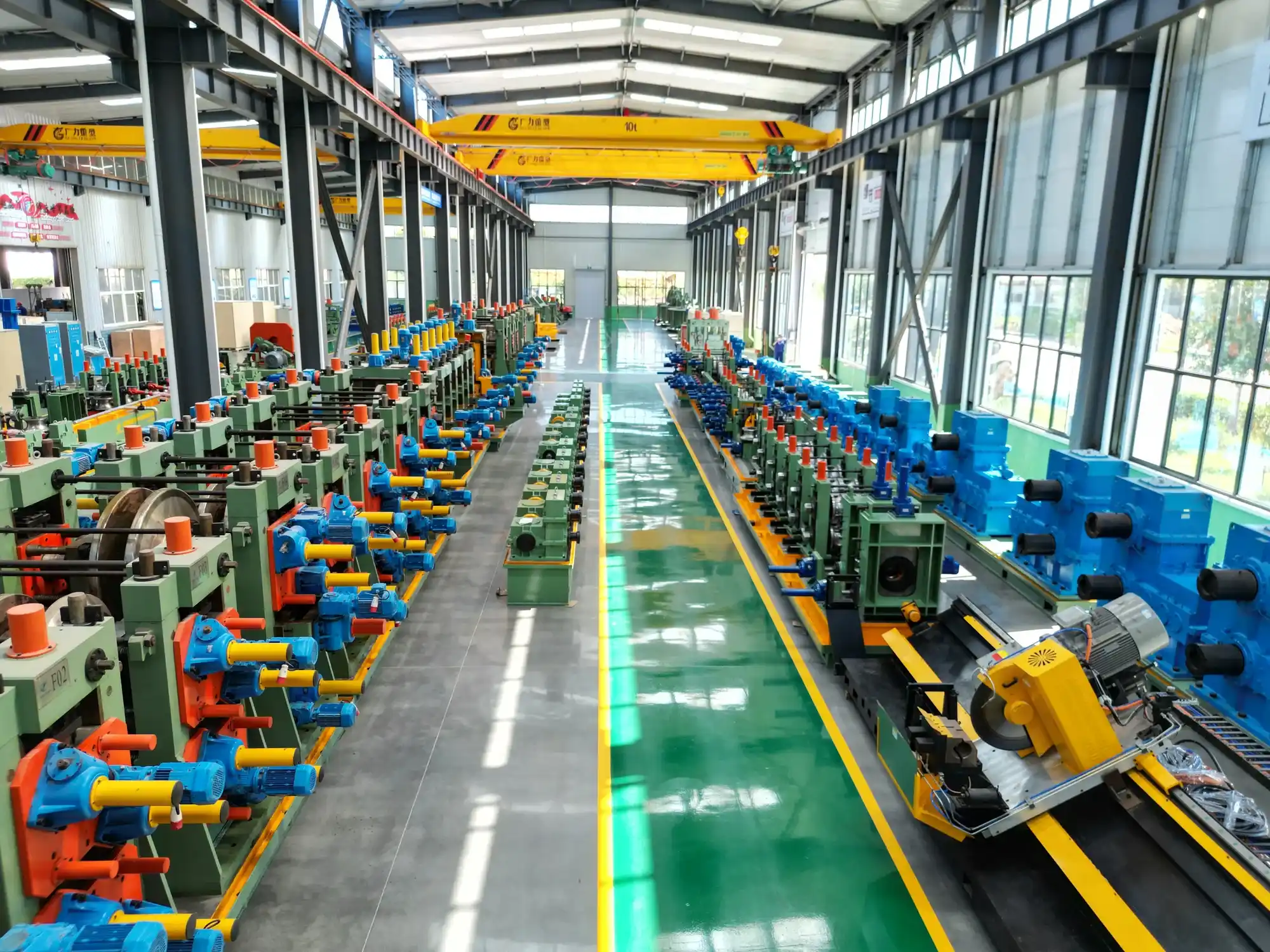
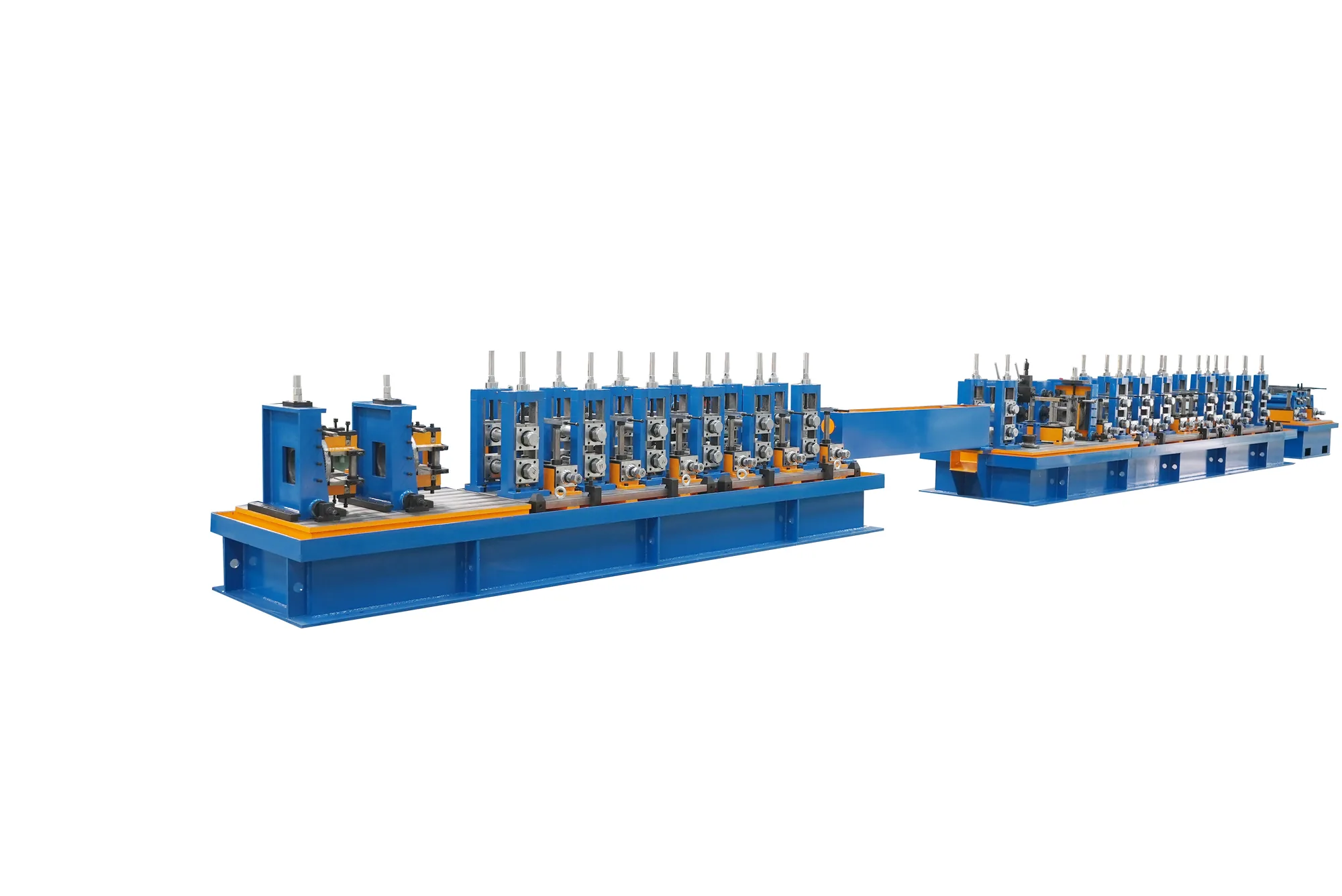
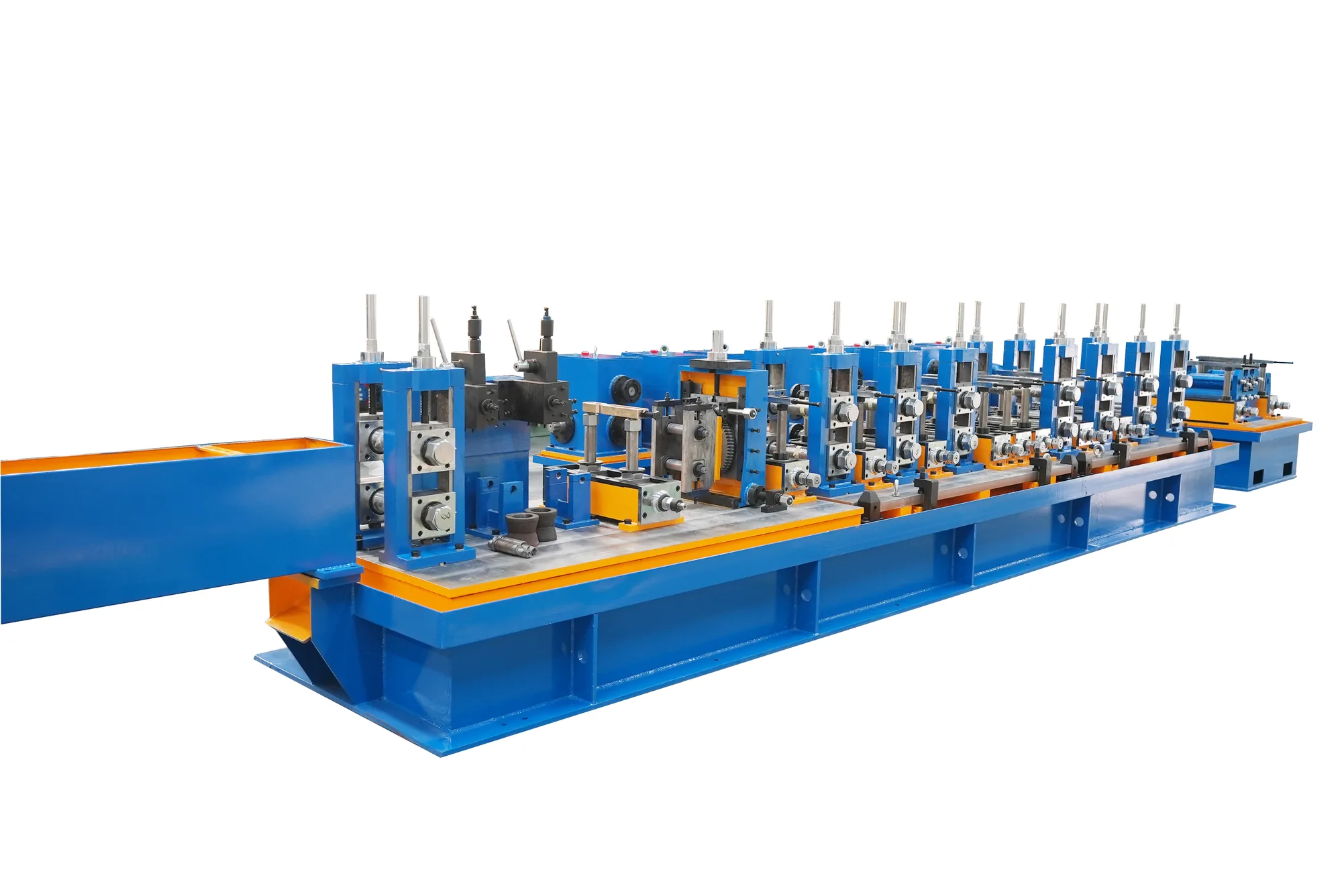
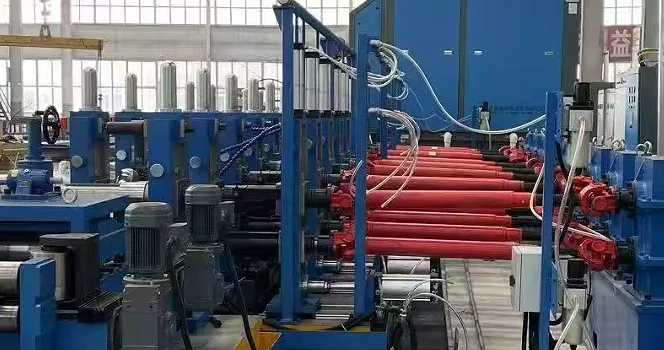
 Tube Mill Output, Material Yield and Roll-Change Cost in the Cold Forming Steel Process
 What Is an ERW Tube Mill
 HGF150 Fully Automatic Square and Rectangular Tube Forming and Welding Equipment
 The API Pipe Mill Inspection Chain
Send Your Enquiry
Tell us the pipe outside-diameter range, the wall thickness and the output you need. An engineer reads every enquiry — it does not land in a general sales inbox.