
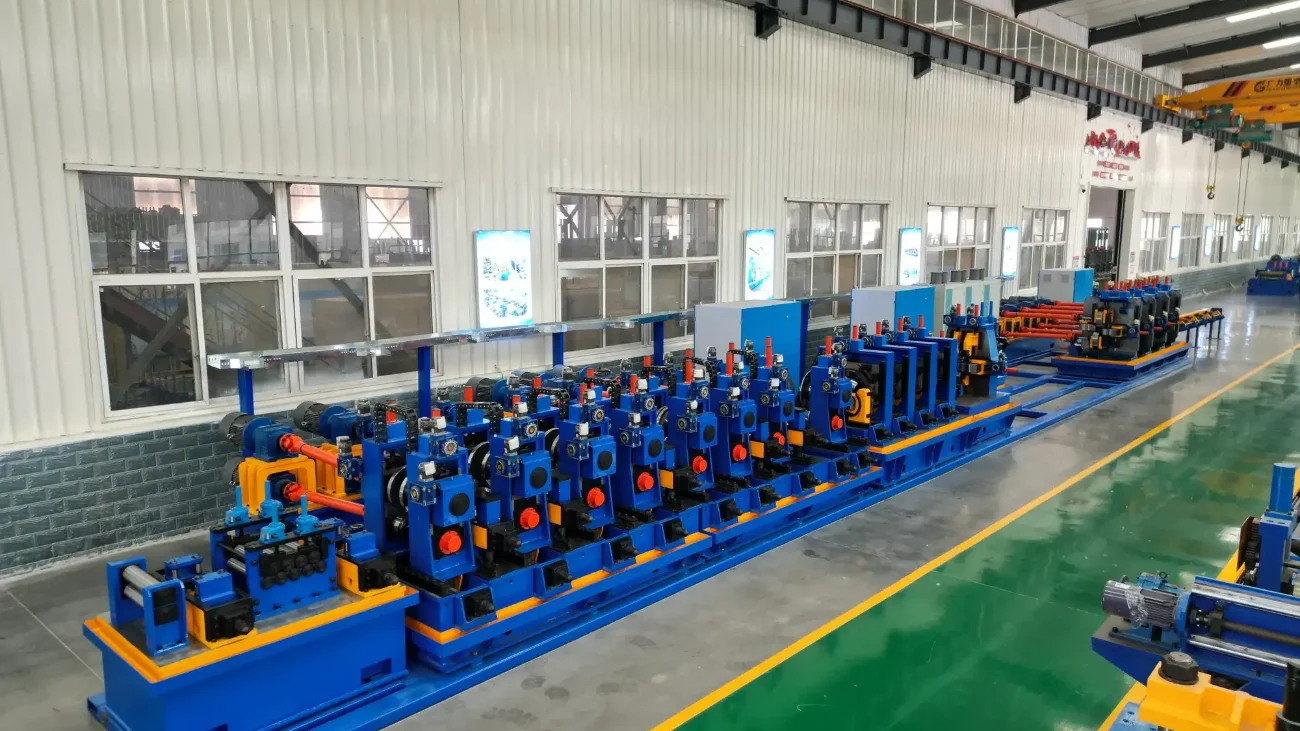
Welded pipe is formed from steel strip and closed along a seam; seamless pipe is pierced from a solid billet and has no seam at all. On the welded side there are two routes we build, high-frequency and spiral submerged-arc, and the choice between them starts with the outside diameter you make. Terms used along the way are explained in the tube & pipe mill glossary.
Inside the Welded Pipe Guide
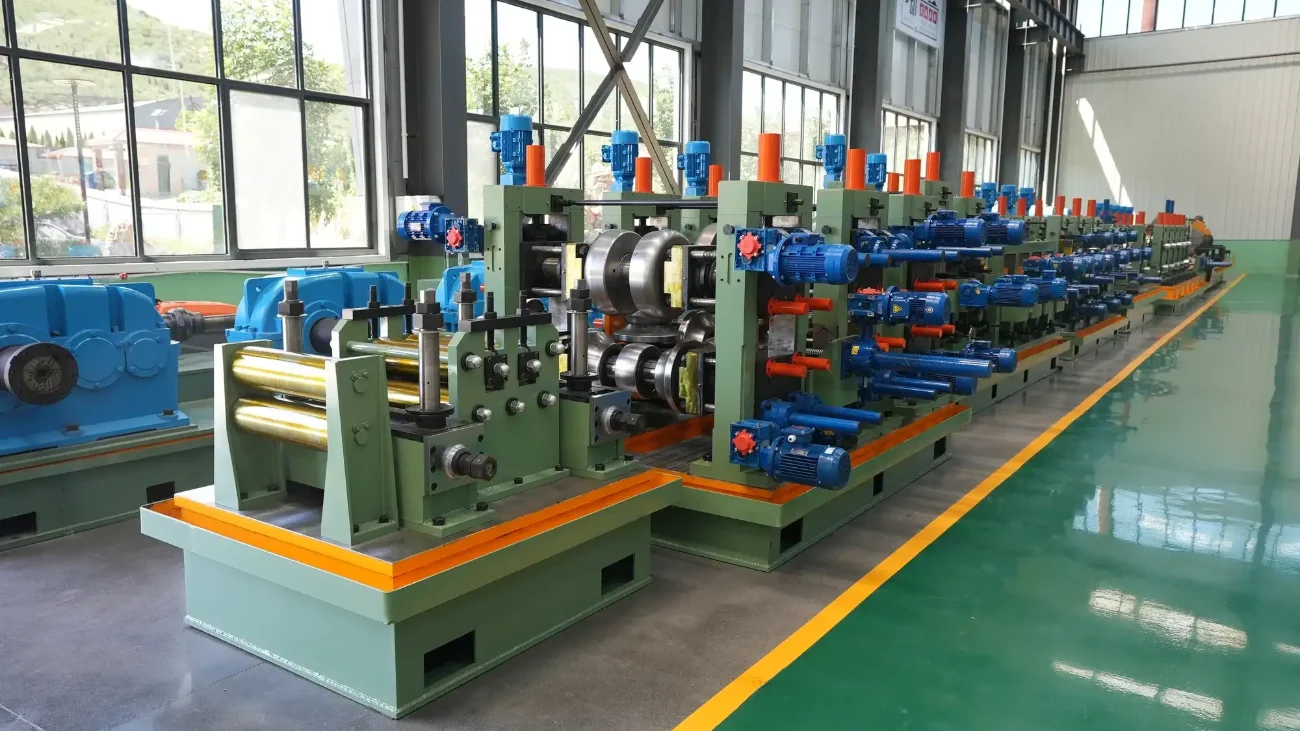 Seamless Pipe vs Welded PipeHow the two are made, what each costs to set up, and how to decide between HFW, spiral and seamless by diameter, application and volume.Read the guide →
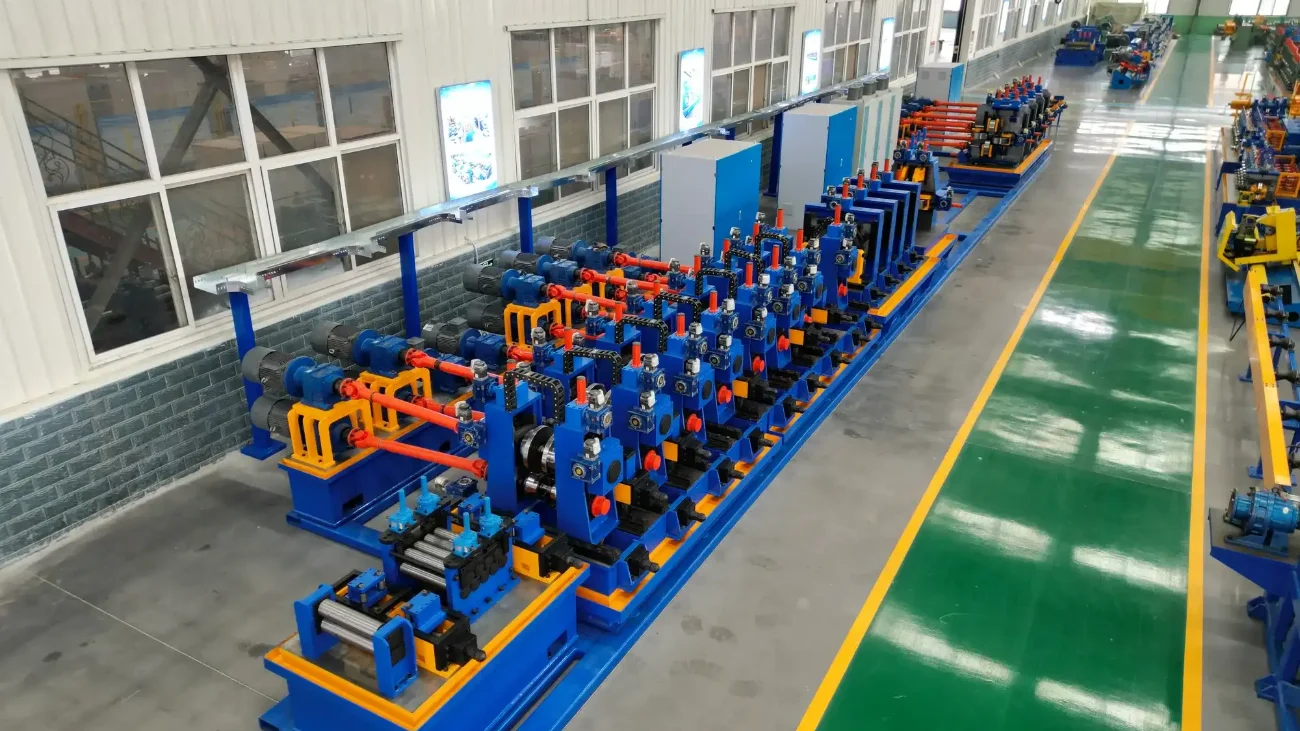 What Is ERW PipeWhat electric resistance welding means, why we call the same route HFW, and how the line forms, welds, sizes and cuts the pipe.Read the guide →
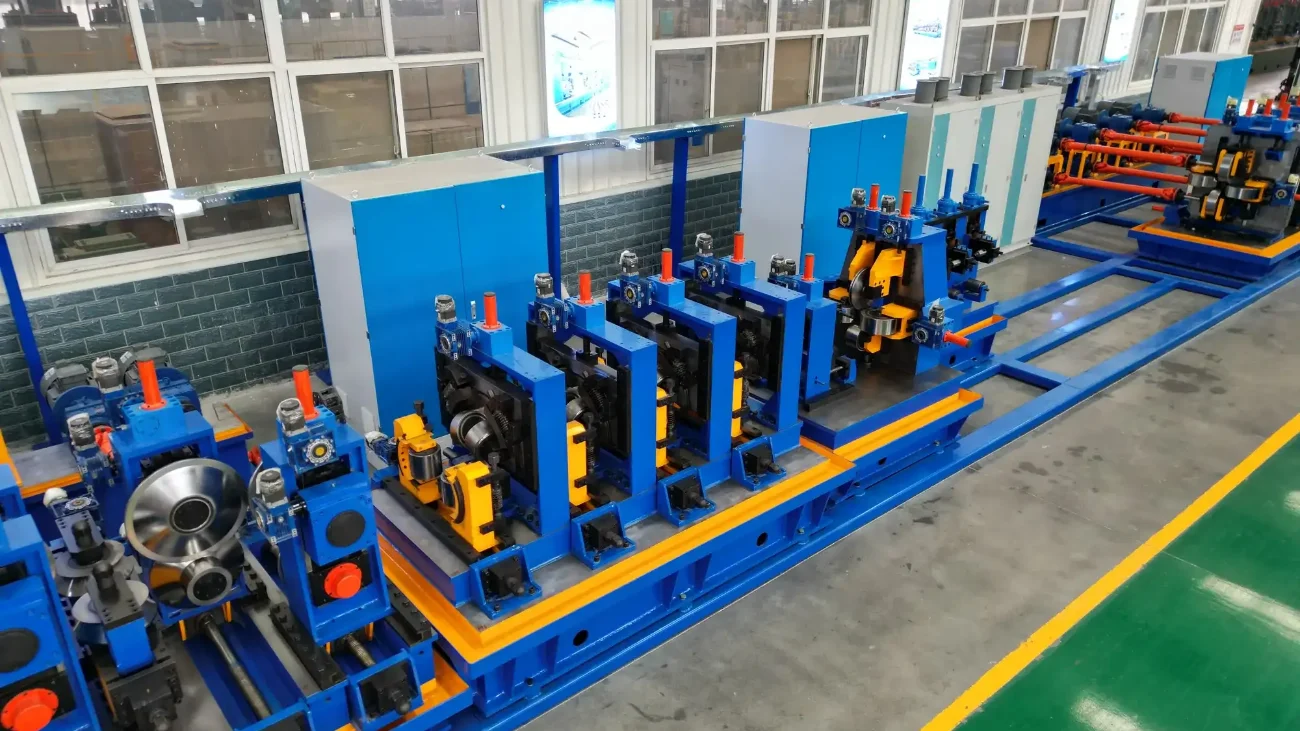 What Is the Roll Forming ProcessHow driven rolls bend strip a little further at every pass, on the line that closes the profile into a tube and on the one that leaves it open.Read the guide →
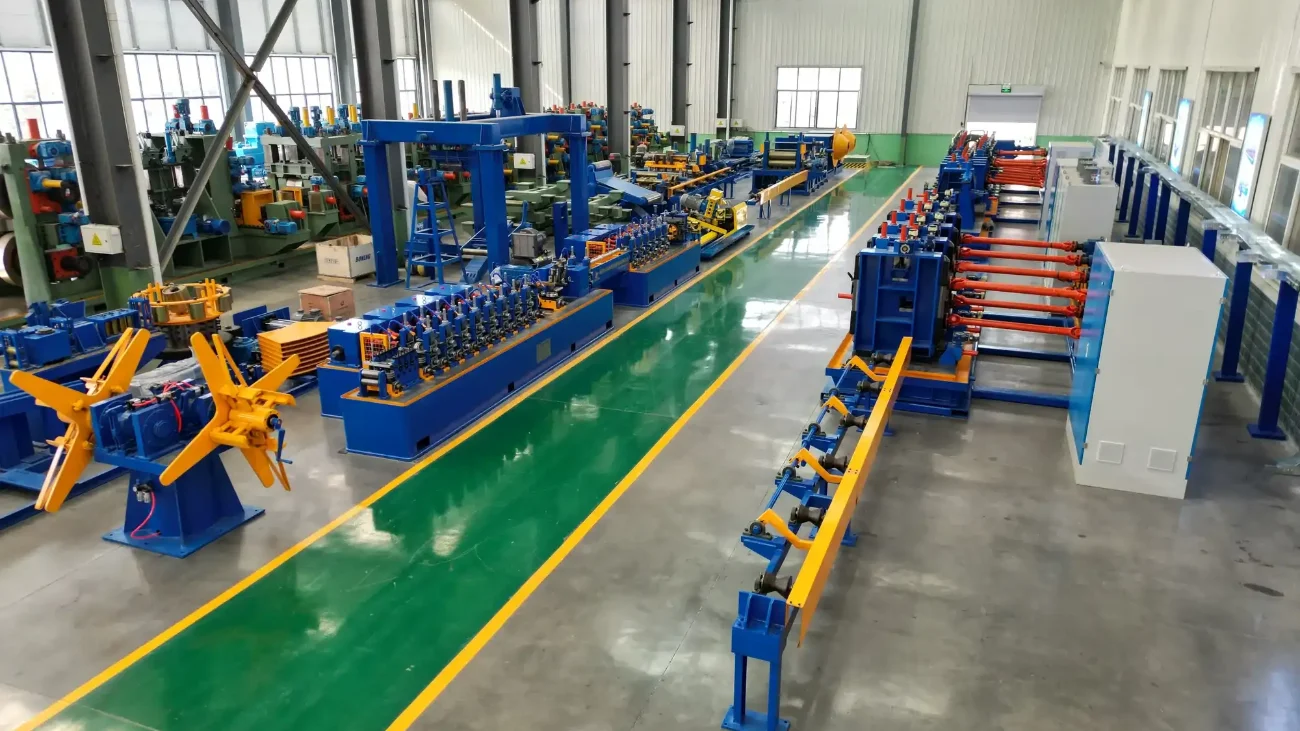 Welded Pipe Manufacturing ProcessThe whole tube mill stage by stage, from uncoiling and levelling to high-frequency welding, sizing and cut-to-length.Read the guide →
What Is Welded Pipe Guide
Welded pipe is made by forming strip into a tube and joining the seam. Seamless pipe is made by piercing and rolling a solid billet, with no seam at all. The two are different products from different plants, and what we can speak to is the equipment side.
Our position for high-frequency welding against seamless rolling and UOE/JCOE is specific: lower investment and running cost, higher continuity, suited to medium and small diameter in volume.
Welded Pipe Guide — Range, Configuration and Output
Tengtian builds lines for two welding processes, and the two lines are genuinely different. The tube mill & welded pipe production line covers Φ10–630 mm across twelve model steps with wall 0.5–16 mm; the SSAW spiral welded pipe mill covers Φ219–1620 mm in two classes.
High-frequency welding. Pressure welding: high-frequency current concentrates at the seam through skin and proximity effects, heats the edges to welding temperature, and squeeze rolls press them together. There is no filler metal.
Spiral submerged-arc welding. Strip is fed at an angle and welded in a spiral seam, inside and out, under a flux layer with dedicated welding power sources. Coverage is Φ219–820 mm with wall 3–12 mm on one class and Φ219–1620 mm with wall 5–16 mm on the other.
In roll forming process which rollers are used
Driven forming rolls on each stand press the strip a little further at every pass until it holds the profile, and nothing is heated along the way. On our purlin line the forming rolls are bearing steel, finished after quenching; the full pass sequence is set out under what is the roll forming process.
Tube mill manufacturing process
A tube mill turns steel coil into welded pipe in one continuous line: uncoil, level, shear and joint-weld, accumulate, roll form, high-frequency weld, size and straighten, then cut to length. Each stage is taken in turn under how a tube mill works.
Key Parameters: Size Range, Wall Thickness, Line Speed and Welder Power Band
| What | High-frequency welded | Spiral submerged-arc |
|---|---|---|
| Seam | Straight, pressure welded, no filler | Spiral, submerged arc, inside and out |
| Outside diameter | Φ10–630 mm, twelve steps | Φ219–820 / Φ219–1620 mm |
| Wall | 0.5–16 mm | 3–12 / 5–16 mm |
| Welding speed | Set by model, given in the quotation | 0.5–3 m/min |
| Welding energy | HF welder 150–1500 kW by step | SAW power sources by class |
How to Choose the Right Model
The first cut is diameter. Below 219 mm, only high-frequency welding is in our range; above 630 mm, only spiral. Between those two numbers both are available, and the choice comes down to the application rather than capability, so we make no default recommendation.
The second cut is what the pipe has to prove. If it has to carry an in-line inspection record — hydrostatic test, ultrasonic, eddy current — that is the API line, built on the tube mill with intermediate annealing, straightening, end facing and the inspection units added.
Scope of Supply, Installation and Commissioning
We supply a complete line, from uncoiler to cut-off with its electrical control, or single units for an existing line; the API configuration adds annealing, straightening, end facing and the inspection units on top of the tube mill.
The line is dismantled into units and shipped in containers: heavy frames are braced and secured, while precision parts and wear items travel in wooden cases together with a spare-parts pack.
Our engineers travel to site to guide installation, commissioning and operator training; the buyer provides the installation crew and covers the engineers’ travel, lodging and daily allowance, and support continues online after handover. A high-frequency line takes two to three engineers, with the period set in the quotation; a spiral line takes five personnel — four engineers and an adjustment technician — over forty days.
Rolls and key wear parts are machined in-house on our own CNC equipment. The engineering team is twenty people averaging twenty years’ experience; the base is open to factory audit.
The three questions buyers actually bring
Does a welded seam matter for my application? High-frequency welding is a pressure weld with no filler, so seam quality is set by power matching, edge alignment and squeeze at the weld box. Those three are on the equipment side; strip quality and operating practice are on the buyer’s.
How do I prove the pipe? If the order is gated on an inspection record, the API line is the configuration that carries it: intermediate annealing, straightening, end facing, hydrostatic testing, ultrasonic and eddy-current inspection, added on top of the tube mill.
Which standards are in play? The target standards fall into these categories: conventional structural and fluid pipe, API 5L line pipe, GOST H-section and GB. The standards actually named on the equipment side are GB/T 9711 and API SPEC 5L on the spiral and API routes, GOST R 58966-2020 on H-beam, and the company’s own enterprise standard Q/GYL TT01-2023.
Downstream Applications
Welded pipe from these lines goes into three main fields: fluid transport, from oil and gas lines to city water, gas, chemical and heating pipework; construction and machinery, from load-bearing structures and scaffolding to machinery and automotive parts; and home furnishing, mainly furniture and fencing.
What high-frequency welding physically is
Three process principles explain why the seam behaves the way it does.
Roll forming: forming rolls rotate continuously and press the strip, bending a flat band progressively into an open round or square tube blank. Pass count, roll gap and roll profile decide shape accuracy and seam alignment.
Skin and proximity effect: high-frequency current concentrates at the open edges of the blank because of these two effects, heating exactly that line to welding temperature. Current frequency, power and welding speed decide whether the heating stays concentrated, and what it costs.
Pressure welding: the two heated edges are pressed together by squeeze rolls into a continuous seam. Squeeze amount, temperature and alignment decide fusion quality and pressure rating. Then cooling, sizing and straightening bring the tube to final dimension and straightness.
That third principle is the one that answers the seamless question directly. A high-frequency weld is made by pressing heated parent metal together — there is no filler and no weld deposit — which is a different kind of joint from an arc weld with consumable.
Where an inspection record comes from
If the buyer’s requirement is a document rather than a dimension, the relevant line is the API configuration, and its inspection chain is stage by stage: medium-frequency annealing, straightening, end facing, hydrostatic test, ultrasonic and eddy current.
Two of those do different jobs. Post-weld medium-frequency annealing heats the weld zone and lets it cool naturally, improving the metallurgical structure and toughness of the weld and heat-affected zone. Hydrostatic, ultrasonic and eddy-current testing then inspect seam and body in line and judge each pipe against the standard.
Standards status
Line pipe for oil and gas is ordered to API 5L, and the equipment side is ready for it — annealing, hydrostatic testing, UT and ECT. Certification of the finished pipe is handled under the pipe maker’s own quality system. For North America, ASTM specifications are the usual reference, and H-beams for Russia and the CIS are made to GOST R 58966-2020, the Russian welded H-beam standard.
Our welded pipe equipment is CE marked under the EC Machinery Directive 2006/42/EC, and the company is certified to ISO 9001:2015.
Checking a supplier’s quotation
Three checks are worth running on any supplier’s offer.
Check which process the offer is for, and read the diameter and wall against that process’s own window rather than against a general one — Φ10–630 mm with wall 0.5–16 mm for high frequency, Φ219–820 or Φ219–1620 mm with wall 3–12 or 5–16 mm for spiral.
Check whether the offer includes post-weld treatment and inspection, because that is the difference between a tube mill and an API line rather than an option on the same machine.
Check what is claimed about certification, and separate equipment readiness from factory certification — the first is a specification, the second is a document held by the plant.
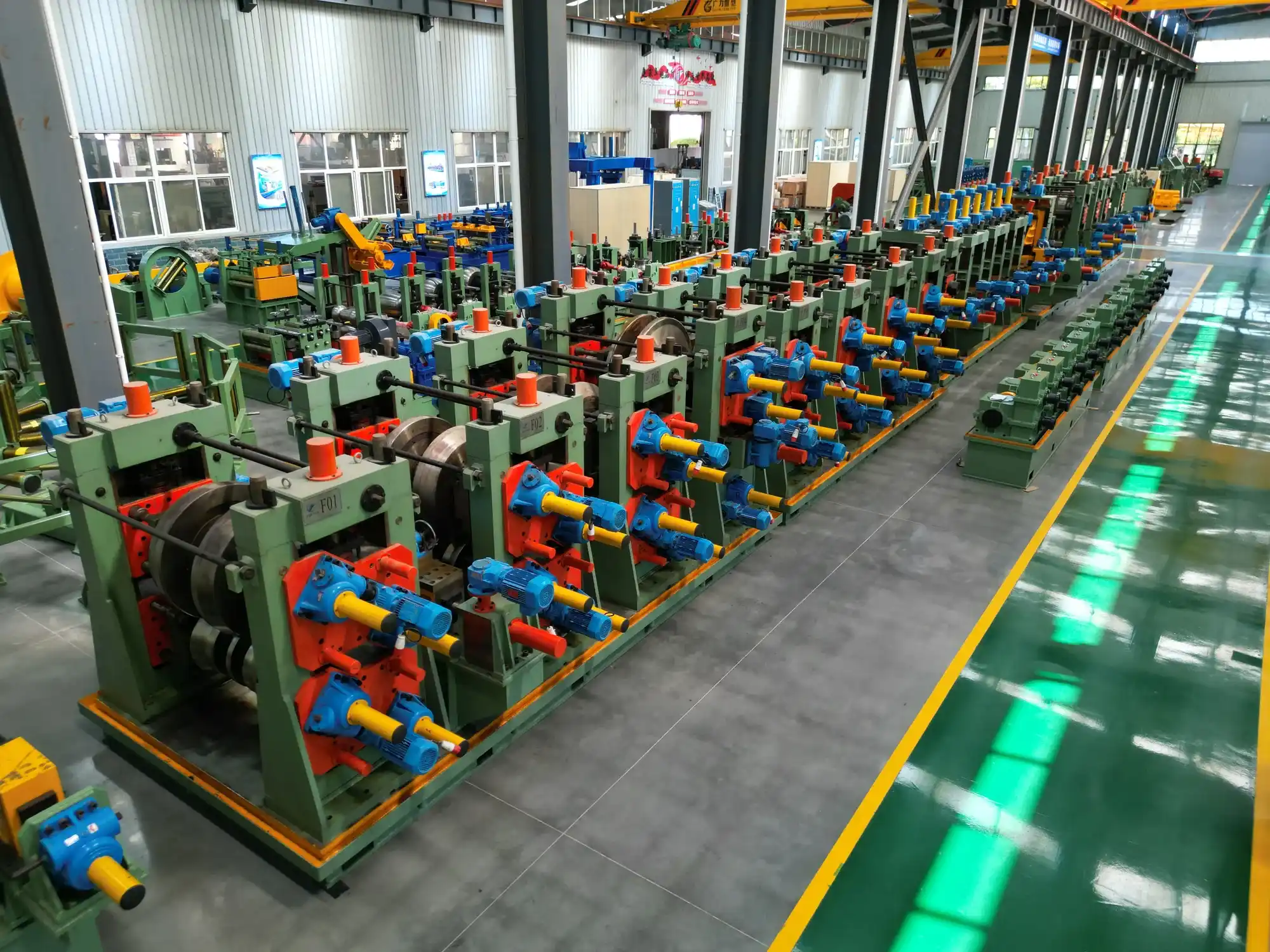
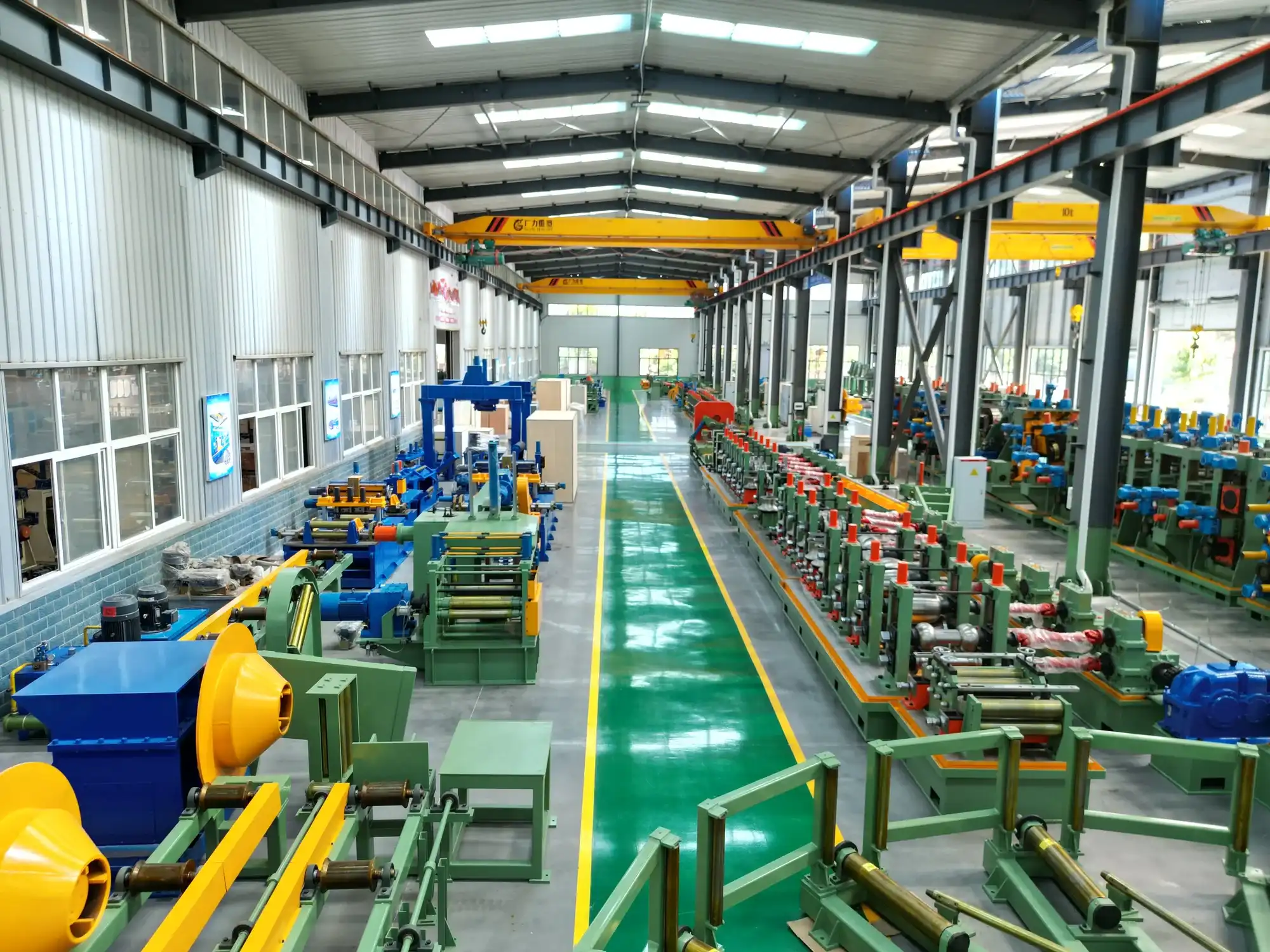
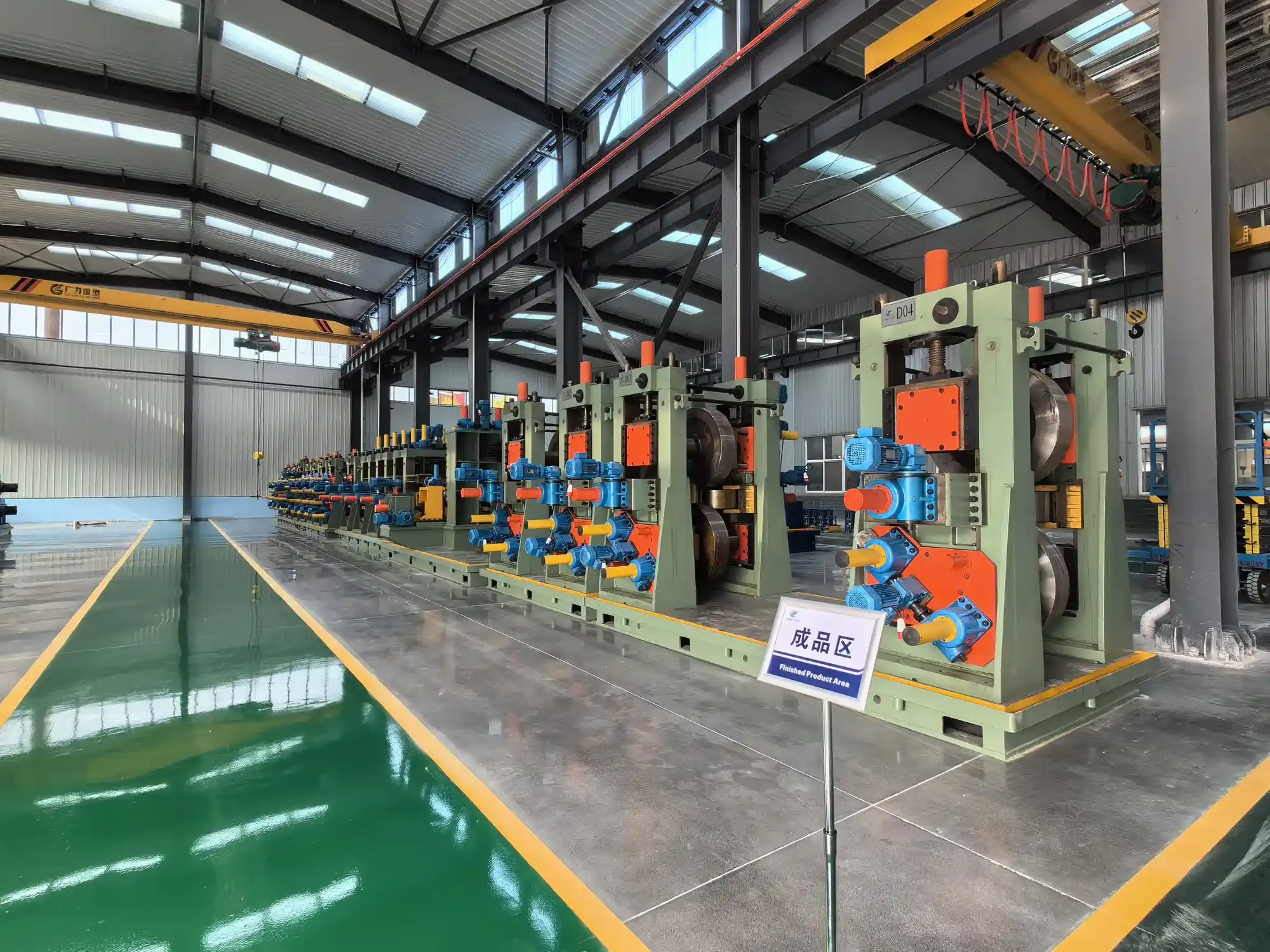
From the Workshop
Send Your Enquiry
Tell us the pipe outside-diameter range, the wall thickness and the output you need. An engineer reads every enquiry — it does not land in a general sales inbox.