
Home › API Line Pipe Mill › The API Pipe Mill Inspection Chain
In This Line
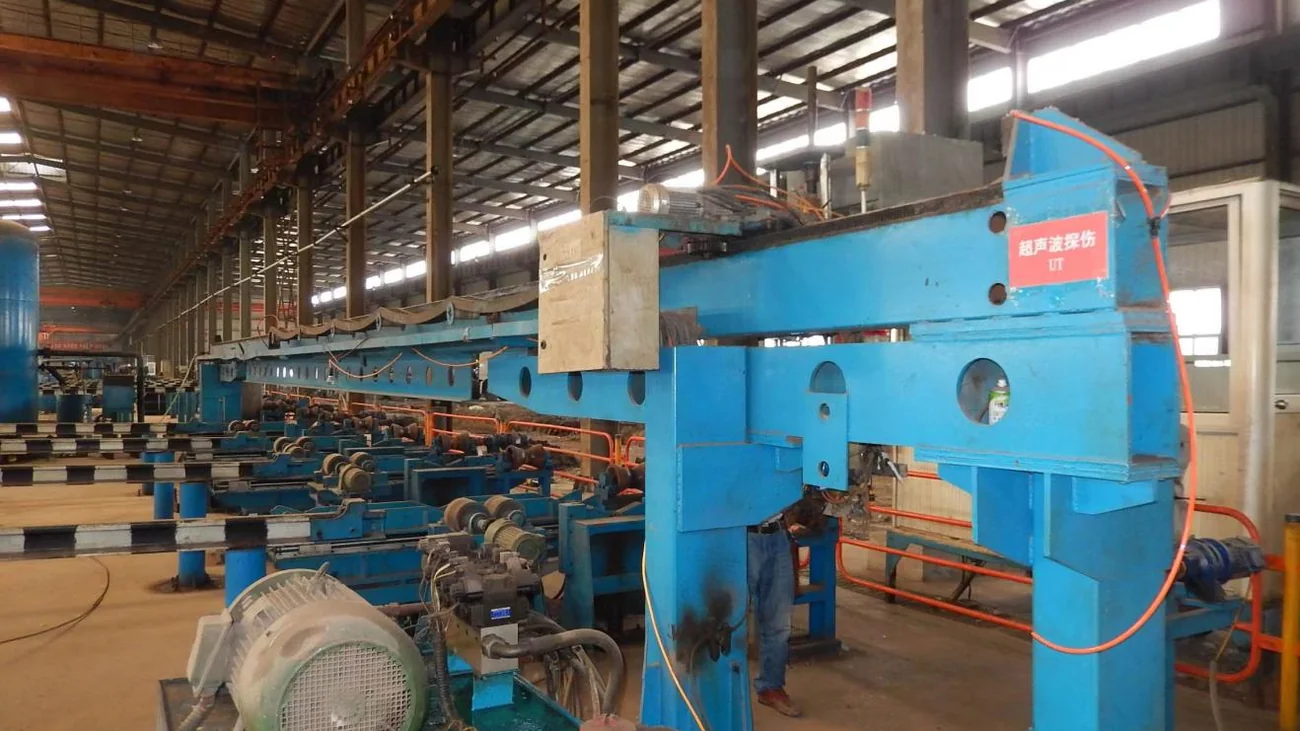
Tengtian’s API pipe mill carries the full post-weld and inspection chain: medium-frequency annealing, straightening, end facing, hydrostatic test, ultrasonic and eddy-current inspection. Certification of the finished pipe is handled under the pipe maker’s own quality system.
The Inspection Chain That Makes It an API Line
- Inspection chain: medium-frequency annealing → straightening → end facing → hydrostatic test → UT → ECT.
- API-line size bands: API 219 / 406 / 426 / 508, OD 114–508 mm, wall 3–20 mm across the four models.
- What separates this line from an ordinary welded line is post-weld heat treatment plus the full NDT set.
- Operating the in-line NDT requires specialist NDT training or qualification.
What the Inspection Chain on This Line Is Configured to Do
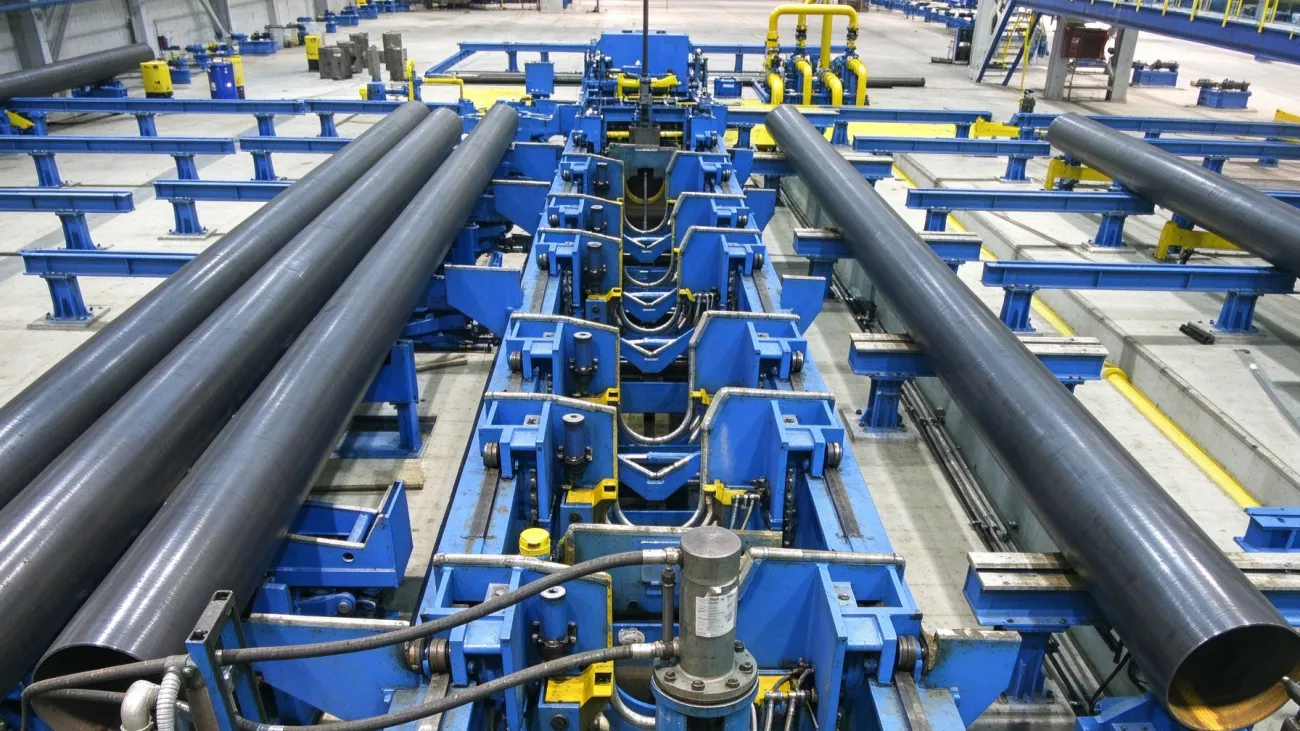
The added stages — medium-frequency annealing, straightening, end machining, hydrostatic testing, ultrasonic inspection and eddy-current inspection — are the in-line inspection and post-processing steps added to produce API 5L line pipe. An API 5L pipe mill with NDT is a high-frequency welded line with these stages built on top of it.
The need comes from the order side. For oil and gas transmission line pipe, weld performance and compliance inspection — hydrostatic, UT and ECT — are the order threshold.
Equipment Configuration Checklist
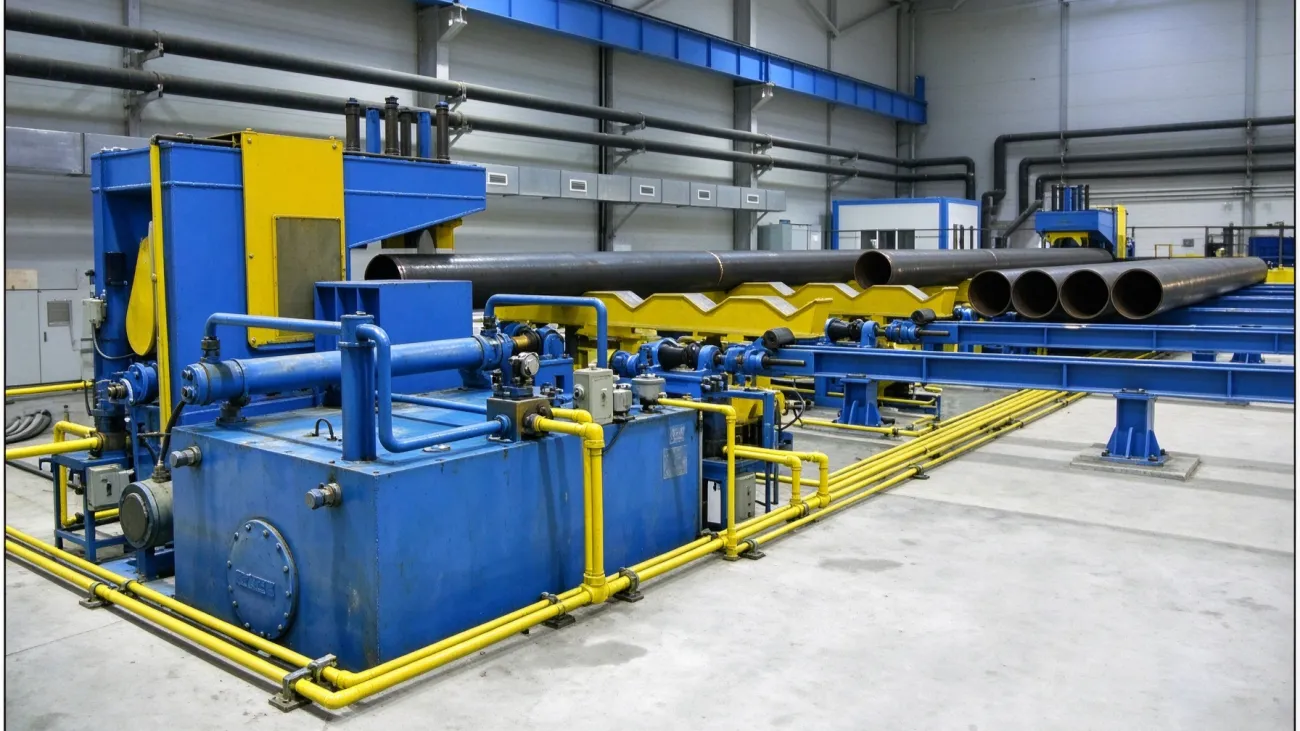
The inspection group comprises annealing, straightening, end facing, hydrostatic, UT and ECT units for API 5L.
In-line UT and ECT components, together with the hydrostatic tester, form the API 5L compliance inspection chain, the order threshold for line pipe; an ordinary welded line has none of these, while an API line carries them as standard.
How the Line Is Configured to Meet Those Checks
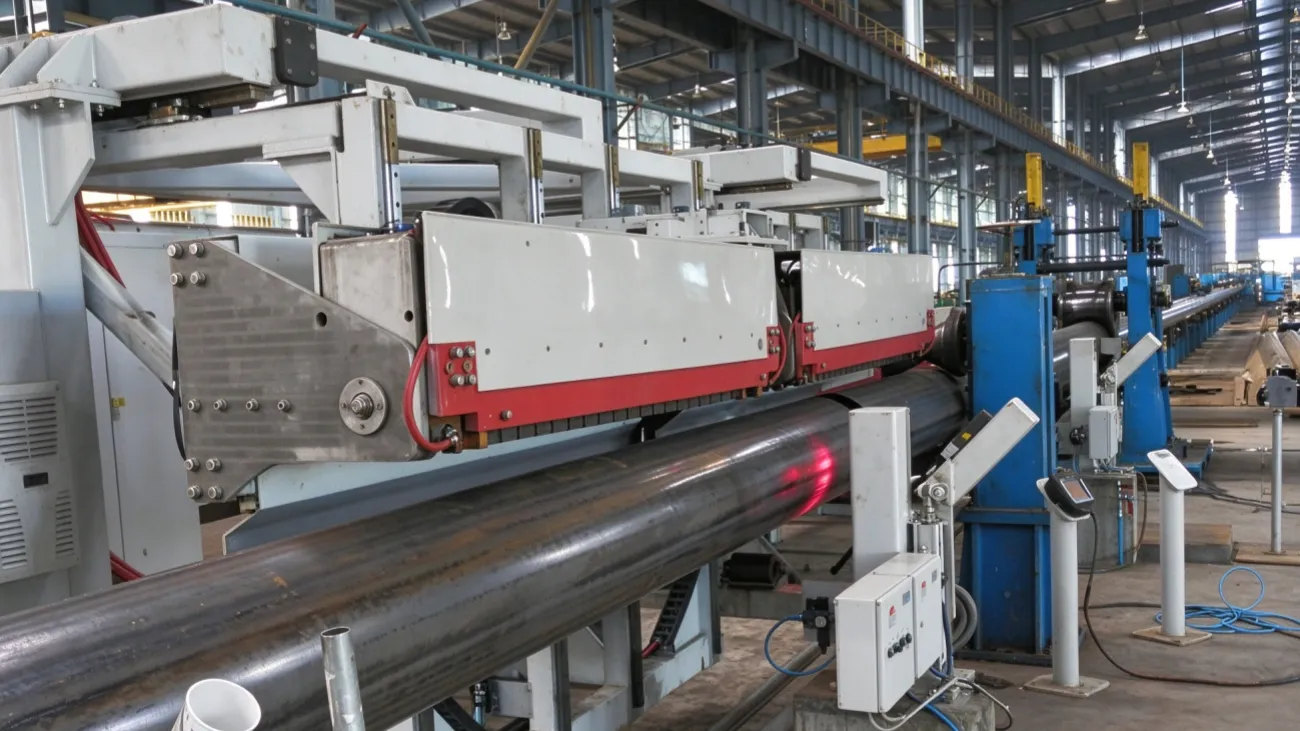
The process order is: medium-frequency annealing, then straightening, then end machining, then hydrostatic testing, then ultrasonic, then eddy current. That whole sequence is the decisive stage for compliance and delivery of API line pipe.
Annealing is the one stage that changes the metal: medium-frequency heating is applied to the weld zone, followed by natural cooling, which improves the metallographic structure and toughness of the weld and heat-affected zone.
The inspection side carries equal weight. Stable hydrostatic, UT and ECT operation produces compliant and traceable pipe; unstable operation produces missed detections, misjudgements and lost traceability.
The governing parameters are annealing temperature and heating power, and what they decide is the weld’s mechanical performance and its compliance. Annealing is also a quality-influencing factor in its own right, with a hard and brittle weld zone and insufficient toughness as the consequence of getting it wrong.
Equipment Status vs Mill Certification — Read This First
On the equipment side the position is clear: the API pipe line integrates the complete API 5L inspection chain — annealing, hydrostatic, UT and ECT — and all API 5L inspection chain equipment is part of the line.
Two things are often confused: what the equipment is built to do, and whether the plant running it is certified. We build and configure the equipment; certification is earned by the pipe plant under its own quality system.
Certification and Scope
Pipe produced on the line is not automatically certified line pipe: the finished pipe is made by the buyer under the buyer’s own quality system.
For detailed requirements, coverage figures, acceptance levels and PSL grading, refer to the API 5L standard itself.
Tengtian draws this division explicitly. The equipment side covers the full inspection chain for compliant and traceable line pipe; the customer side covers incoming material and operation. The same split holds for weld quality, where equipment provides annealing plus the hydrostatic, UT and ECT chain while incoming material and operation remain with the buyer.
Records and Traceability
Traceability comes from stable inspection rather than from a separate paperwork system: each pipe is judged pass or reject at the hydrostatic, UT and ECT stations as it passes. Keeping those judgements reliable needs NDT couplant and calibration test blocks, replenished according to inspection volume.
How the line ships
The line is dismantled into units and shipped in containers: heavy frames are braced and secured, while precision parts and wear items — control cabinets, induction coils and impeders, forming rolls and cutting tools — travel in wooden cases together with a spare-parts pack. Shipment is within 90 working days of the deposit.
Installation and commissioning are guided on site by our engineers, with online support behind them; the buyer provides the installation crew and covers the engineers’ travel, lodging and daily allowance.
Applicable Standards
API 5L is mandatory for line pipe orders in the global oil and gas market and applies to the API line pipe product only.
For North America, ASTM specifications are the usual reference.
Resource Downloads
From the Workshop
 API Line Pipe Mill
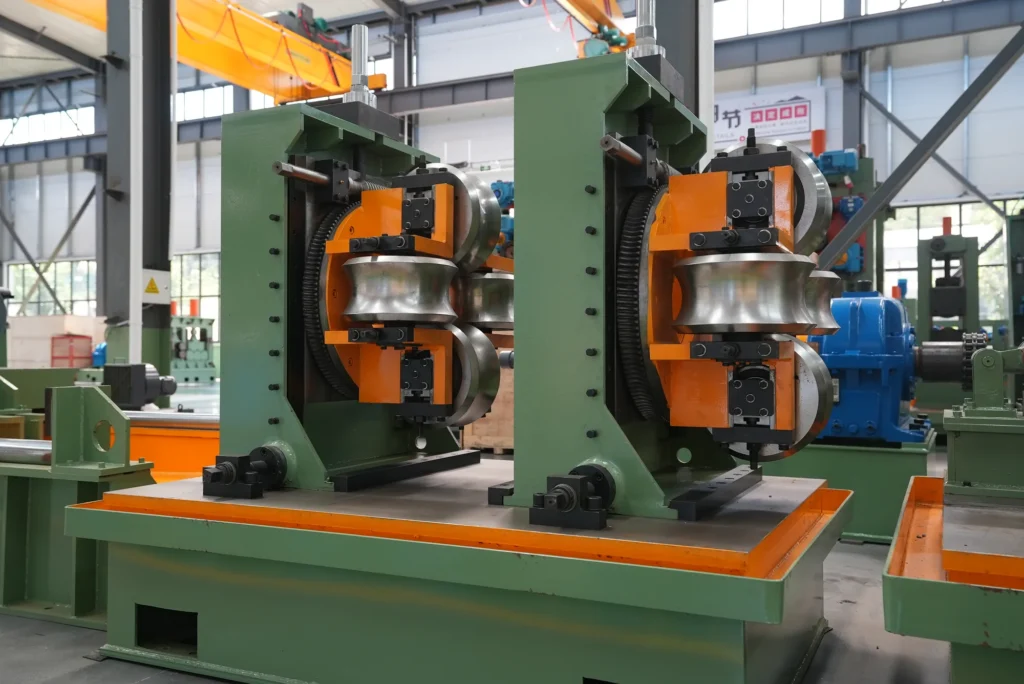 Oil & Gas Line Pipe Mill
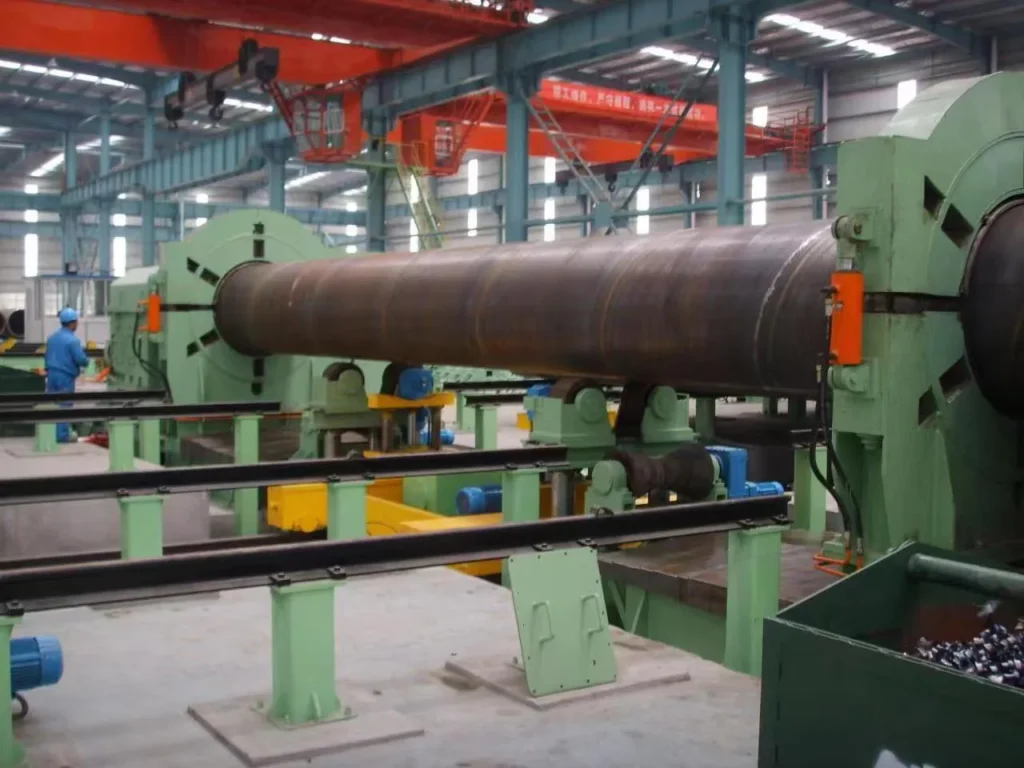 SSAW Spiral Welded Pipe Mill
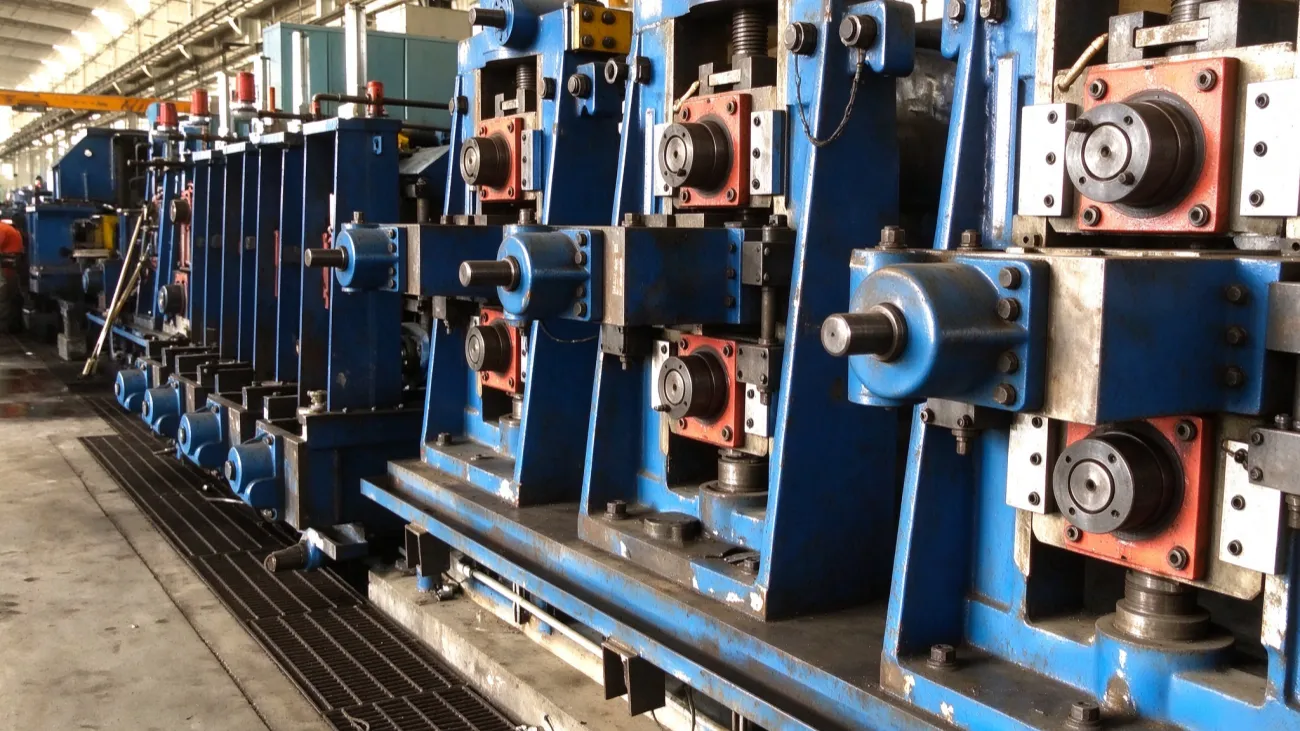 API Line Pipe Plant for Integrators
Send Your Enquiry
Tell us the pipe outside-diameter range, the wall thickness and the output you need. An engineer reads every enquiry — it does not land in a general sales inbox.