
Home › Roll Forming Machine › Metal Roll Forming
Metal roll forming bends steel strip, cold and pass by pass, into a finished profile. On our purlin line it turns 2–4 mm strip into C, Z and Ω sections, punched and cut to length, with no welding.
In This Line
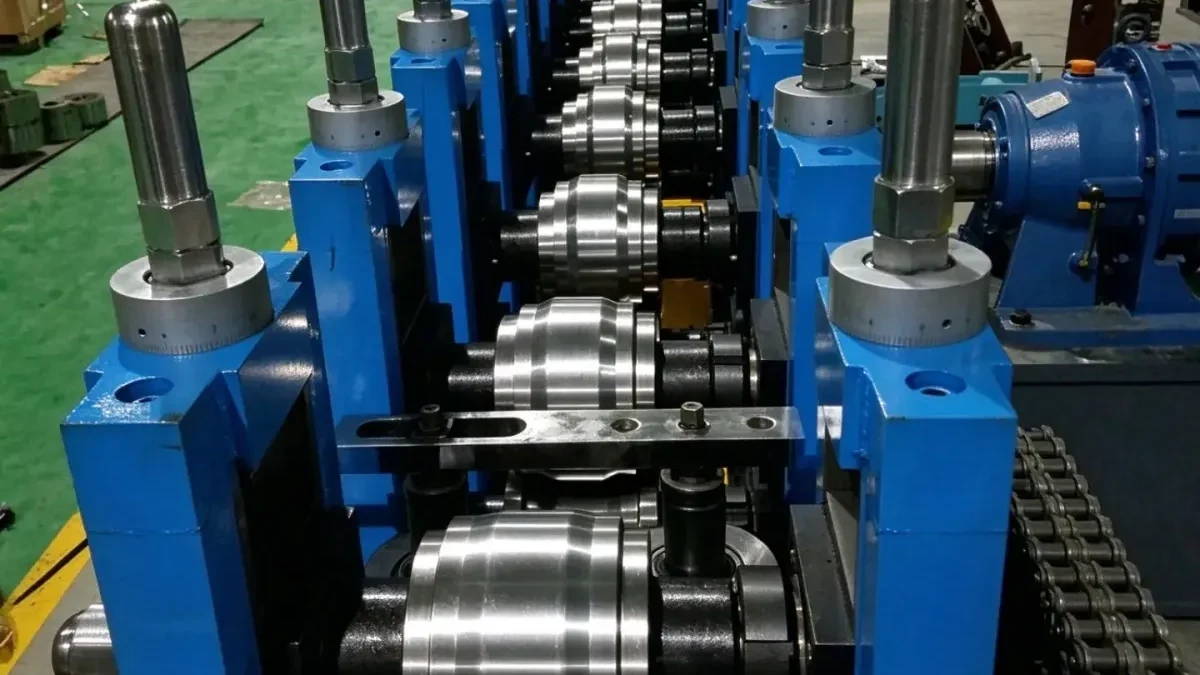
How Cold Roll Forming Actually Works
- Roll forming is cold work: strip is bent progressively at room temperature, with no phase change, only plastic deformation.
- Our purlin line has 18 forming passes, with hydraulic punching and cut-off, and runs at up to 20 m/min on 2–4 mm strip.
- The same machine makes C, Z and Ω sections by stepless adjustment, with no roll change between sizes.
- Rolls are hardened bearing steel; punching dies and cutters are hardened Cr12.
What Is Roll Formed Steel Profiles
Roll forming is a cold process: strip is bent step by step at room temperature through a series of driven roll stands, with no phase change and purely plastic deformation. Each stand takes the material a little further than the one before it, so the section arrives at its final shape gradually rather than in one press stroke.
What comes out depends on whether the section is left open or closed. The purlin machine is a cold-forming line with no welding at all: it rolls strip into C, Z and Ω purlin sections and finishes them with hydraulic punching and cut-off. This is cold forming, and that is what separates it from the tube mill lines.
A tube mill uses the same progressive bending but closes the section and welds the seam; see our welded pipe guide.
Roll forming operation in sheet metal
The operation on the purlin line is end to end. The operator enters purlin length, hole pitch and quantity; the line then roll-forms the section, punches the holes hydraulically and cuts the piece to length automatically. The variables that decide whether that comes out right are the parameter settings and the alignment of the stepless adjustment.
Roll Formed Steel Profiles Explained
Roll formed purlins come off an 18-pass roll former with hydraulic punching and cut-off, working 2–4 mm strip at up to 20 m/min. It is a semi-automatic C/Z interchangeable line: one set of equipment produces multiple C and Z sizes through stepless adjustment, without changing rolls. The forming rolls are hardened bearing steel, and the punching dies and cutters are hardened Cr12.
If roll, die or cutter hardness falls short, the section edges come out poorly, holes drift out of position and cutting edges blunt early.
The machine is responsible for punch positioning and roll profile accuracy; the plant is responsible for the parameter settings. Material thickness, line speed and output are confirmed against your profile section, steel grade and finished length at quotation.
Send us those three and we will state the figures.
When buyers compare purlin lines, they usually check three things: whether a size change needs a roll change, how accurately holes are punched, and the forming speed.
Roll forming sheet metal
On the purlin line, sheet metal in strip form, 2–4 mm thick, enters through a guide and levelling unit and runs through 18 forming passes. Holes are punched hydraulically and the section is cut to length after forming, so one pass down the line gives a finished, punched purlin.
Rolls, dies and cutters are the wear parts. Cr12 dies and cutters can be supplied as they are reground or replaced, and one set ships with the line.
Side-by-Side Comparison Table
| C purlin | Z purlin | |
|---|---|---|
| Web a (mm) | 100 – 400 | 120 – 400 |
| Flange b/d (mm) | 50 – 100 | 50 – 100 |
| Lip c (mm) | 10 – 25 | 10 – 25 |
| Strip thickness (mm) | 2 – 4 | 2 – 4 |
| Size change | Stepless, no roll change | Stepless, no roll change |
| Punching and cutting | Hydraulic, after forming | Hydraulic, after forming |
How to Decide: Section, Application and Volume
Section type comes first. The purlin line makes C, Z and Ω purlins from 2–4 mm strip; a closed round, square or rectangular tube is a tube mill job.
Changeover comes next. On the purlin line, size changes are stepless and need no roll change.
Send us the profile drawing, strip thickness and grade, and the lengths you run, and we will confirm the line against them.
Frequently Asked Questions
What is the practical difference between the two? A cold roll forming line bends strip into an open section, such as a C, Z or Ω purlin, and never welds it; the line finishes with hydraulic punching and cut-off. A tube mill bends strip into a closed shell and welds the seam.
Which one suits my target size and application? If the part is an open section bolted or screwed into a structure, such as a purlin for a steel building or a solar mounting frame, it is a roll forming job. Our purlin line works 2–4 mm strip into C, Z and Ω sections. If the part is a closed tube, it is a tube mill job.
How do running costs compare? On the purlin line the main running cost is tooling: rolls, punching dies and cutters wear and are reground or replaced. Because size changes need no roll change, there is no second roll set to buy for each size.
Which standards apply to each? The purlin line is CE marked under the EC Machinery Directive 2006/42/EC. Purlin section dimensions and tolerances follow the standard your project specifies; send it with your enquiry.
Which option ships and commissions faster? Standard lines ship within 90 working days of the deposit, and our engineers travel to site to guide installation and commissioning.
Can one supplier provide both? Yes. Besides the purlin roll forming line, we build welded pipe lines; see our welded pipe guide for how those are configured.
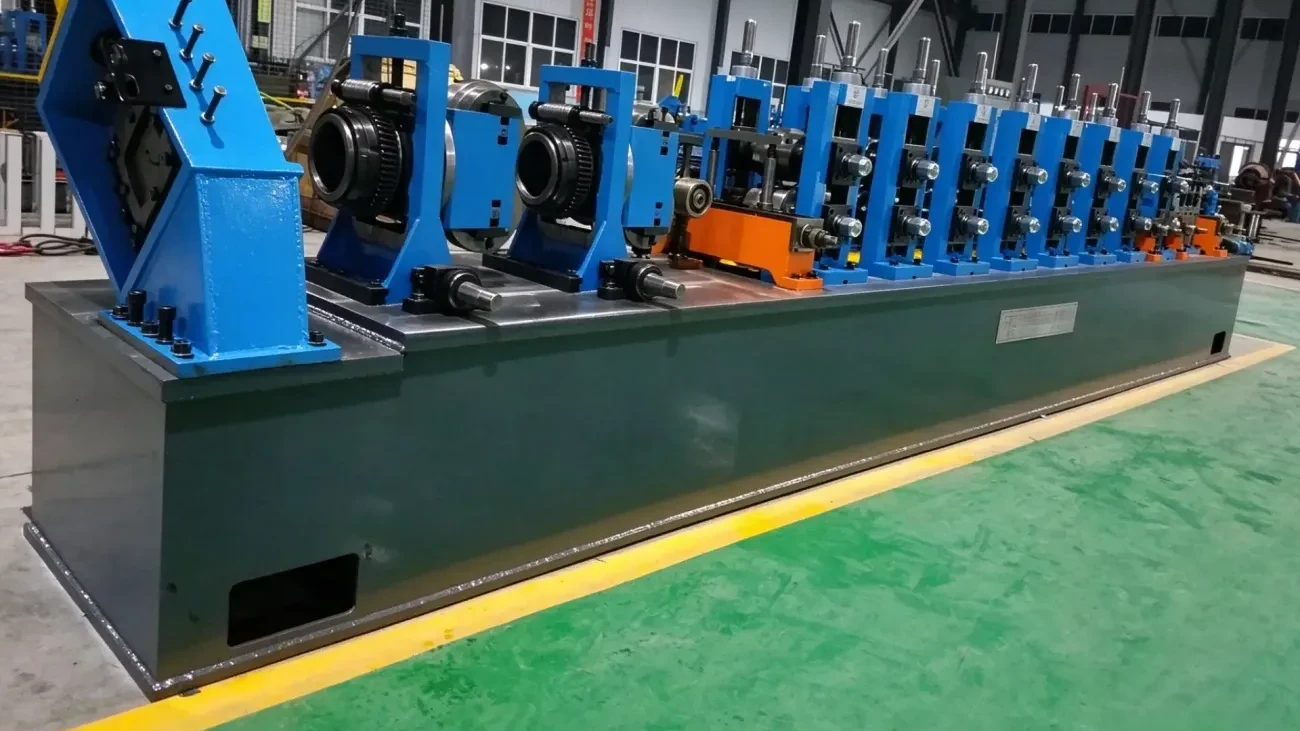 Roll Forming Line for Sale
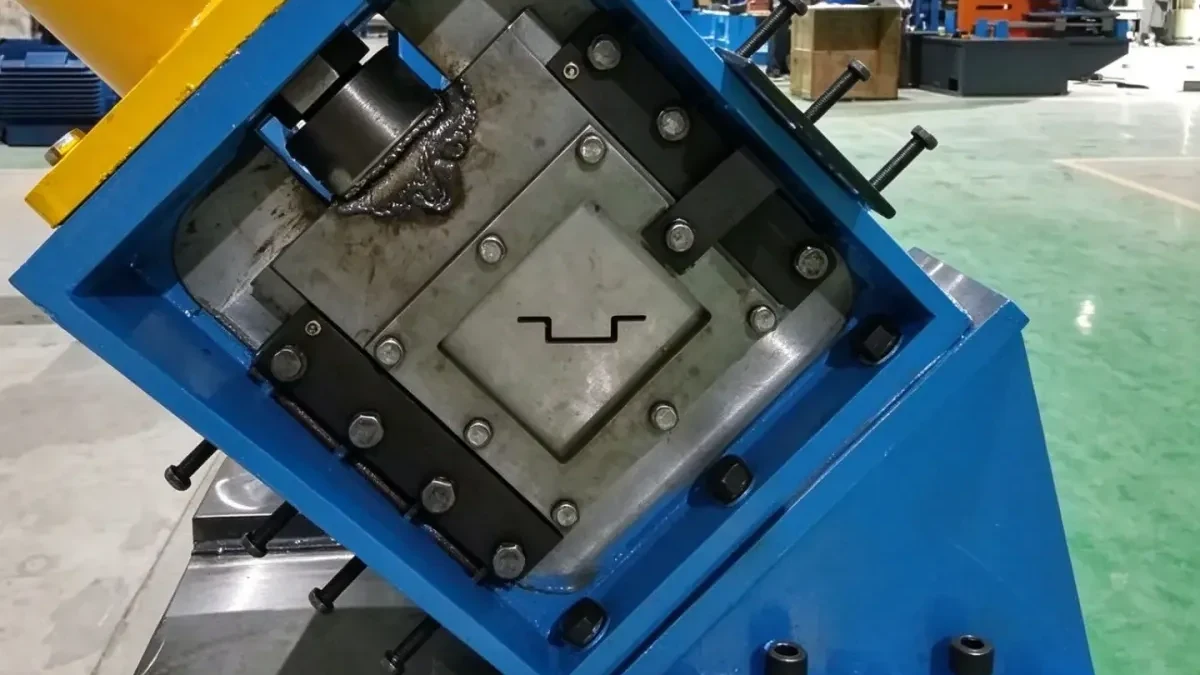 Roll Forming Tooling & Die Design
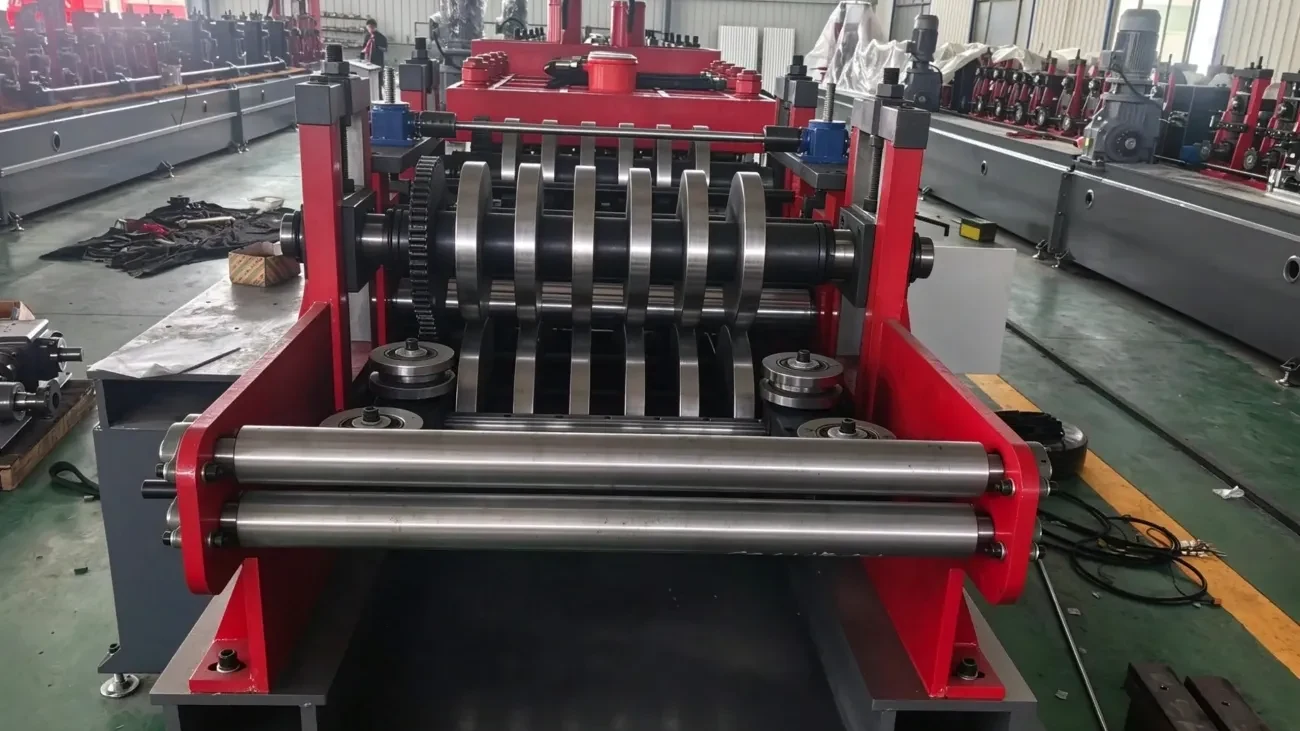 Cold Roll Forming Machine for C, Z and Omega Purlins
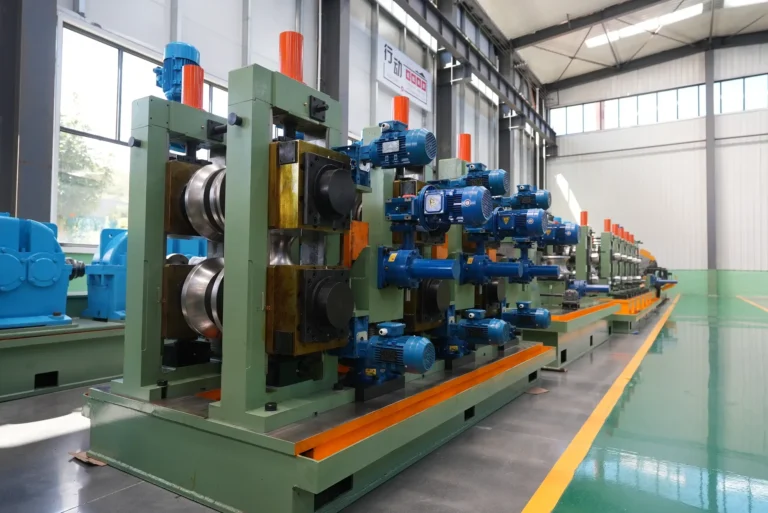 What Is the Roll Forming Process — Stands, Passes and Cold Forming
Send Your Enquiry
Tell us the pipe outside-diameter range, the wall thickness and the output you need. An engineer reads every enquiry — it does not land in a general sales inbox.