
Home › Roll Forming Machine › Roll Forming Tooling & Die Design
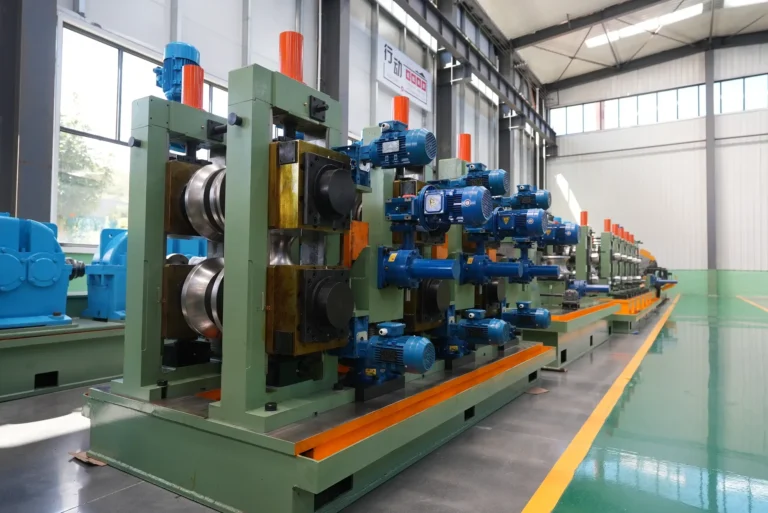
Roll forming tooling is the set of forming rolls, dies and cutters that shapes strip into a profile. On our purlin line the forming rolls are bearing steel and the punching dies and cutters are Cr12, both hardened, across 18 forming passes.
In This Line
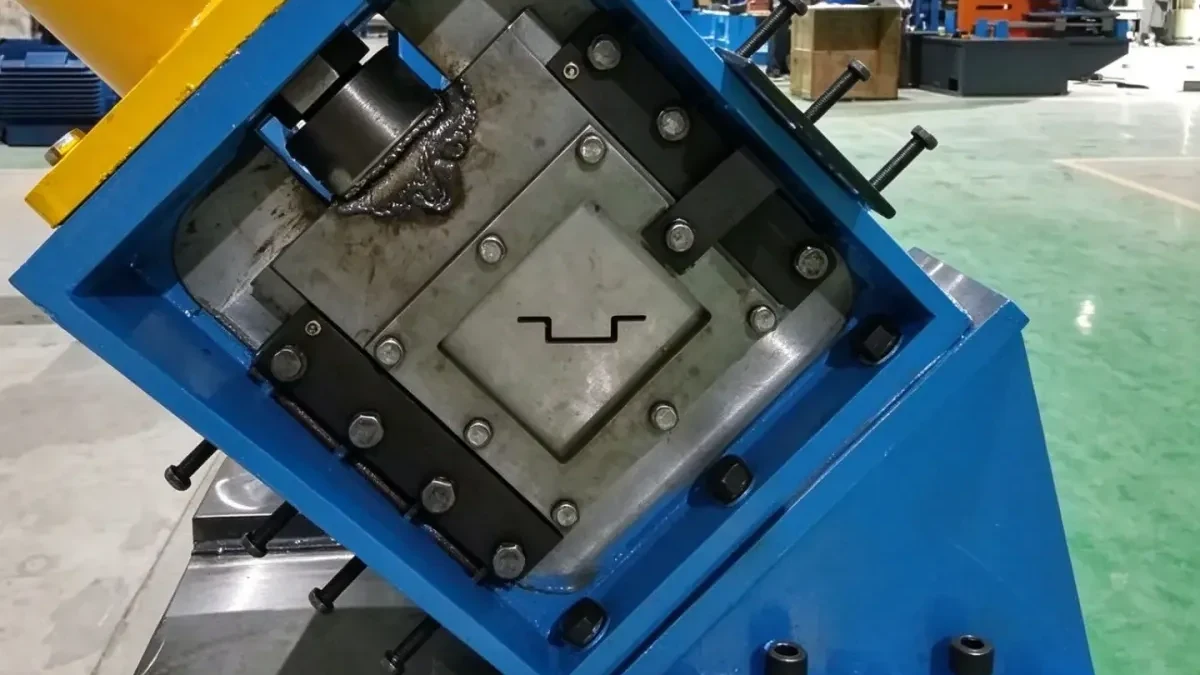
What the Tooling Is Made Of, and Who Makes It
- Forming rolls are bearing steel, finished after quenching.
- Punching dies and cutters are Cr12, quenched.
- The purlin line is an 18-pass roll former with hydraulic punching and cutting, running at up to 20 m/min.
- Forming rolls are machined in house on our own CNC equipment.
What Is Roll Forming Tooling & Die Design
Roll forming tooling is the precision and wear layer of a cold forming line: the forming rolls that bend the strip pass by pass, and the dies and cutters that punch the holes and cut the section to length.
Tooling design comes down to three decisions: the material and heat treatment of each tooling class, the way a size change is handled, and the pass-by-pass roll schedule, which is specific to each section: which stand carries which roll form, and what each stand contributes to the developing section.
For tube mill forming and sizing rolls, see our tube mill rolls & spare parts.
Roll forming machine roller design
Roller design decides whether a line holds the section shape. On our purlin line the rolls are bearing steel, finished after quenching, and the same roll set covers every C and Z size through stepless adjustment. If roll hardness falls short, the corner lines of the section come out poorly and the rolls wear early.
Roll Forming Tooling & Die Design — Method and Measured Values
On the purlin line the configuration is eighteen forming passes with hydraulic punching and cutting, working material of 2 to 4 mm thickness at speeds up to 20 metres per minute; the same machine covers multiple C and Z sizes by stepless adjustment without changing rolls.
Section width is set by hydraulic stepless adjustment, and the hole spacing can be adjusted horizontally from 45 to 650 mm.
Roll forming tooling design
Tooling for the purlin line comes as a set: the forming rolls for 18 passes, plus the punching dies and the cutter, all matched to the C and Z sections the line makes. Because size changes are made by stepless adjustment rather than by changing rolls, one roll set serves the whole size range. One set of dies and cutters ships with the line, and Cr12 dies and cutters can be supplied as they are reground or replaced.
Sources and Standards Referenced in Our Records
Our cold roll forming equipment is CE marked under the EC Machinery Directive 2006/42/EC. The tooling materials, pass count, speeds and adjustment ranges on this page are taken from the technical specification of our C/Z purlin roll forming line.
Step-by-Step Procedure
- Enter the purlin length, the longitudinal hole spacing and the quantity at the control panel.
- Set the section width by hydraulic stepless adjustment; no roll change is needed between sizes.
- Feed the strip, 2–4 mm thick, through the entry guide and levelling unit.
- Form the section through 18 roll passes at up to 20 m/min.
- Punch the holes hydraulically after forming, at the entered spacing.
- Cut each purlin to length hydraulically after forming.
Worked Example — What Is On File and What Is Not
On file for our C/Z purlin line: 18 forming passes; 2–4 mm strip; up to 20 m/min; hole spacing adjustable from 45 to 650 mm; a 30 kW main motor and an 11 kW hydraulic station with accumulator; rolls in bearing steel and dies and cutters in Cr12, all quenched.
Not given as fixed figures: roll life and output per shift. Both depend on the strip grade, thickness and section you run, so we work them out against your drawing when we quote.
How a size change is handled
On the purlin line the same machine produces multiple C and Z sizes through stepless adjustment, and no roll change is needed for a size change within its range.
Where roll material sits among the quality factors
Roll material and heat treatment are among the factors that decide section quality. If they fall short, the section shape drifts, the rolls wear early and the corner lines come out uneven; the control points are the heat treatment of the roll steel and machining on our own CNC equipment.
Consumable dies and cutters
On the purlin line the consumables are the punching dies and the cutter. They are Cr12, quenched, and are reground or replaced according to punching count; one set ships with the line, and replacements can be supplied for as long as the line runs.
Resource Downloads
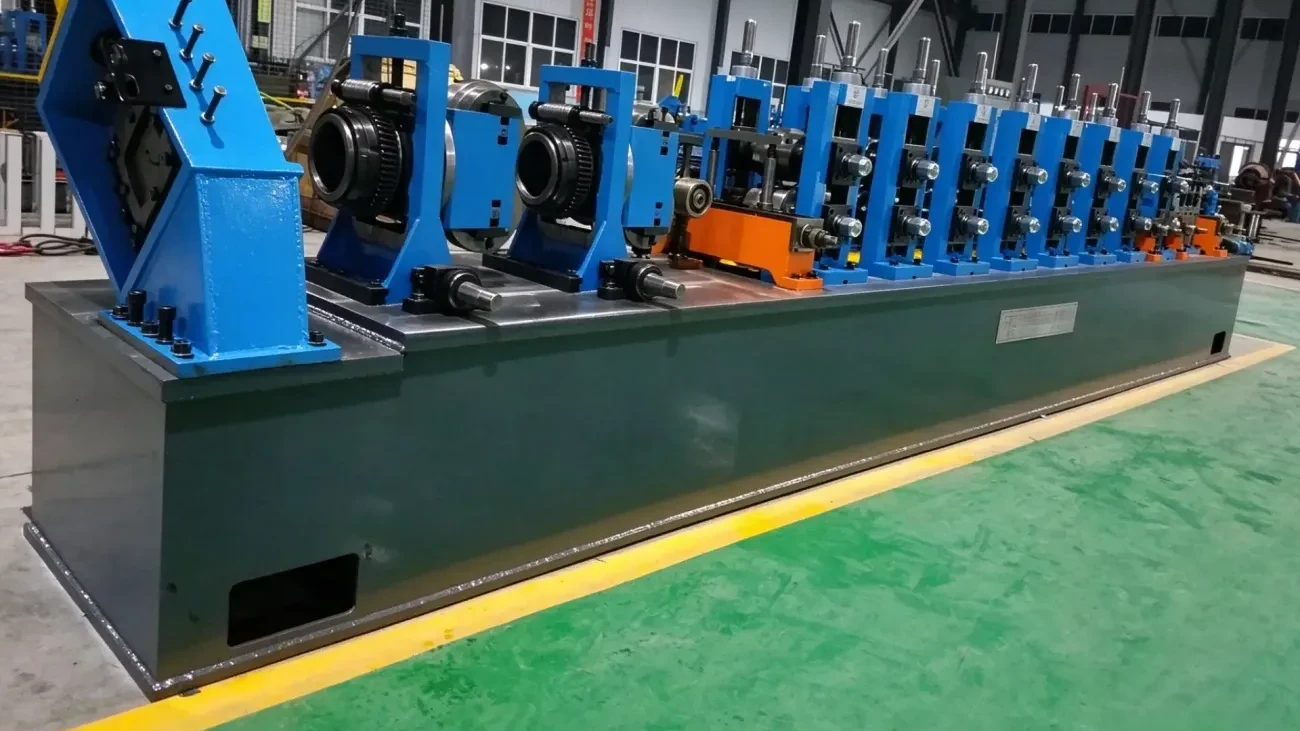 Roll Forming Line for Sale
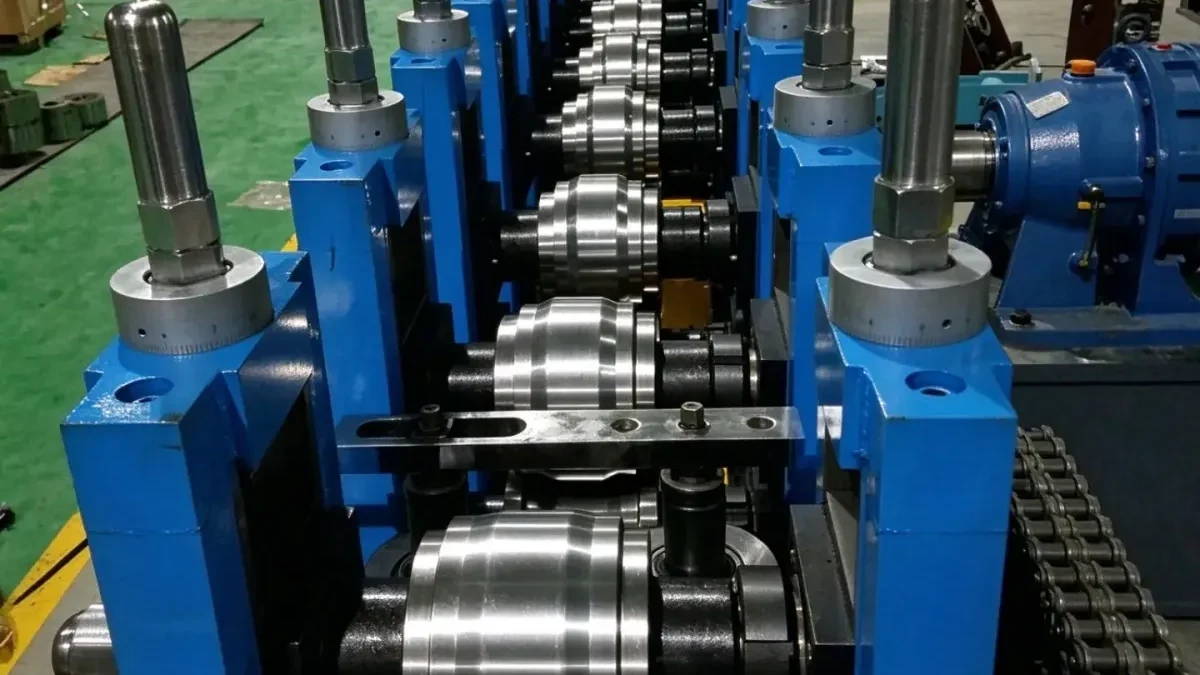 Metal Roll Forming
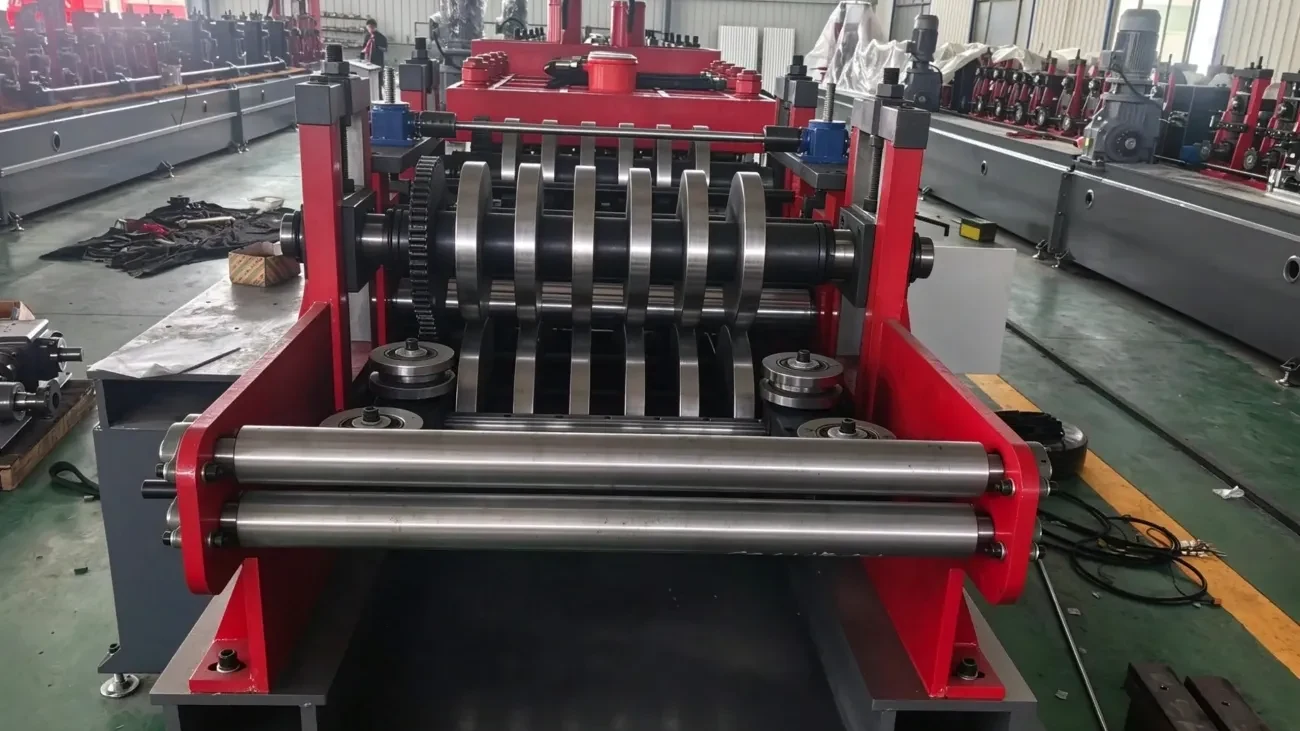 Cold Roll Forming Machine for C, Z and Omega Purlins
 Tube Mill Rolls & Spare Parts
Send Your Enquiry
Tell us the pipe outside-diameter range, the wall thickness and the output you need. An engineer reads every enquiry — it does not land in a general sales inbox.