
Home › Steel Coil Slitting Line › Steel Coil Slitting Machine
A steel coil slitting machine takes a wide hot-rolled coil, uncoils and levels it, slits it lengthwise into narrower strips and recoils them. For cutting coil into flat sheet, see our cut-to-length line.
In This Line
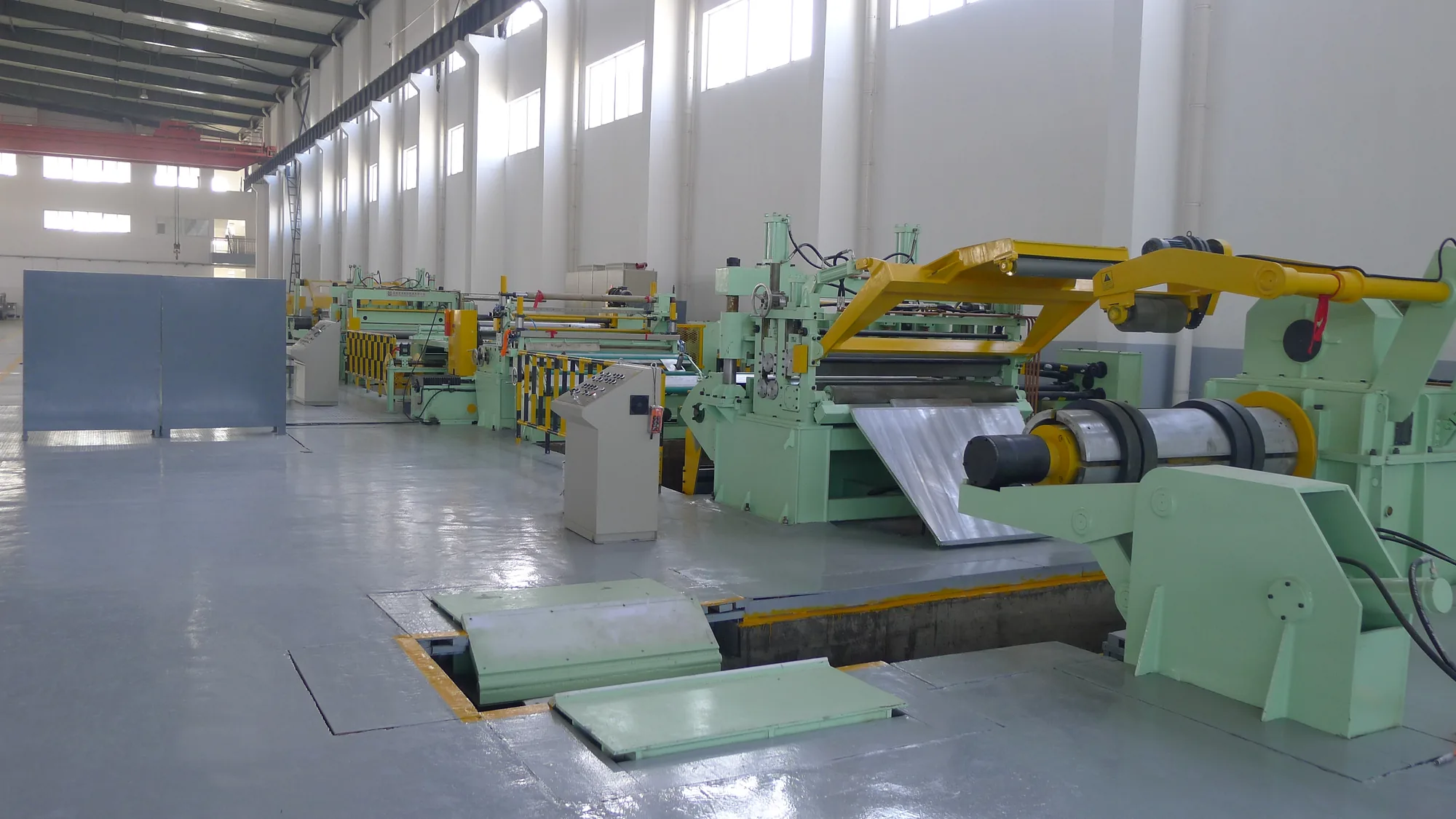
Coil 1–12 mm thick, 800–2000 mm wide, up to 32 tonnes.
Technical Specification Table
| Parameter | Value |
|---|---|
| Model | SL-12×2000 |
| Line type | CNC coil uncoiling, slitting and recoiling line |
| Coil material | Hot-rolled steel coil (yield strength ≤250 MPa, tensile strength ≤480 MPa) |
| Coil thickness | 1–12 mm (levelling and shearing) |
| Coil width | 800–2000 mm |
| Coil inner diameter | Φ610 mm |
| Coil outer diameter | Φ1300–2200 mm |
| Coil weight | max. 32,000 kg |
| Recoil inner diameter | Φ610 mm |
| Recoil outer diameter | Φ1300–2200 mm |
| Recoil weight | max. 32,000 kg |
| Number of strips | up to 15 at 2 mm, 10 at 4 mm, 6 at 6 mm, 4 at 8 mm |
| Minimum strip width | 80 mm |
| Slit width accuracy | ±0.2 mm |
| Camber | ≤0.5 mm per 1000 mm (coil width ≥200 mm) |
| Burr | ≤4% of material thickness |
| Scrap edge width | 5–15 mm |
| Telescoping on the recoil | within ±10 mm |
| Line speed | 30/100 m/min |
| Main units | Double-head uncoiler, slitter and 32 t recoiler with separator |
| Secondary units | Pre-leveller (2+5 rolls), hydraulic shear, scrap winder, looper, separating unit, tension and feeding unit |
| Slitting tooling | Slitting knives, spacer bushings, rubber sleeves and separator discs; knife set configured for each strip thickness |
Four of these figures are what the next line depends on: slit width sets the strip a tube mill forms, burr the edge it welds, camber how straight the strip tracks, and telescoping whether the recoiled coil can be loaded at all.
Line Configuration and Scope of Supply
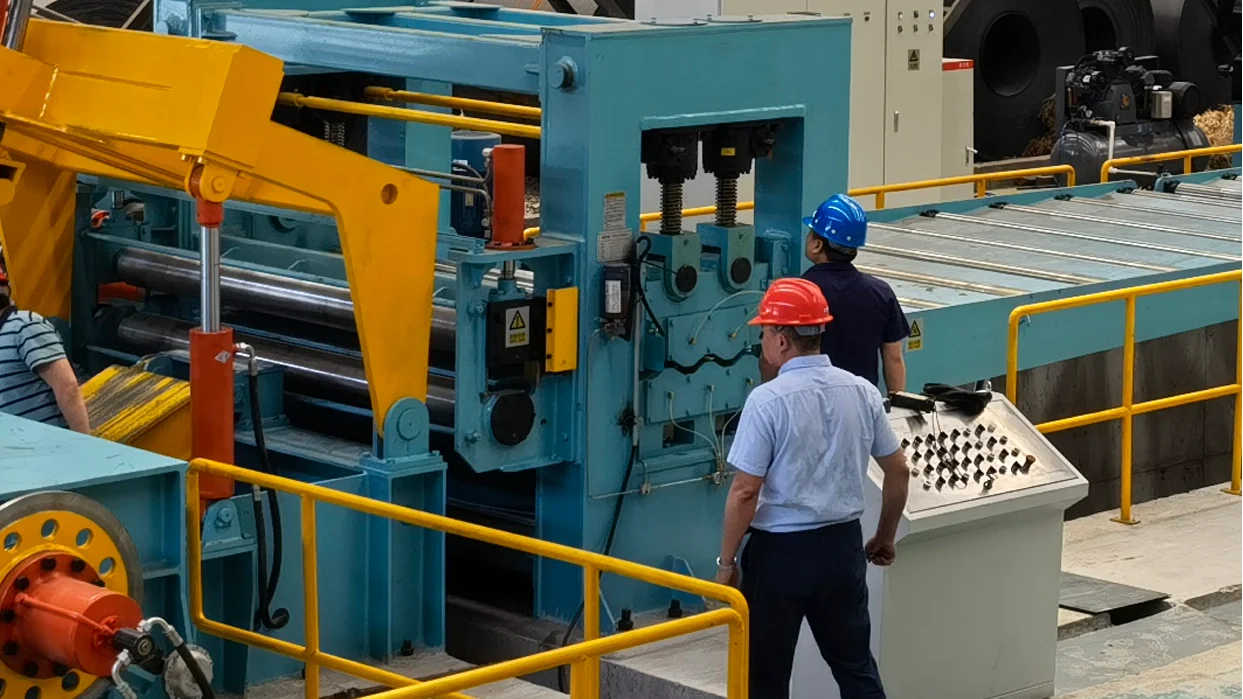
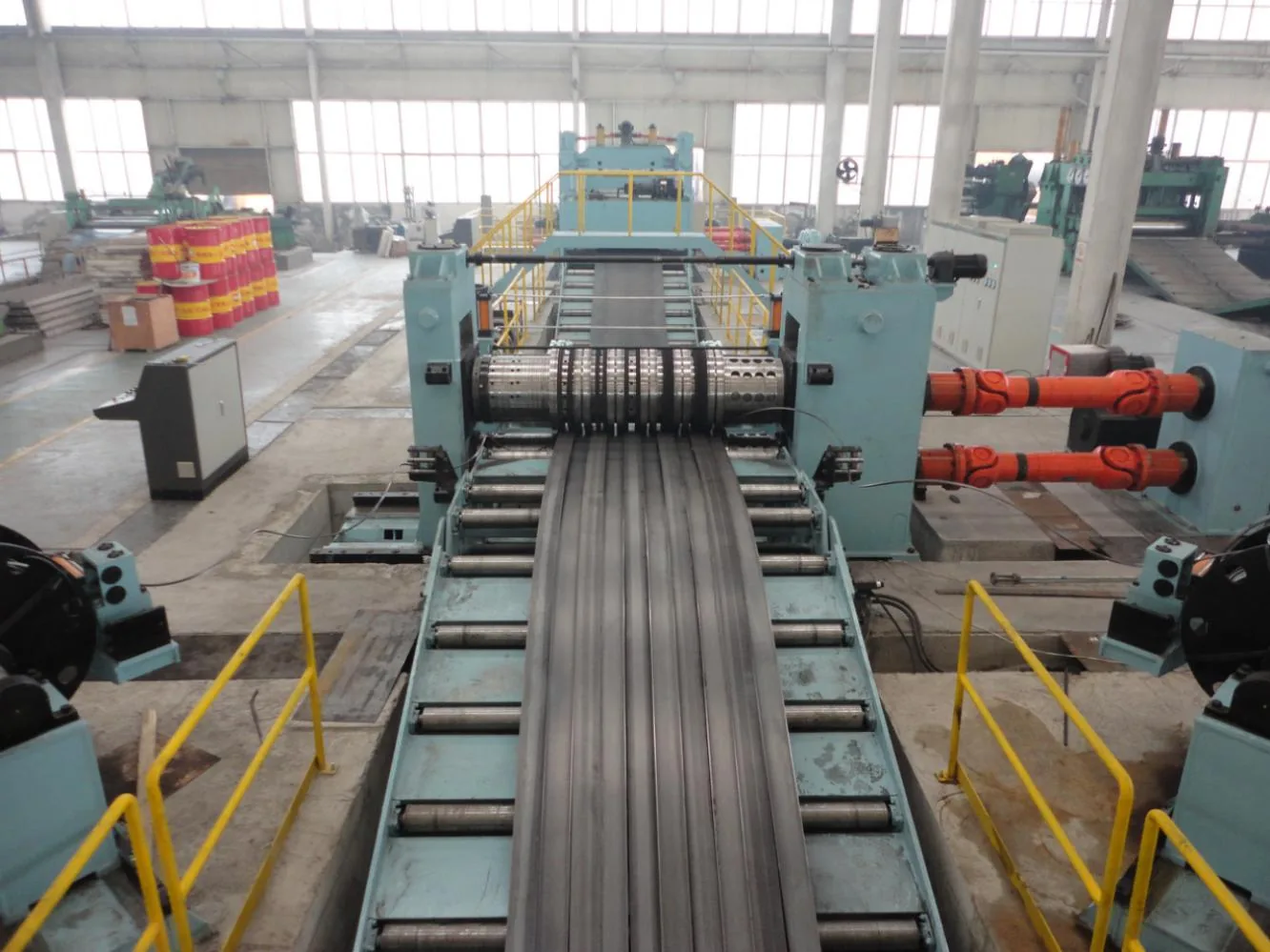
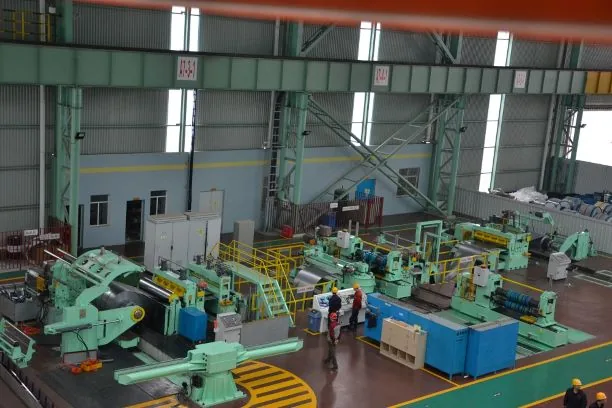
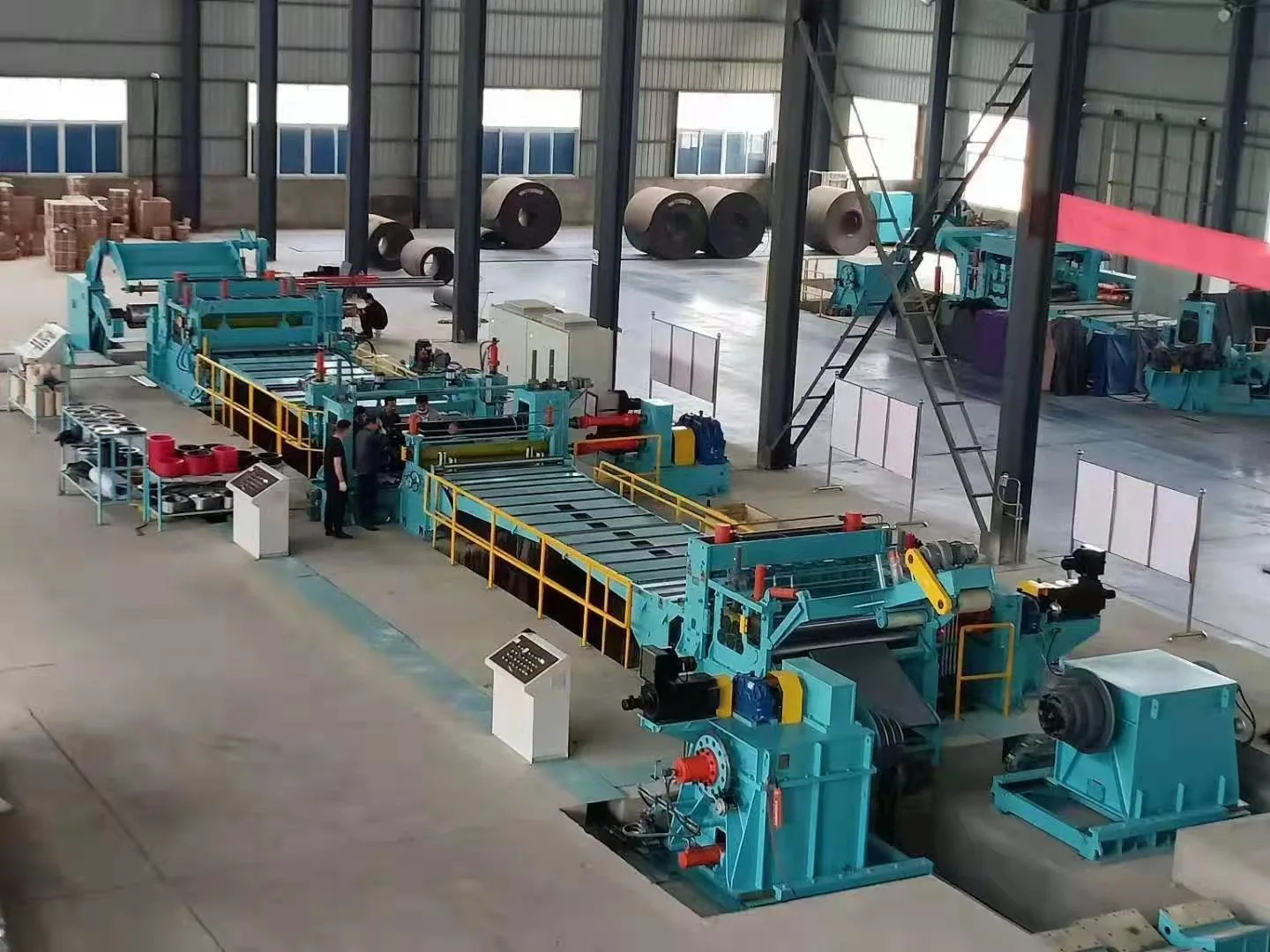
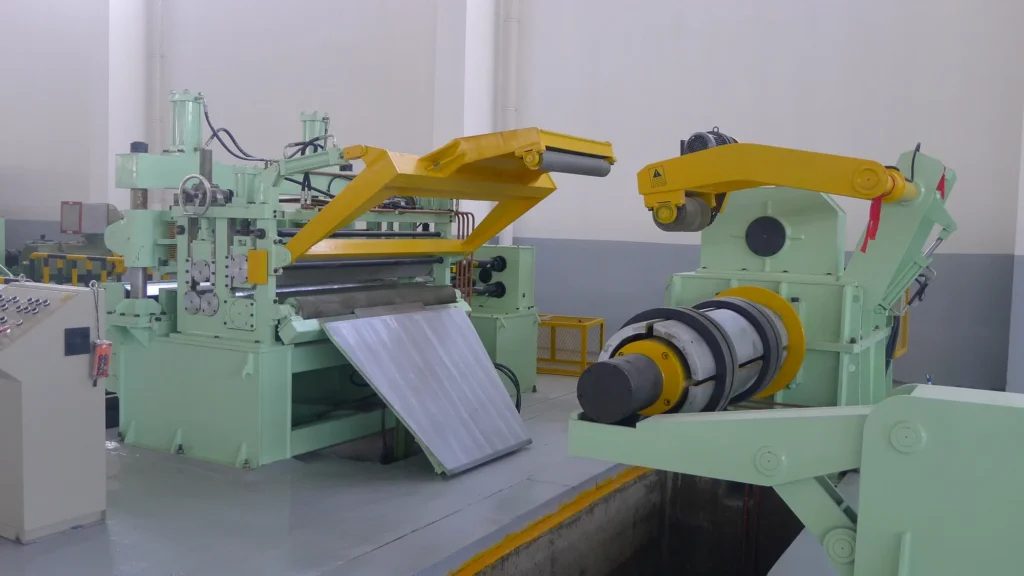
Main units. A double-head uncoiler, the slitter and a 32-tonne recoiler. The line runs in a fixed sequence: coil loading → uncoiling → levelling → hydraulic shear → slitting → scrap-edge winding → looper → separation → tensioning → recoiling.
Secondary units. A hydraulic shear, a looper for accumulation and a tension-separation unit. Tension and looper control are what hold camber and telescoping.
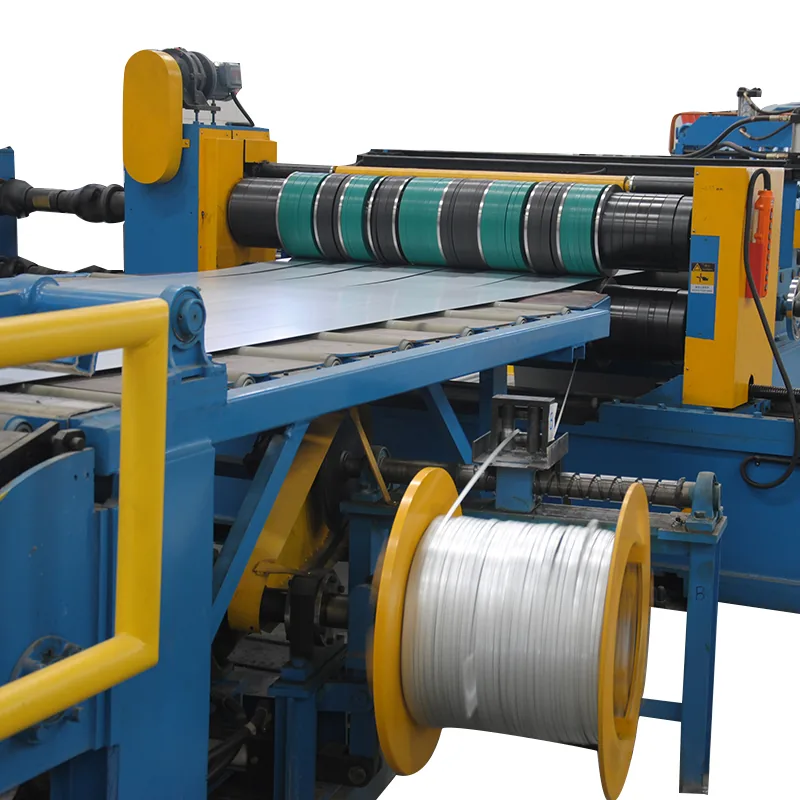
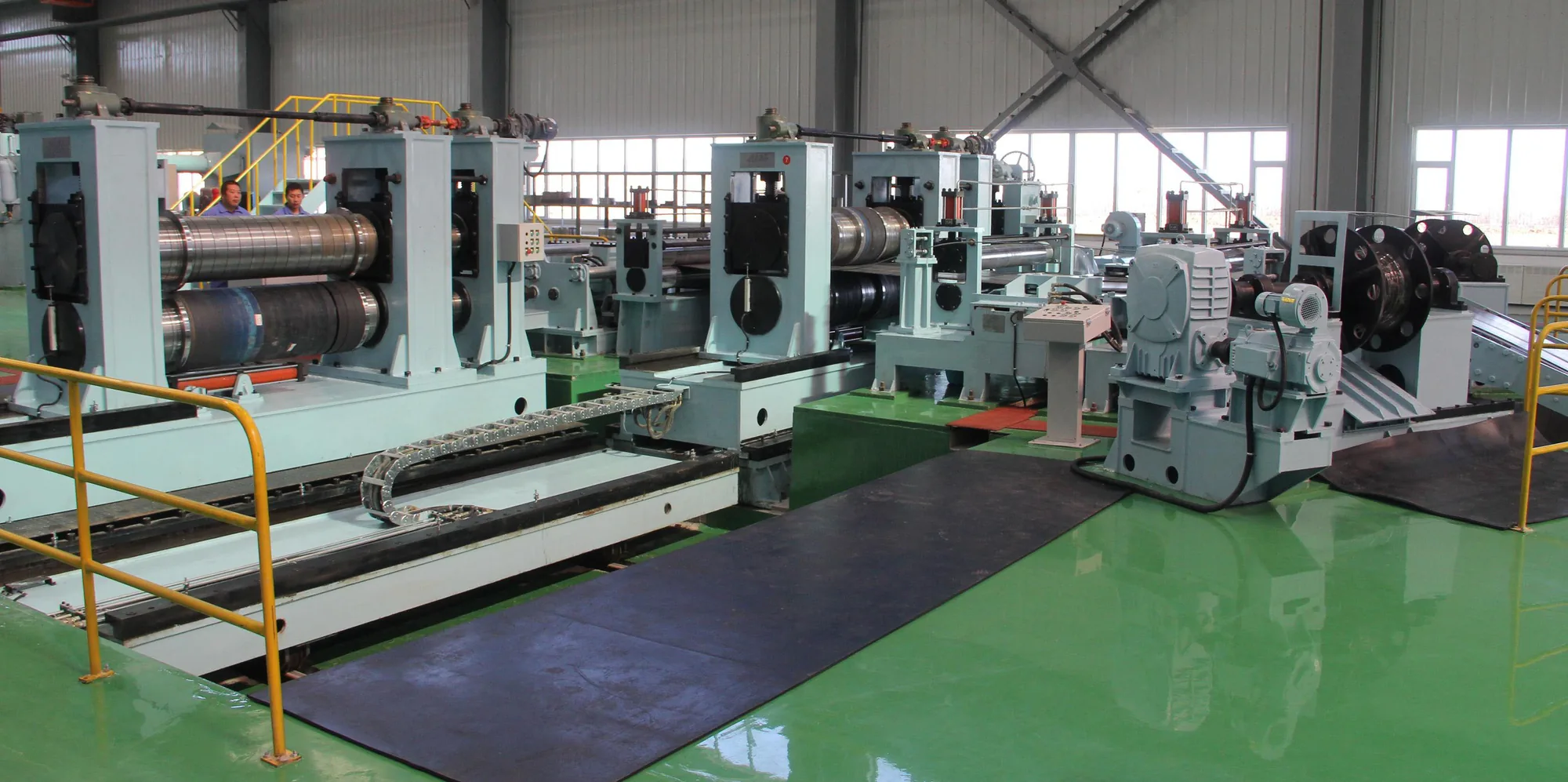
Slitting tooling. Circular knives, spacers, rubber sleeves and separator discs. This assembly is where slit width accuracy, burr and edge quality are actually decided — the machine frame holds it, but the tooling set does the work.
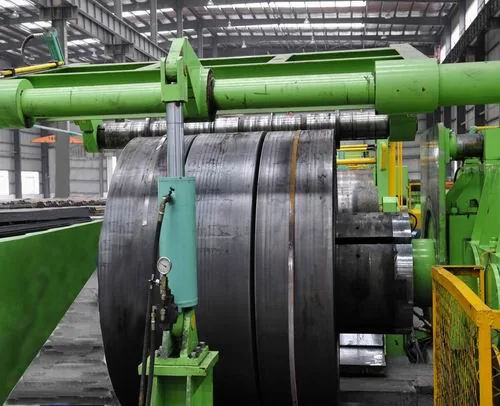
Coil loading and uncoiling set the coil on centre and under tension; a coil that is off-centre or slack arrives at the knives already displaced. Levelling takes residual curvature out of the strip before it is cut — cut a bowed strip and every slit inherits the bow. The hydraulic shear trims the head and tail so the line starts on clean material rather than on the deformed end of a coil.
Slitting itself is the moment the four tolerances are set, and it is over in an instant — after the knives there is nothing that can put width or burr back. Scrap-edge winding takes the trimmed edges away continuously; without it the line stops to clear them.
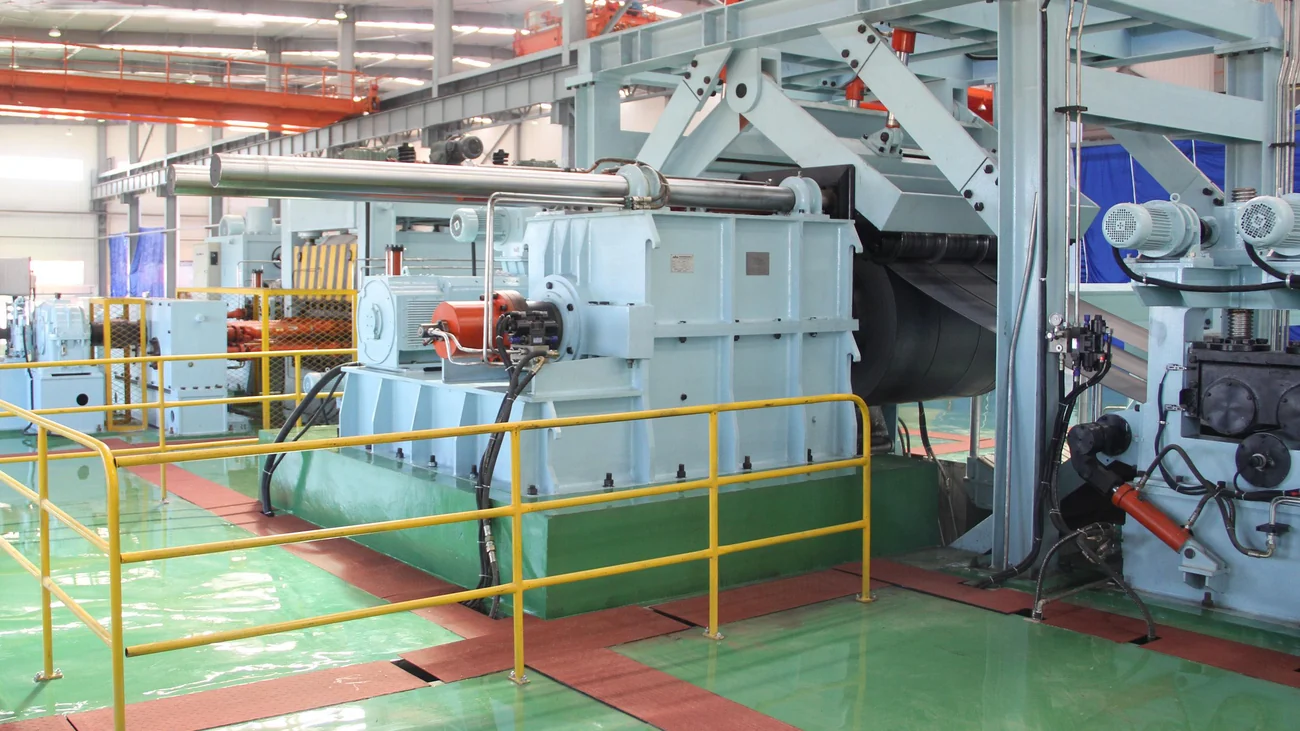
In the last four stations, the looper accumulates strip so that speed differences between slitting and recoiling do not translate into tension spikes. Separation keeps the slit strips apart so they do not cross or scuff. Tensioning holds each strip at an even pull.
Recoiling winds them into coils that have to be handled, transported and mounted on somebody else’s uncoiler — which is why telescoping within ±10 mm is a delivery specification and not a cosmetic one.
Scope of supply is quoted either as a complete line or as individual machines and units, and the automation level can be selected.
Coil slitting machine line
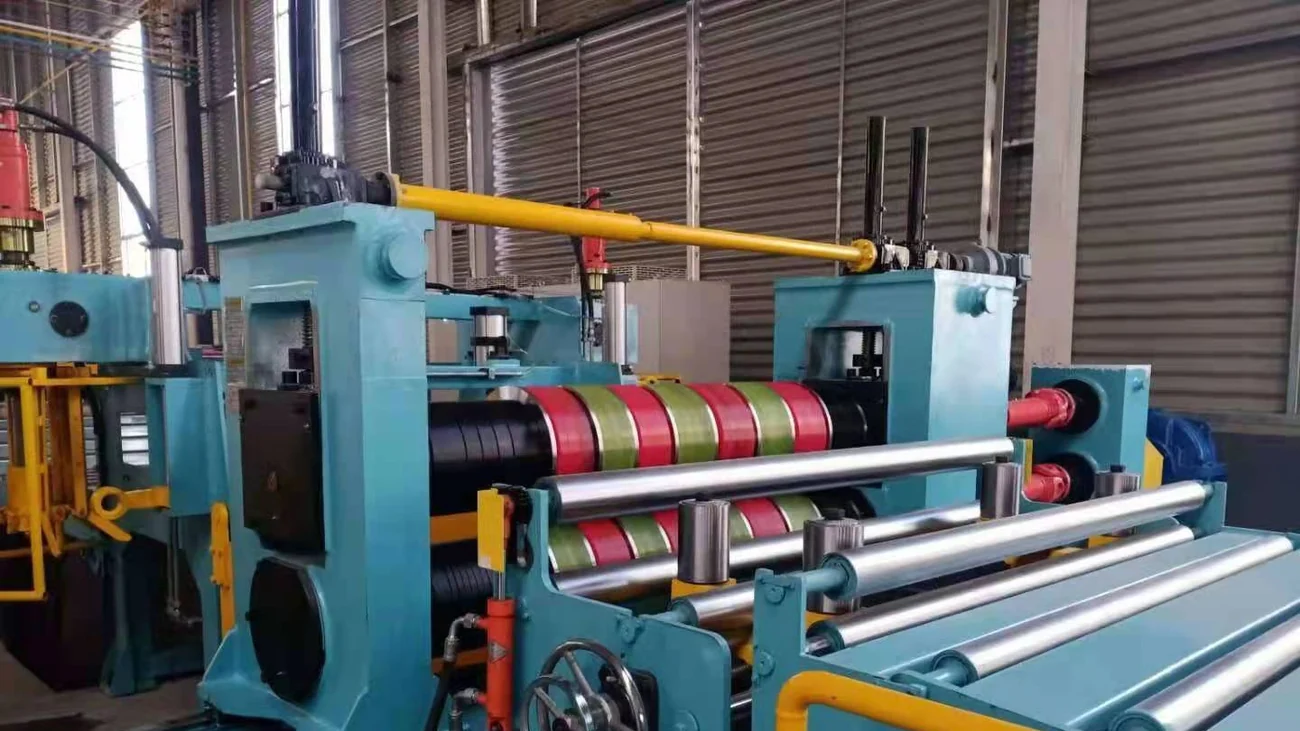
The SL-12×2000 is supplied as a complete coil slitting machine line rather than a stand-alone coil slitter: coil saddle and loading car, double-head uncoiler, gantry feeding unit, pre-leveller with 2+5 rolls, hydraulic shear with scrap car, roller table, hydraulic side guide, slitter, scrap winder, looper, separating unit, tension and feeding unit, recoiler with separator, and unloading car, with its own hydraulic, pneumatic and electrical control systems and protective guarding.
Size Change and Running Cost
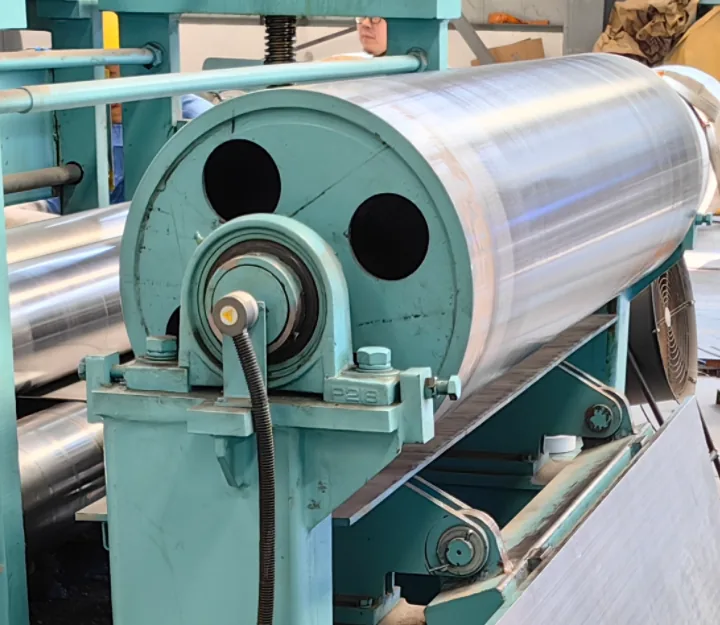
Changeover on this line is a knife-set change, driven by strip thickness. Knives, spacers and separator discs are configured for each thickness; a wrong configuration or worn tooling shows up as out-of-tolerance width, heavy burr and camber at once. Knife change time and running cost are covered on our slitting line running cost page.
Width and burr are governed by the knife set and its clearance for each thickness; camber and telescoping by tension, looper and recoil control. The tolerances are covered in detail on our slitting precision page.
Wear Parts and Consumables
The wear parts of this line are its slitting knives, spacer bushings, rubber sleeves and separator discs, and a set is supplied with the line. Circular knives wear with cutting volume and raise burr as they blunt; spacers and rubber sleeves set strip width and wear as well, so a wrong configuration does as much damage as wear; separator discs keep the slit strips apart before recoiling. All of them can be resupplied.
Applications and Output Examples
This machine prepares strip for the lines downstream. Steel-processing and pipe-making plants use it to slit wide hot-rolled coil to the widths their tube mills and roll forming lines run. For a tube mill, slit width sets the strip it forms, which is why the ±0.2 mm width tolerance matters; for a roll forming line making open sections, camber within 0.5 mm per 1000 mm keeps the strip tracking straight. As coil slitting equipment, the SL-12×2000 runs at a rated line speed of 30/100 m/min and cuts up to 15 strips from a 2 mm coil, 10 from 4 mm, 6 from 6 mm and 4 from 8 mm.
Delivery, Installation and Training
Standard lines ship within 90 working days of the deposit, with plant-level customisation scheduled from our own manufacturing base.
The line is dismantled into units and shipped in containers: heavy frames are braced and secured, while precision parts and wear items travel in wooden cases together with a spare-parts pack.
Our engineers travel to site to guide installation, commissioning and operator training; the buyer provides the installation crew and covers the engineers’ travel, lodging and daily allowance, and support continues online after handover. Training matters on this line because setting the knife set for each thickness is an operator’s job, and it has more effect on width accuracy and burr than anything else.
Payment is 30% by T/T on signing, 65% by T/T before shipment and 5% after installation and commissioning, or by L/C at sight; prices are quoted ex-works (EXW).
Our slitting lines are CE marked under the EC Machinery Directive 2006/42/EC. Our after-sales team handles enquiries, and distributors can also see our wholesale coil slitting machines page.
Watch This Line Running
Coil Slitting Line — ±0.2 mm Width, Camber ≤0.5 mm/1000 mm
From the Workshop
 Slitting vs Cut-to-Length
 Slitting Precision
 Slitting Line Running Cost
 Steel Coil Slitting Line
Send Your Enquiry
Tell us the pipe outside-diameter range, the wall thickness and the output you need. An engineer reads every enquiry — it does not land in a general sales inbox.