
Home › Steel Coil Slitting Line › Slitting vs Cut-to-Length
Two coil lines, two different products.
In This Line
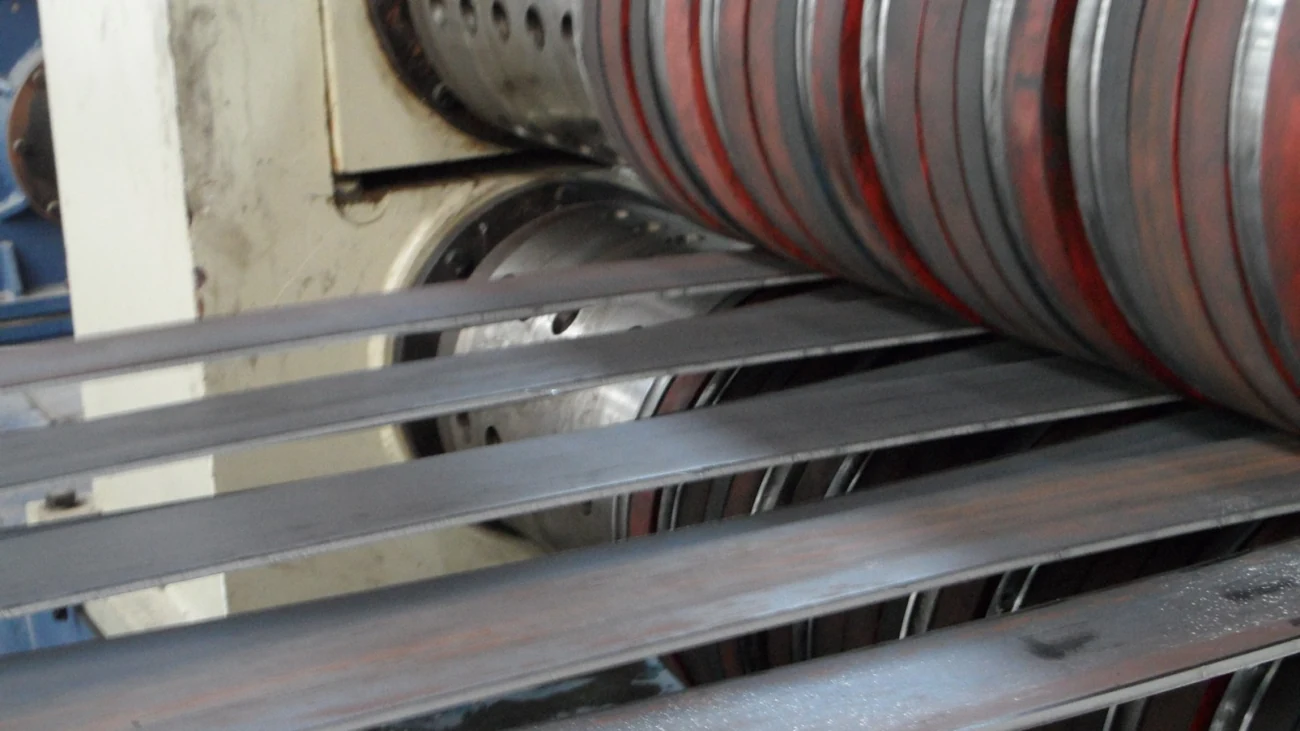
A slitting line cuts a wide coil lengthwise into narrow strip and recoils it; a cut-to-length line cuts it crosswise into flat sheet. They are two different lines, and the choice follows what your next line takes in.
What Is Slitting vs Cut-to-Length
Slitting and cut-to-length are two different coil processing lines. In the steel slitting process, a wide coil is uncoiled, levelled, cut lengthwise into narrower strips and recoiled, so what comes out is still coil. A cut-to-length line also uncoils and levels the coil, but cuts it crosswise into flat sheets of a set length, so what comes out is sheet.
That difference decides the choice. A tube mill or a roll forming line runs coil, so it is fed by a slitting line; a press shop or a fabrication shop that works from flat sheet is fed by a cut-to-length line. Our cut-to-length line has its own page.
Cut to length and slitting machine
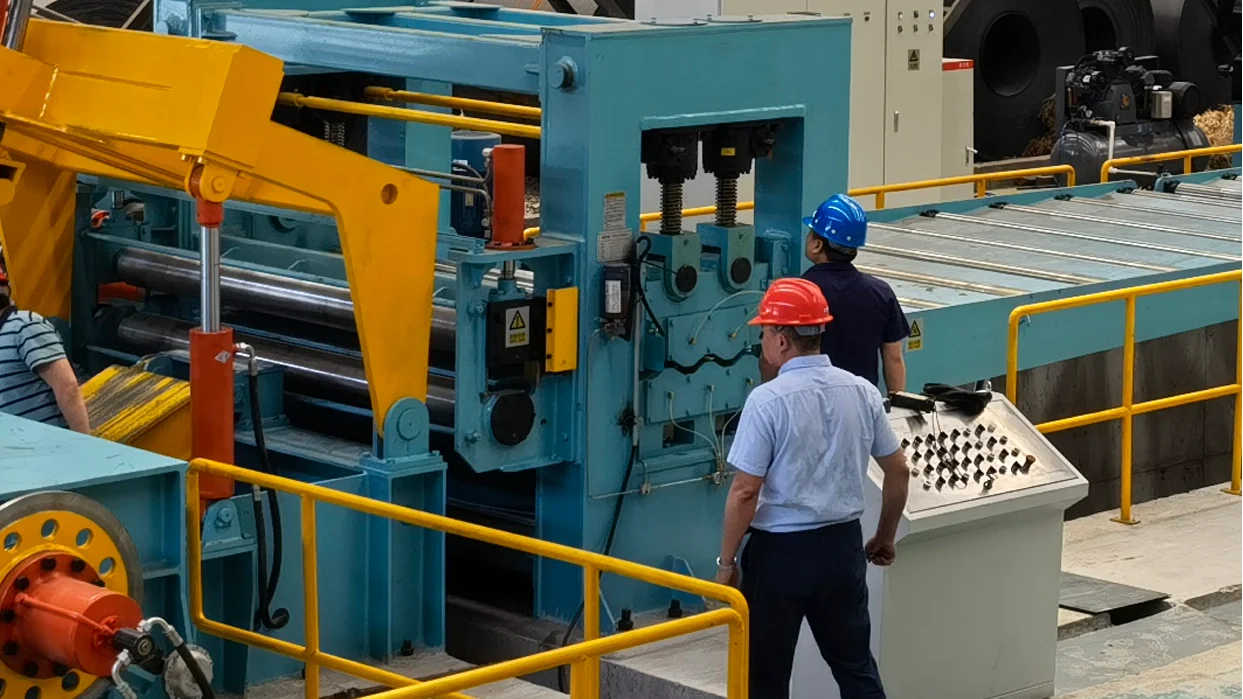
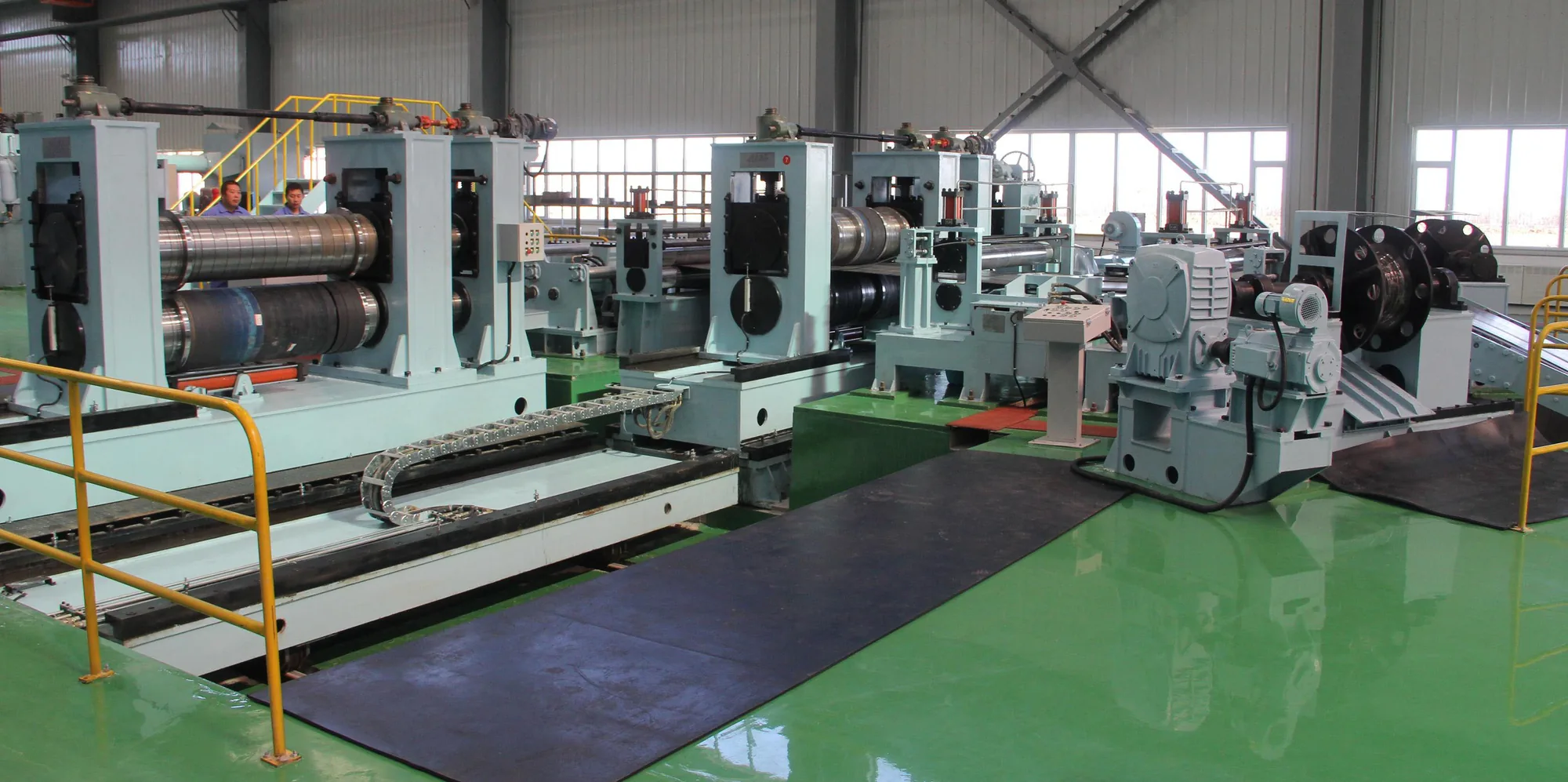
A cut to length and slitting machine is, in practice, two machines on two lines: a slitter that divides the coil into strips, and a cross-cut shear that cuts it into sheets. Our slitting line, the SL-12×2000, is a CNC uncoiling, slitting and recoiling line for hot-rolled coil 1–12 mm thick and 800–2000 mm wide, up to 32 tonnes; its full specification is on the coil slitting machine page. No fixed figures are given for the cut-to-length line; thickness range, length accuracy and stacking are confirmed per project.
Slitting vs Cut-to-Length Explained
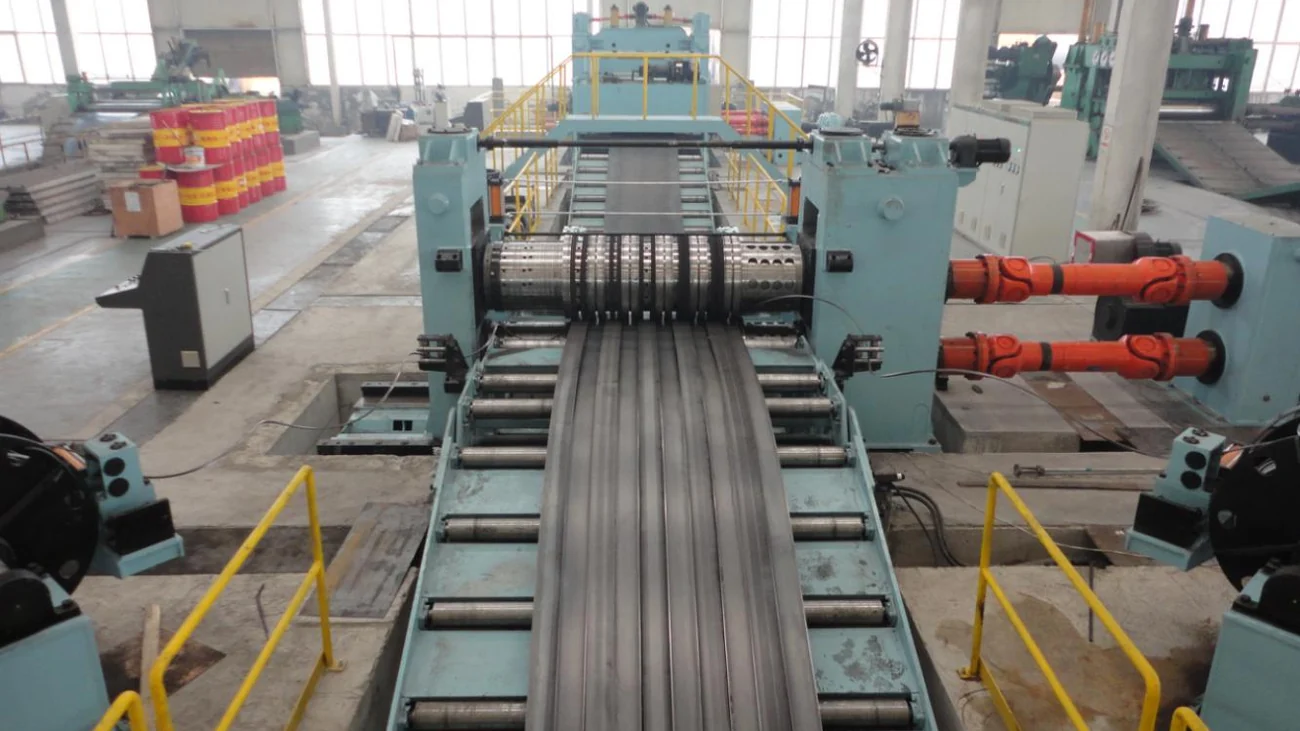
In the steel coil slitting process on our SL-12×2000, the coil runs one way, from coil to coil: loading car, double-head uncoiler, pre-leveller, hydraulic shear, side guide, slitter, scrap winder, looper, separating and tension unit, recoiler and unloading car. There is no cross-cut station on this line. Strip width is held to ±0.2 mm; how each tolerance is held is explained on the slitting precision page.
A cut-to-length line shares the front end, uncoiling and levelling, then cuts the strip across into sheets of a set length and stacks them. No fixed figures are given here for its length accuracy, cutting speed or stacking.
Slitting and cut to length line
Some plants need both strip and sheet from the same coil supply and ask for a slitting and cut to length line. That means two lines in one project: the slitting line is specified from the figures above, and the cut-to-length line is specified separately for your sheet length, thickness and stacking. Knife change and set-up on the slitting side are covered on the slitting line running cost page.
Side-by-Side Comparison Table
The slitting column comes from the specification of our SL-12×2000 slitting line. The cut-to-length column carries no fixed figures; they are confirmed per project.
| Slitting line | Cut-to-length line | |
|---|---|---|
| What it does | Cuts the coil lengthwise into narrower strips and recoils them | Cuts the coil crosswise into flat sheets of a set length |
| What comes out | Narrow coil (strip) | Flat sheet |
| Usually feeds | Tube mills and roll forming lines | Press shops and fabrication shops |
| Material | Hot-rolled steel coil, yield strength up to 250 MPa, tensile strength up to 480 MPa | No fixed figure |
| Coil thickness | 1–12 mm | No fixed figure |
| Coil width | 800–2000 mm | No fixed figure |
| Coil weight | Up to 32 tonnes | No fixed figure |
| Strips per pass | Up to 15 at 2 mm, 10 at 4 mm, 6 at 6 mm, 4 at 8 mm; minimum strip width 80 mm | Not applicable |
| Key accuracy | Strip width ±0.2 mm | Length accuracy: no fixed figure |
| More detail | Steel coil slitting machine; slitting precision | Cut-to-length line |
How to Decide: Downstream Product, Application and Volume
- What does the next line take in? Coil for a tube mill or a roll forming line means a slitting line. Flat sheet at a set length for a press or a fabrication shop means a cut-to-length line.
- Does your coil fit? Our slitting line takes hot-rolled coil 1–12 mm thick, 800–2000 mm wide and up to 32 tonnes. No extended range is specified.
- How many strips, and how much? Strip count depends on thickness, from up to 15 strips at 2 mm to up to 4 at 8 mm. Output per shift is not a fixed figure; it depends on your strip mix and is worked out per project.
Frequently Asked Questions
In practice, how do slitting and cut-to-length differ? In the direction of the cut and in what comes out. A slitting line cuts the coil lengthwise and recoils narrow strip; a cut-to-length line cuts it crosswise and stacks flat sheet. They are separate lines.
Which line suits my coil and what I make? There is no pipe diameter to choose by here; both lines process coil. Choose by product: strip for a tube mill or a forming line means slitting, sheet at a set length means cut-to-length. Our slitting line takes coil 1–12 mm thick, 800–2000 mm wide and up to 32 tonnes; for cut-to-length there are no fixed figures and the range is confirmed per project.
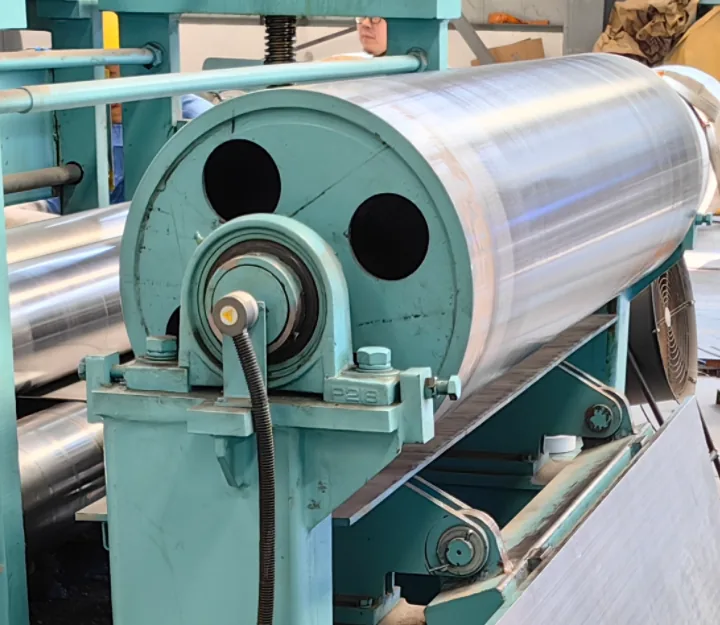
How do the running costs of the two compare? There are no fixed cost figures for either line, so there is no like-for-like comparison to give. On the slitting side, the wear parts are the knives, spacers, rubber sleeves and separation discs; knife change and set-up are covered on the slitting line running cost page.
Which standards apply to slit coil and to cut sheet? Our slitting lines are CE marked under the EC Machinery Directive 2006/42/EC. No product standard is tied to slit strip or cut sheet in our records; the standard follows your steel grade and end product.
Which line ships and gets commissioned faster? There is no difference to state between the two. Standard lines ship within 90 working days of the deposit, and commissioning time is confirmed per project.
Can one supplier give me both lines? Yes. Slitting and cut-to-length lines are one of our product groups, so both can be quoted in one project. See our cut-to-length line page for the second line, and our wholesale coil slitting machines page if you buy for resale.
 Slitting Precision
 Slitting Line Running Cost
 Steel Coil Slitting Machine
 Steel Coil Slitting Line
Send Your Enquiry
Tell us the pipe outside-diameter range, the wall thickness and the output you need. An engineer reads every enquiry — it does not land in a general sales inbox.