
In This Line
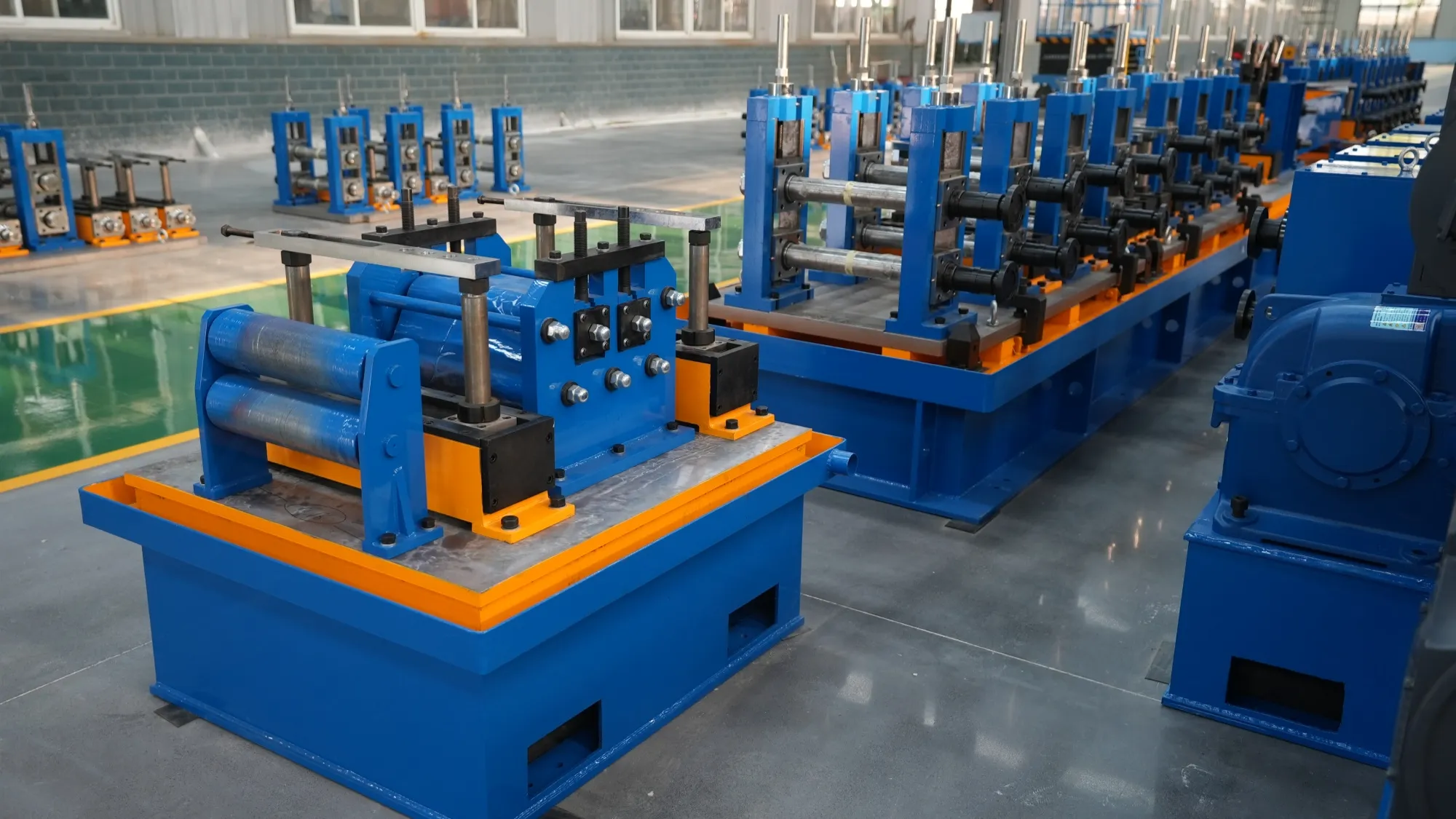
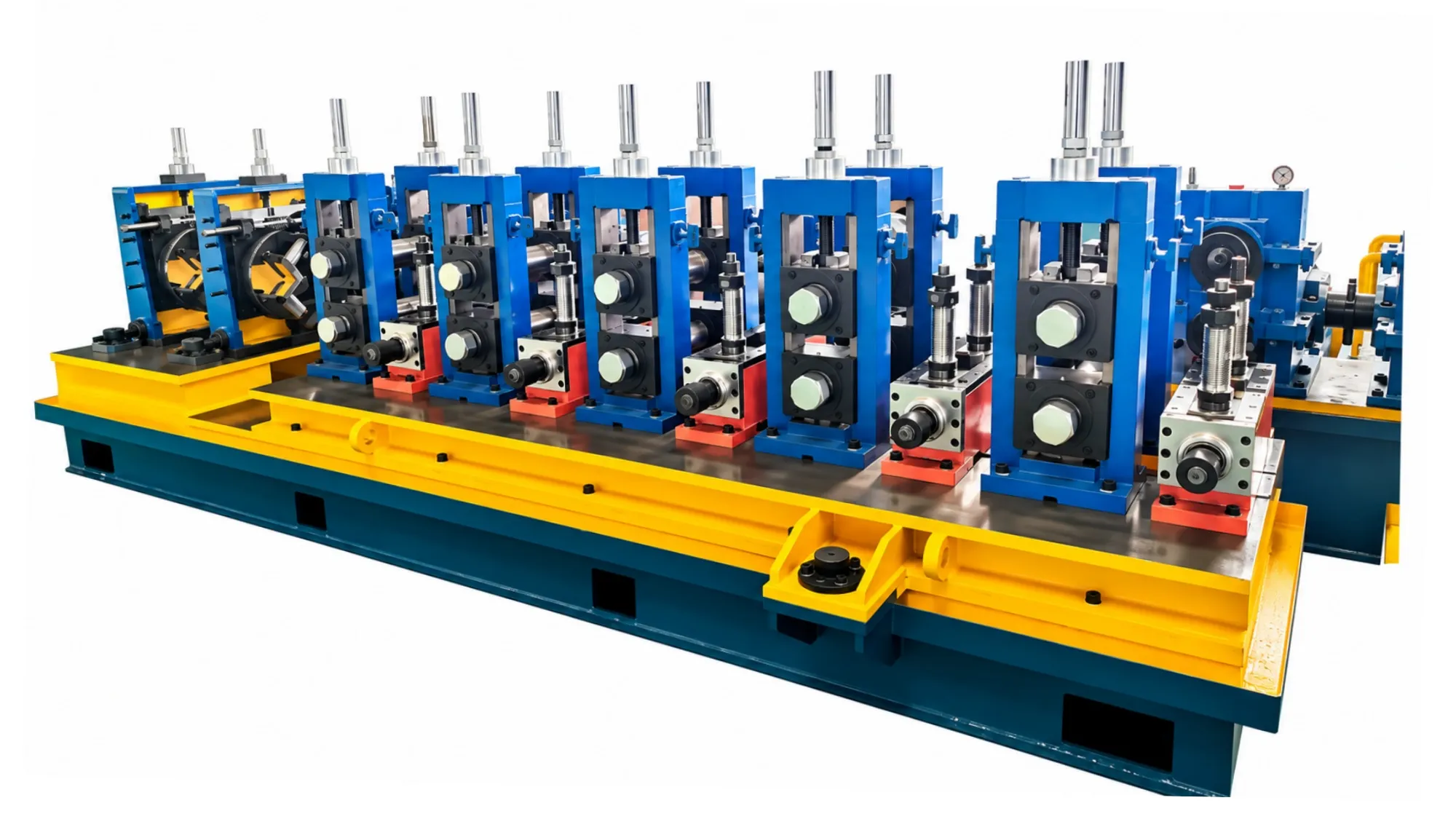
In the cold forming steel process, roll-change cost is best shown as a comparison: the direct-forming square route saves more than ninety per cent of roll consumption because a size change needs no roll change.
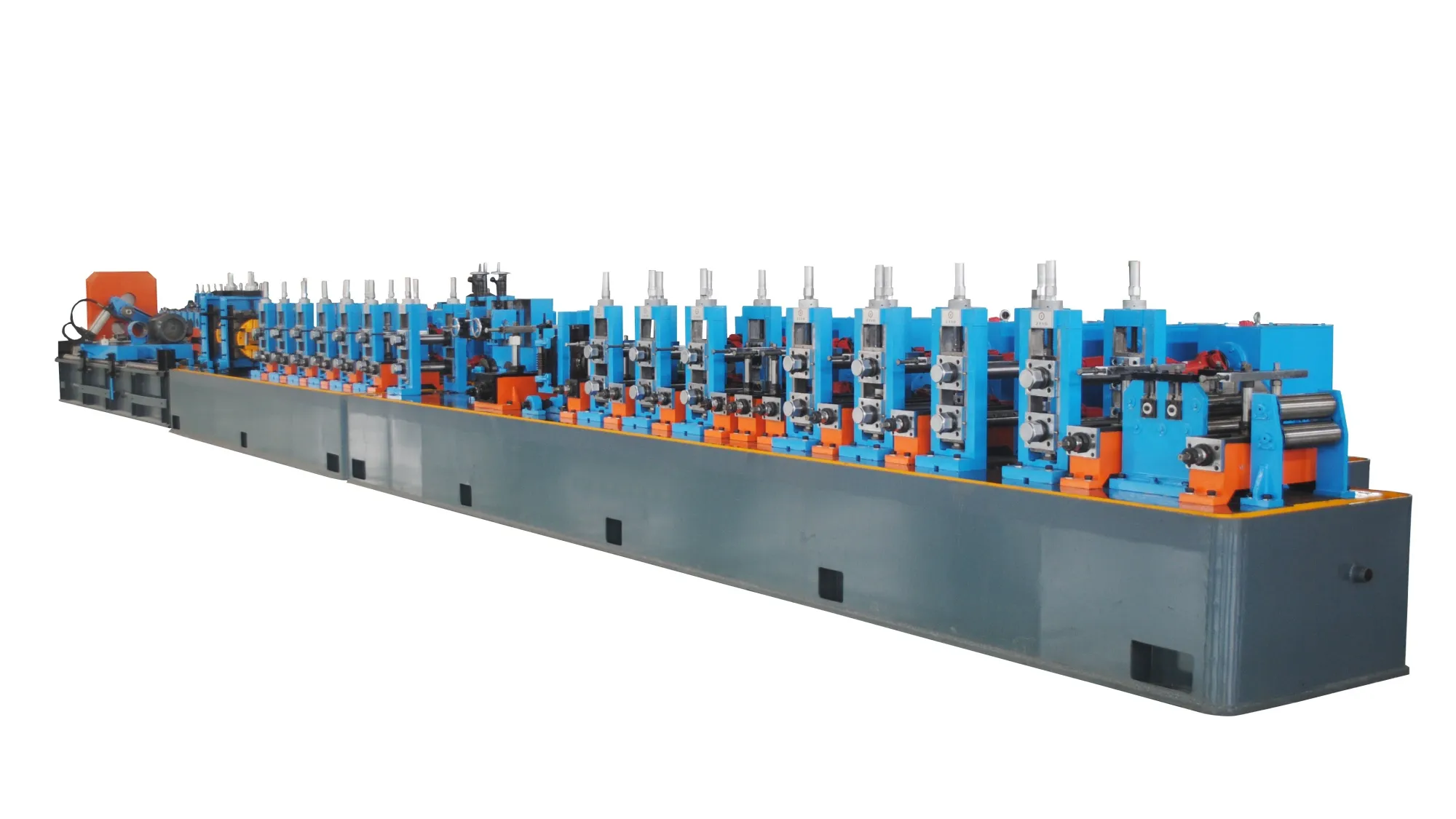
What Sets Yield, and What a Size Change Costs
- Material yield can reach 93% or more on some high-end lines.
- Actual yield also depends on the buyer’s operation.
- Direct forming square saves more than ninety per cent of roll consumption — no roll change on a size change.
- A conventional line changes rolls for a size change; direct forming adjusts servos instead.
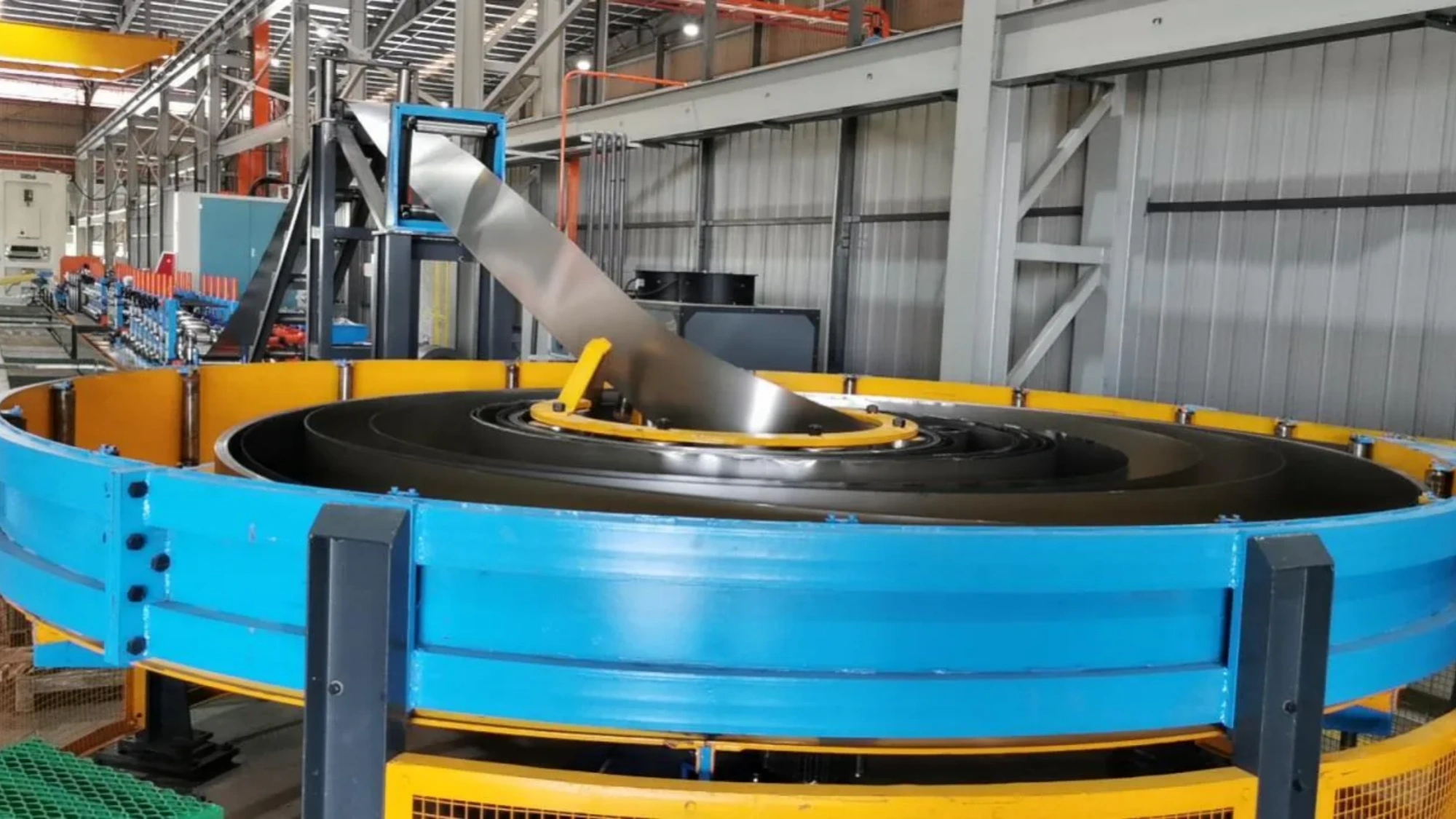
- A spiral accumulator keeps the mill running through a coil change.
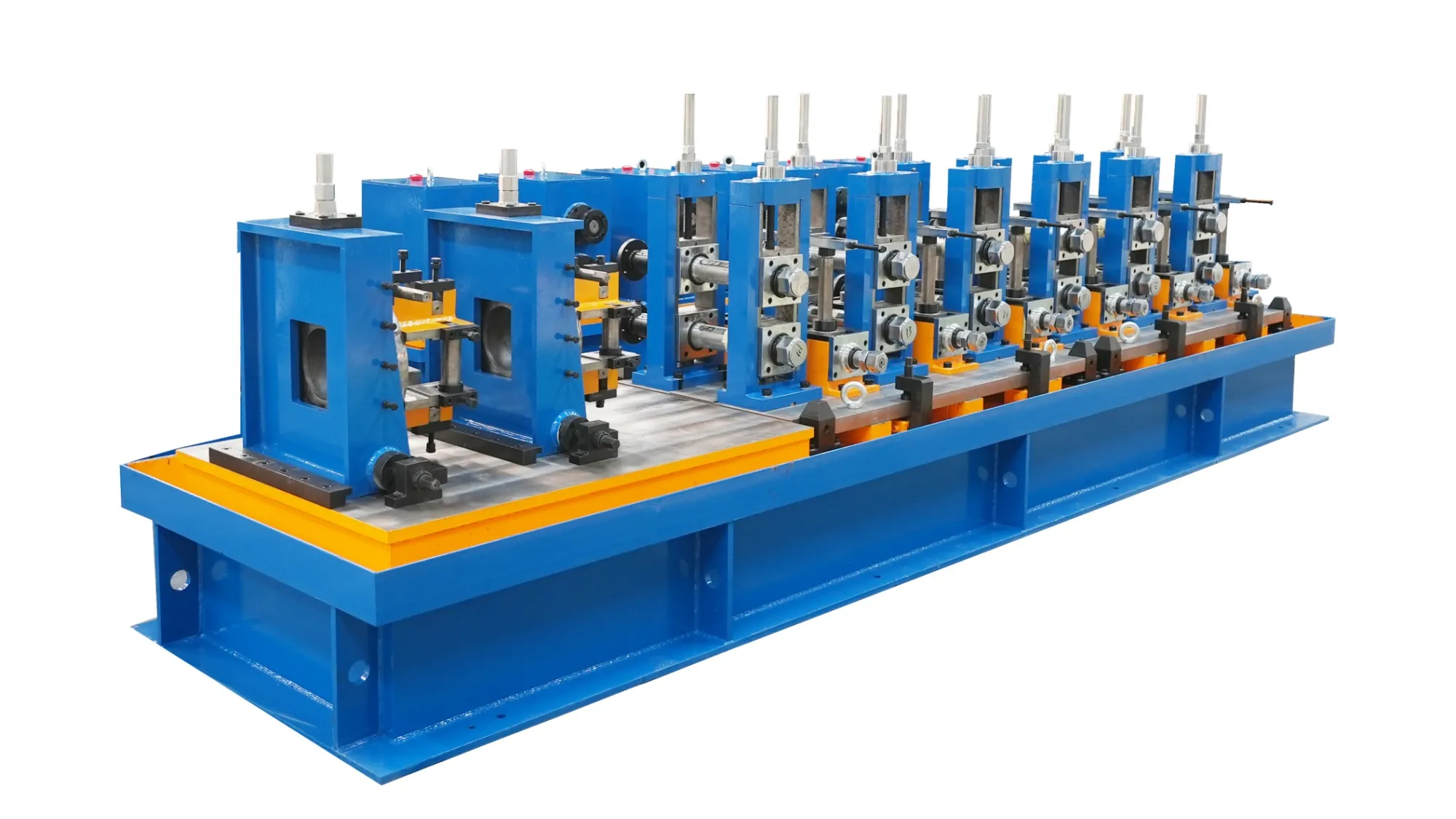
What Is Tube Mill Output, Material Yield & Roll-Change Cost
Three numbers decide whether a tube mill pays for itself, and buyers usually ask for them together: how much pipe comes off the line in a shift, how much of the incoming coil ends up as saleable pipe, and what it costs in tooling and downtime every time the size changes.
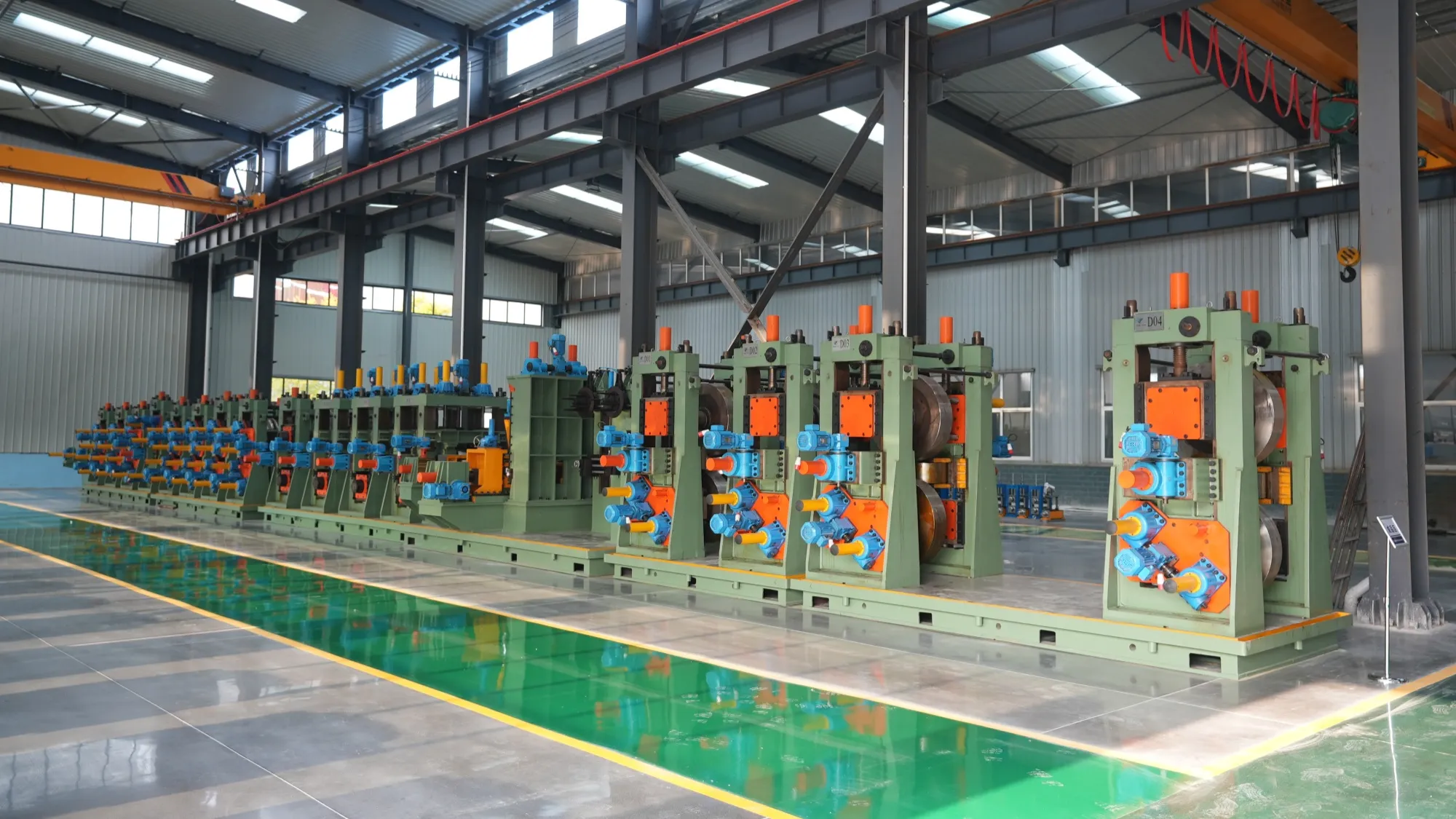
Tube mill output
Wall thickness, line speed and shift output are confirmed against your pipe size, material grade and cut length at quotation. Send us those three and we will state the figures.
What matters most for output is keeping the line running. Plants building or expanding cold forming tube capacity look for production that does not stop, one line covering several sizes, stable yield and weld quality, and quick size changes.
The specific device that delivers the first of those is the spiral accumulator, which stores strip between the shear-welder and the mill so that the mill keeps forming while the next coil is prepared and joined.
The failure mode for that buffer is worth knowing when comparing lines: if accumulator storage or tension control is poor, the mill starves or judders, and the consequence is weld-seam fluctuation and downtime.
On the equipment side, yield depends on the cold forming steel process, the welding process and automation; on the customer side, it depends on scheduling and operator skill.
The Operator Side of a Size Change in the Cold Forming Steel Process
The cost of a size change also has a human component. Operator setup and quick roll change are among the quality-influencing factors, under personnel, and the consequence of getting them wrong is shape drift after the change and scrap pipe while the new size is dialled in; the mitigations are change-over training and quick die change.
Roll change cost
Consumables fall into four classes: saw blades and cutting tools, consumed in proportion to cutting volume and replaced periodically; the induction coil and impeder, as wear parts; cooling water and emulsion as process media; and hydraulic oil and grease. Continuous supply is offered for the first two.
Standards Behind the Output and Yield Figures
The standards named in Tengtian’s documentation belong to its other lines and to equipment: GB/T 9711 on both spiral bands, plus GB/T 5037 on the 820 band and API 5L on the 1620 band; API 5L for the API line pipe family; GOST R 58966-2020 for the H-beam line; and the enterprise standard Q/GYL TT01-2023 covering HGF150 high-frequency welded pipe equipment. They govern product classes and tube mill equipment, not yield or changeover economics. No product-level standard applies to output, yield or roll-change cost for this family.
Step-by-Step Procedure
For a size change, the operator sets the line to the target pipe diameter: on a conventional line that means changing rolls and then setting roll gap and alignment; on the direct-forming square line it means a servo adjustment only.
Welding power and weld speed are set, the continuous forming–welding–sizing sequence is started, and the process is monitored. Coil changes are handled without stopping: before the running coil is exhausted, the head and tail are sheared and butt welded to join the next coil, and the accumulator supplies the mill during the join.
At the tube mill cut-off, the flying saw cuts to the set length automatically and the run-out table collects finished pipe.
Worked Example — Yield on an HG Line
On some high-end HG lines, 93% or more of the input coil mass can leave the line as saleable pipe.
Where yield is actually won or lost
Yield is not decided at one machine. Across the cold forming steel process, the quality-influencing factors spread across raw material, process, equipment, personnel and inspection, and each carries the defect it produces when it drifts.
Incoming strip is checked for grade, thickness tolerance and flatness, because poor material shows up as forming wander, seam inclusions and uneven wall thickness — all of which become scrap rather than saleable pipe.
On HG89 and above, the five-roll pre-leveller flattens the strip before forming, and the consequence of leaving residual curvature in the band is a poor corner line and weld-seam misalignment downstream.
Further down the line the same logic repeats. Sizing and straightening set final dimension and straightness, with out-of-tolerance outside diameter, bend and ovality as the failure modes.
PLC and variable-frequency drive stability keep line speed and cut length repeatable, and when they drift the symptoms are speed fluctuation and length error — both of which turn finished pipe into off-cut. Final inspection is the last catch, with ultrasonic and eddy-current testing on API lines.
Read as a set, that list tells a buyer what makes a high-yield tube mill and where yield losses come from, without attaching a percentage to any single cause.
The two routes compared
For roll-change cost, the comparison that matters is between the conventional and direct-forming routes.
On a conventional line, each finished diameter has its own tube mill roll profile, so a change of diameter is a change of rolls. Roll gap and alignment have to be reset afterwards, and the risks are shape drift and scrap pipe while the new size is dialled in. The mitigation is training and quick die change rather than a claim that the problem disappears.
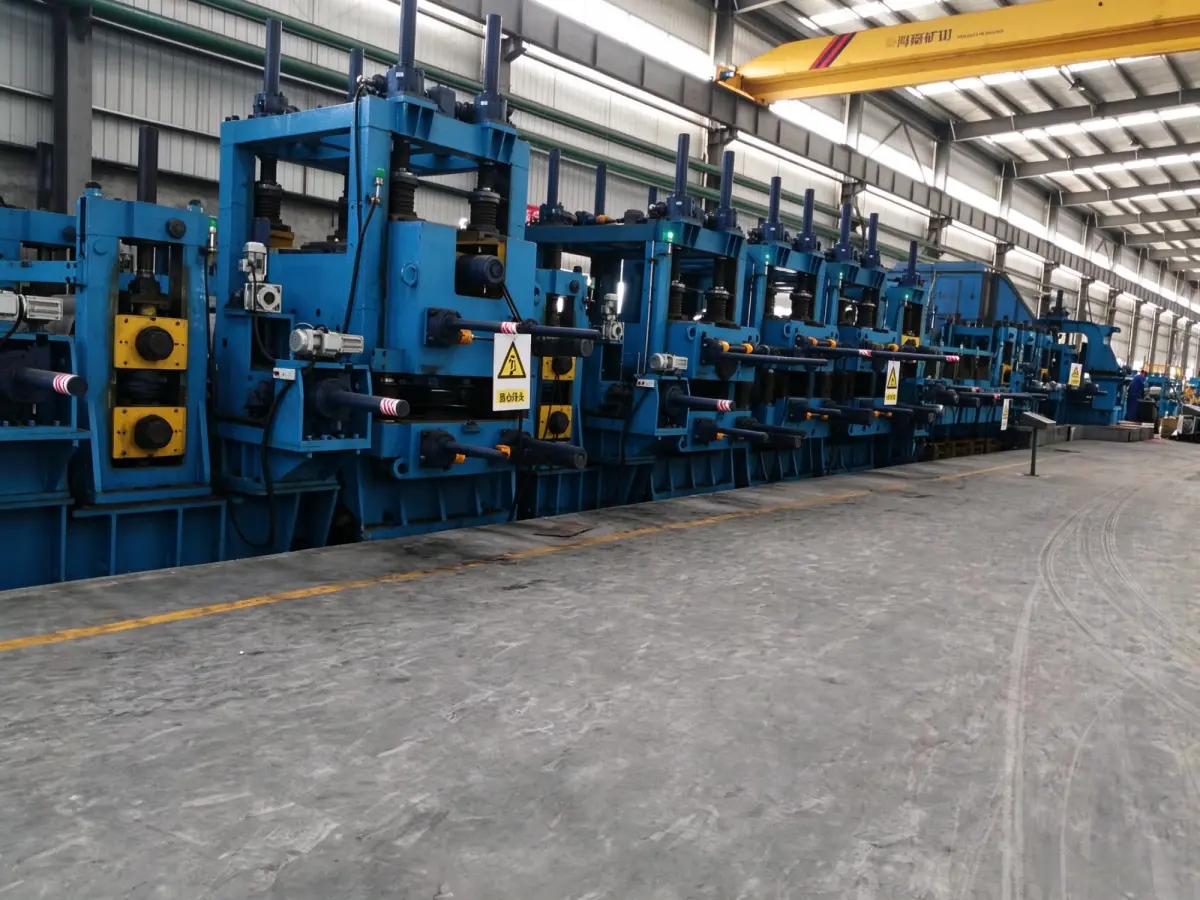
The direct-forming square line covers finished sizes from 30 × 30 to 500 × 500 mm at 1.5 to 20 mm wall across seven bands, and within each band one combined roll set covers the size range: sizes are changed by servo adjustment rather than by changing rolls, which saves more than 90% of the rolls. The one exception is 100 × 100 mm tube, which needs the upper roll on the final open stand changed. Because the combined rolls meet the strip in point contact instead of line contact, roll wear is also reduced and roll life is longer.
What continuity is worth, and how it is achieved
Output on a continuous line is as much about not stopping as about speed. Non-stop tube mill production rests on two mechanisms. The shear and butt welder joins the tail of the running coil to the head of the next one so a coil change does not halt production, and the spiral accumulator holds enough strip to feed the mill while that joint is made.
The control layer holds the rest together. The PLC and variable-frequency drive system unifies the cycle and speed of forming, welding, sizing and cutting, and determines line stability and the level of automation; configurations run from semi-automatic to fully automatic PLC control.
Around the equipment, two commercial facts bear on when output actually starts. Standard lines ship within 90 working days of the deposit, with plant-level customisation from the manufacturer’s own base, and installation and commissioning are guided on site by the manufacturer’s engineers, with online support; the buyer provides the installation crew and covers the engineers’ travel, lodging and daily allowance.
What to ask the factory for
Three requests turn a general enquiry into a business case. Ask for line speed and shift output for the specific band and wall thickness. Ask for the roll-change time on the configuration offered, in minutes, not as a percentage saving.
And ask for the yield figure to be restated against your own coil grade and thickness: the published figure describes what the equipment can reach, not a promise about any particular plant.
Resource Downloads
From the Workshop
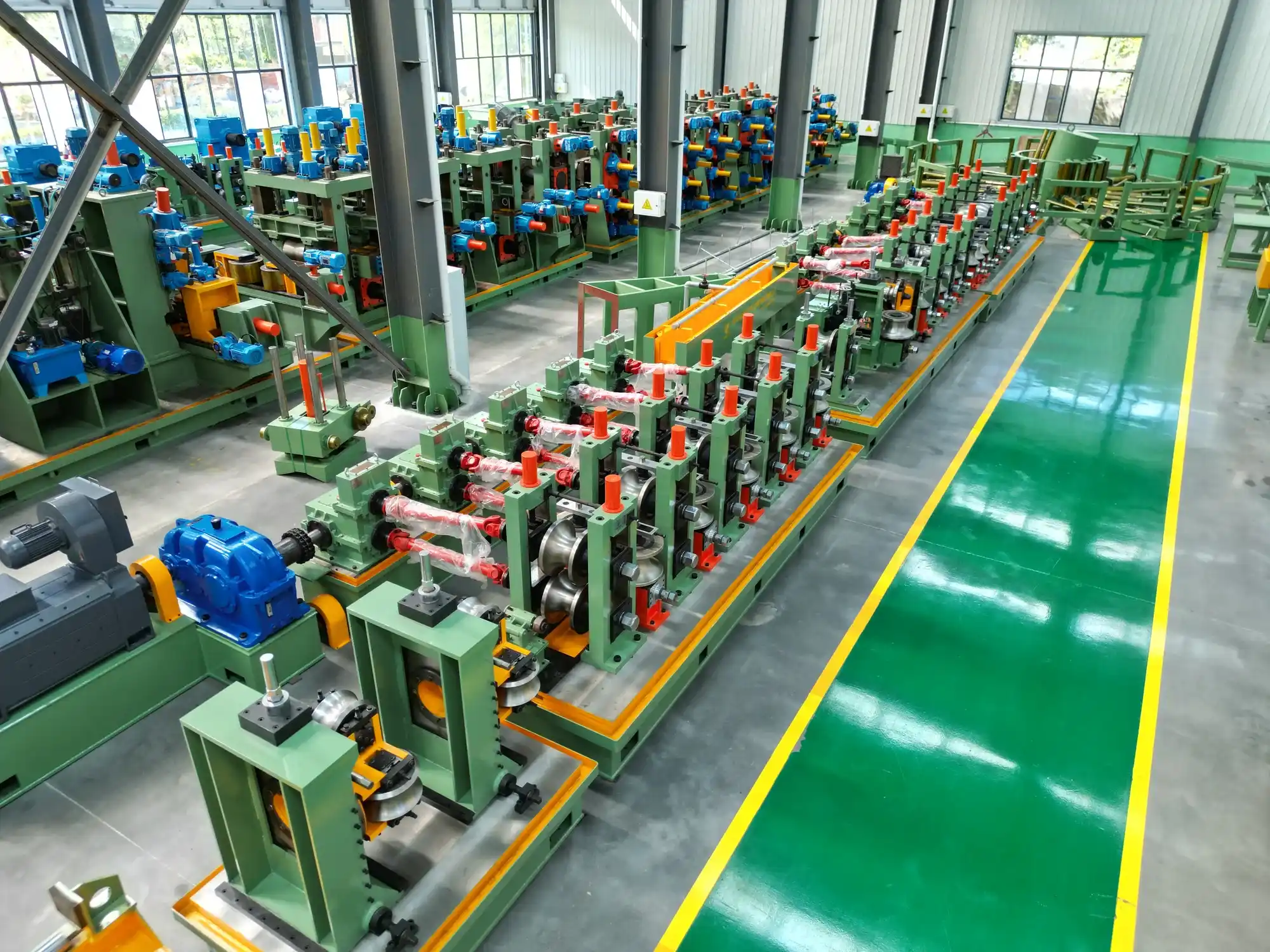
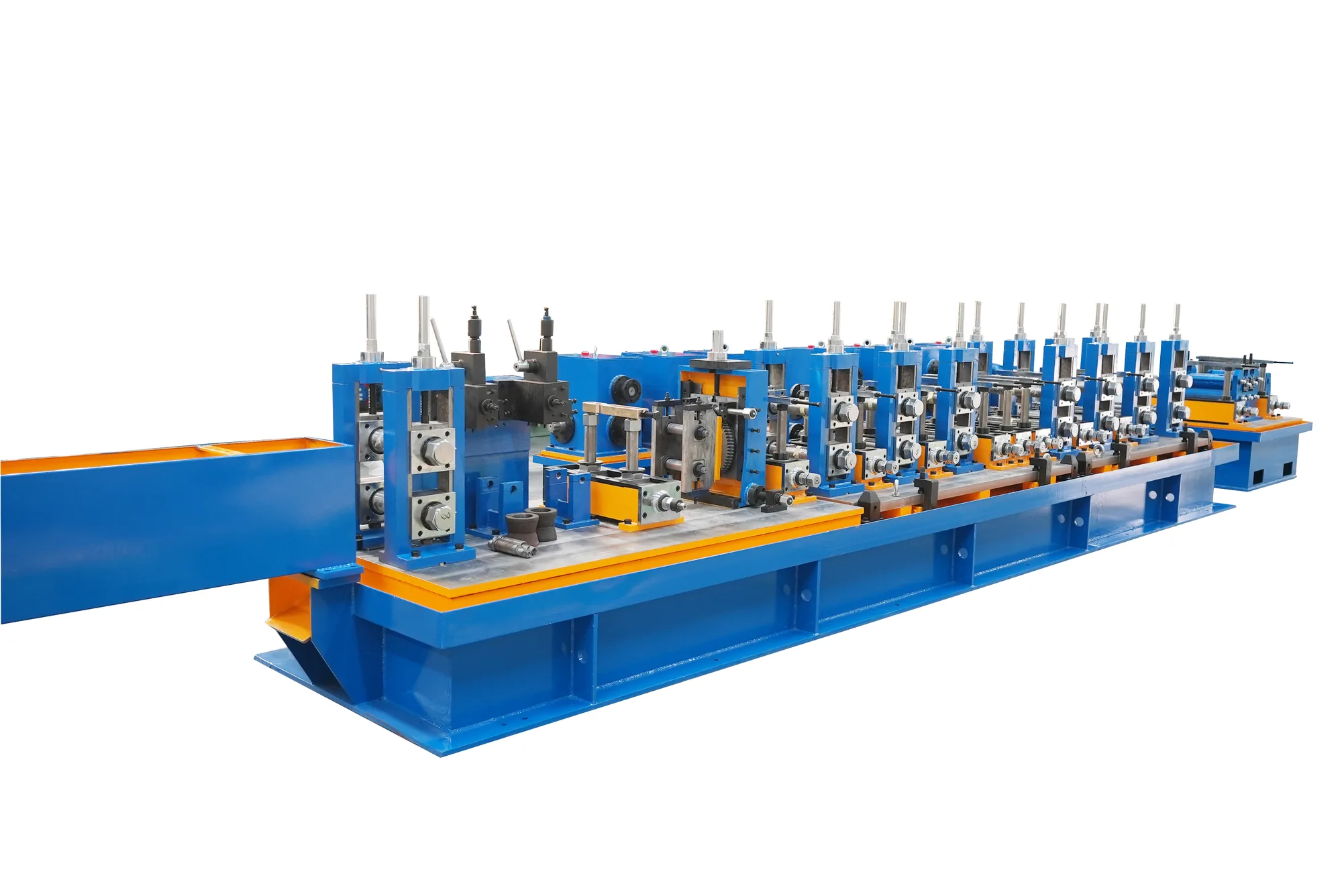
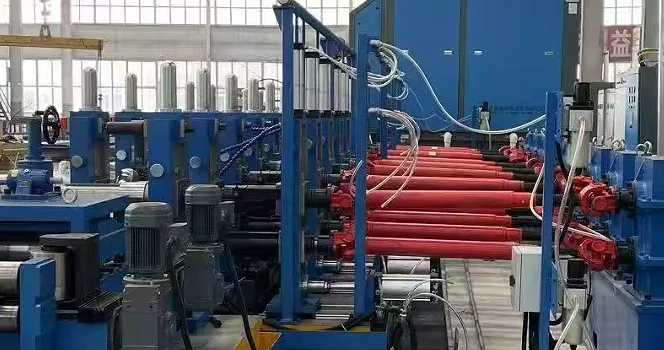
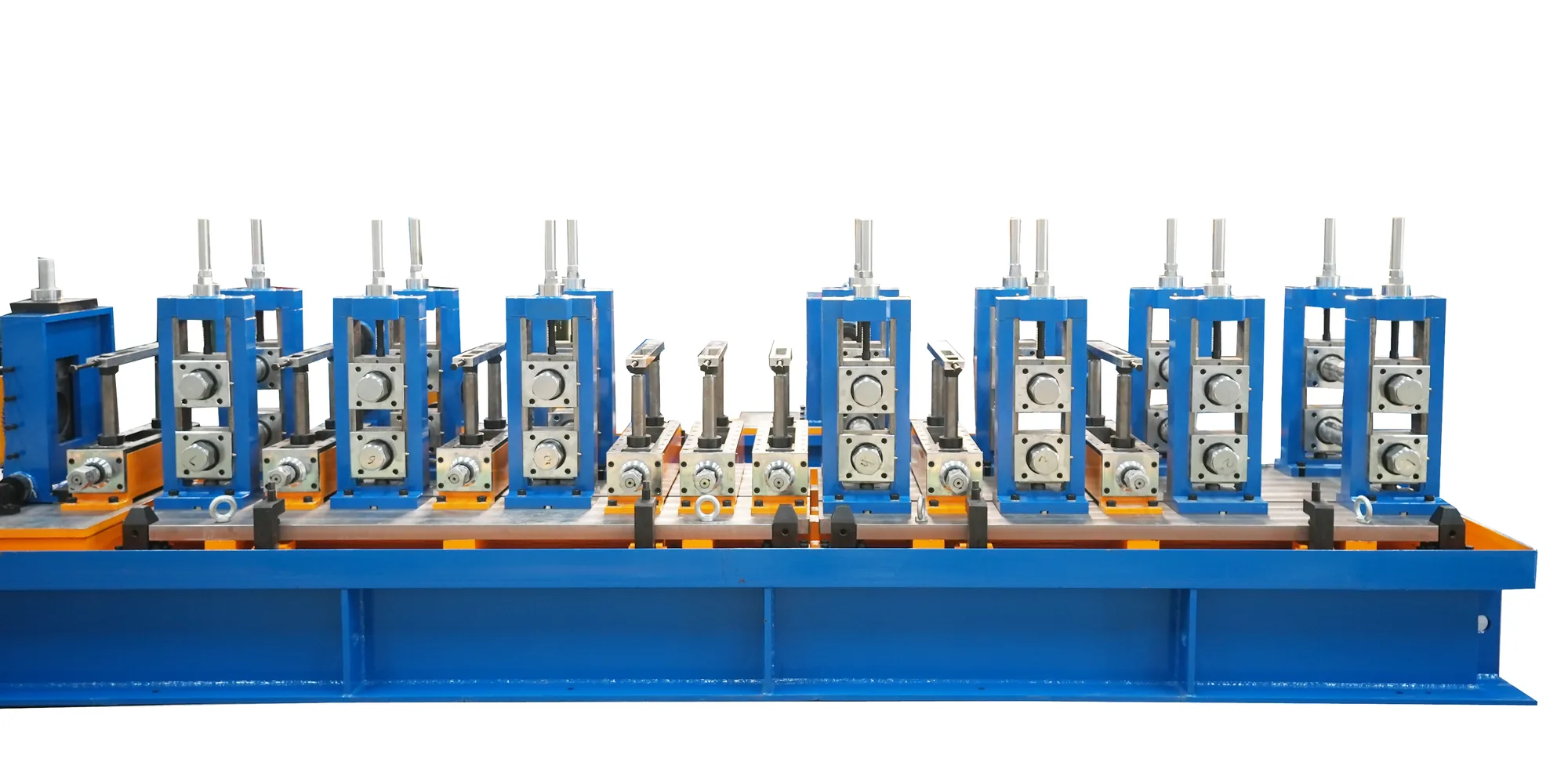
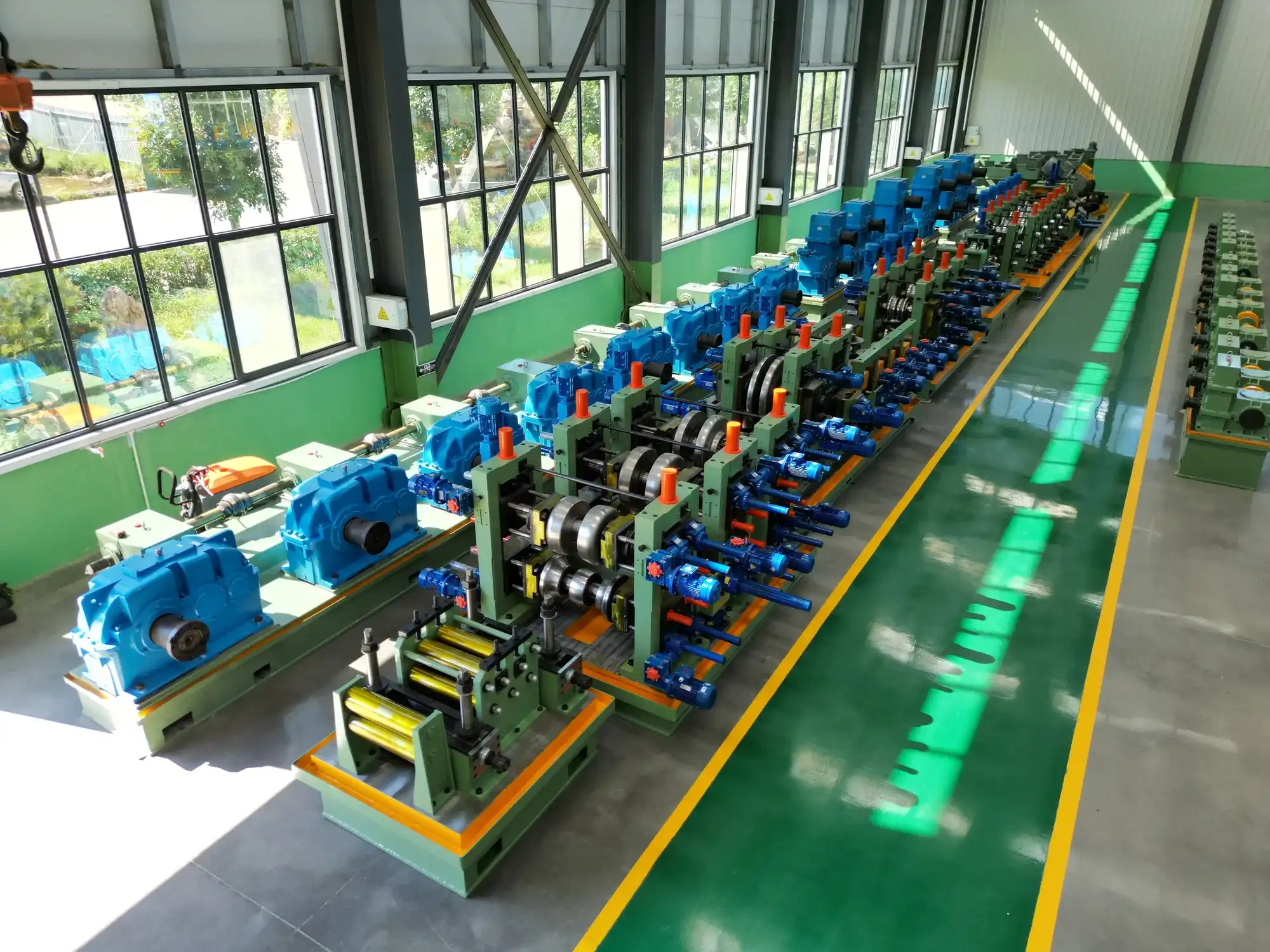
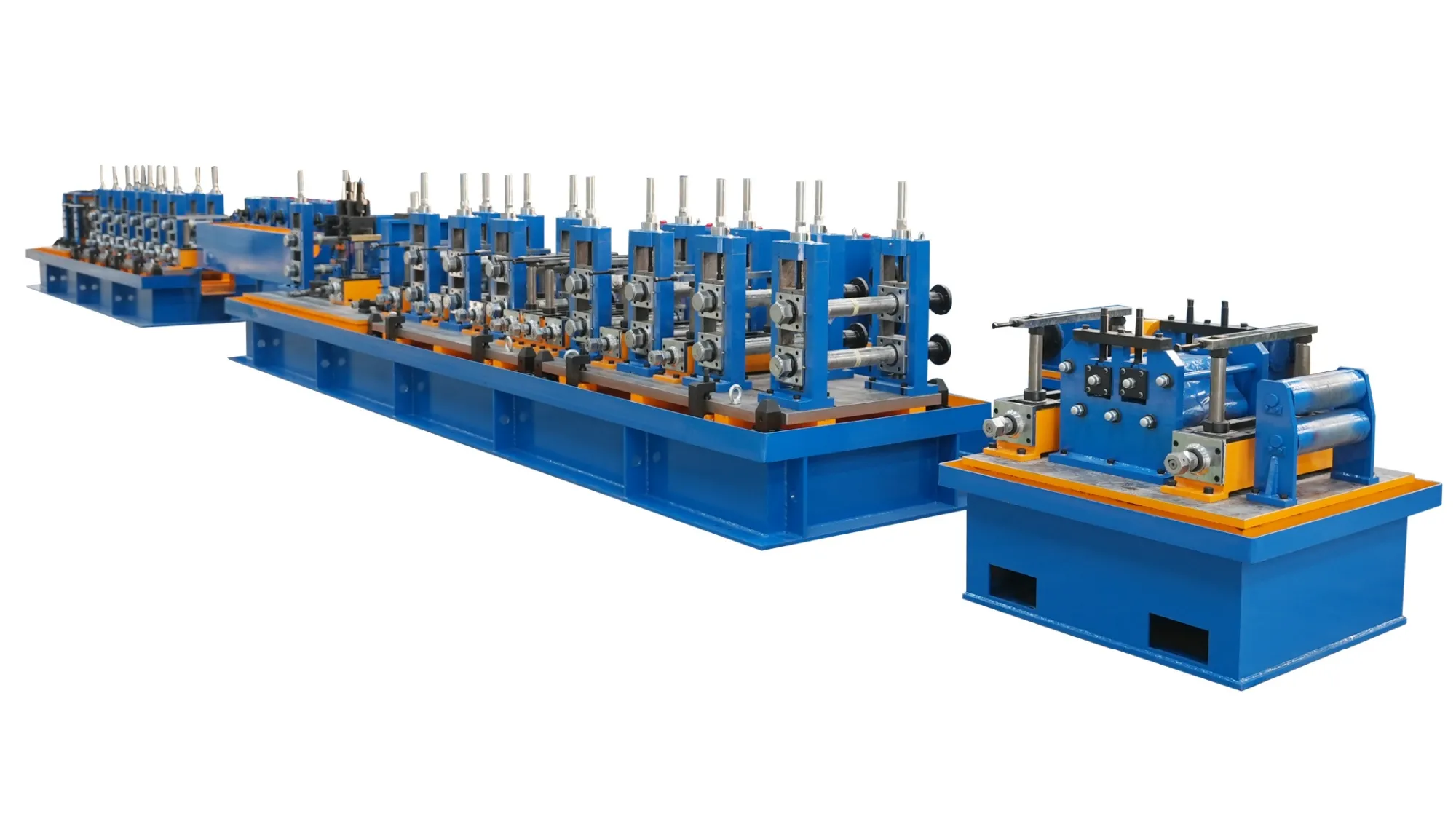 Tube Mill Machine for Steel Pipe Production
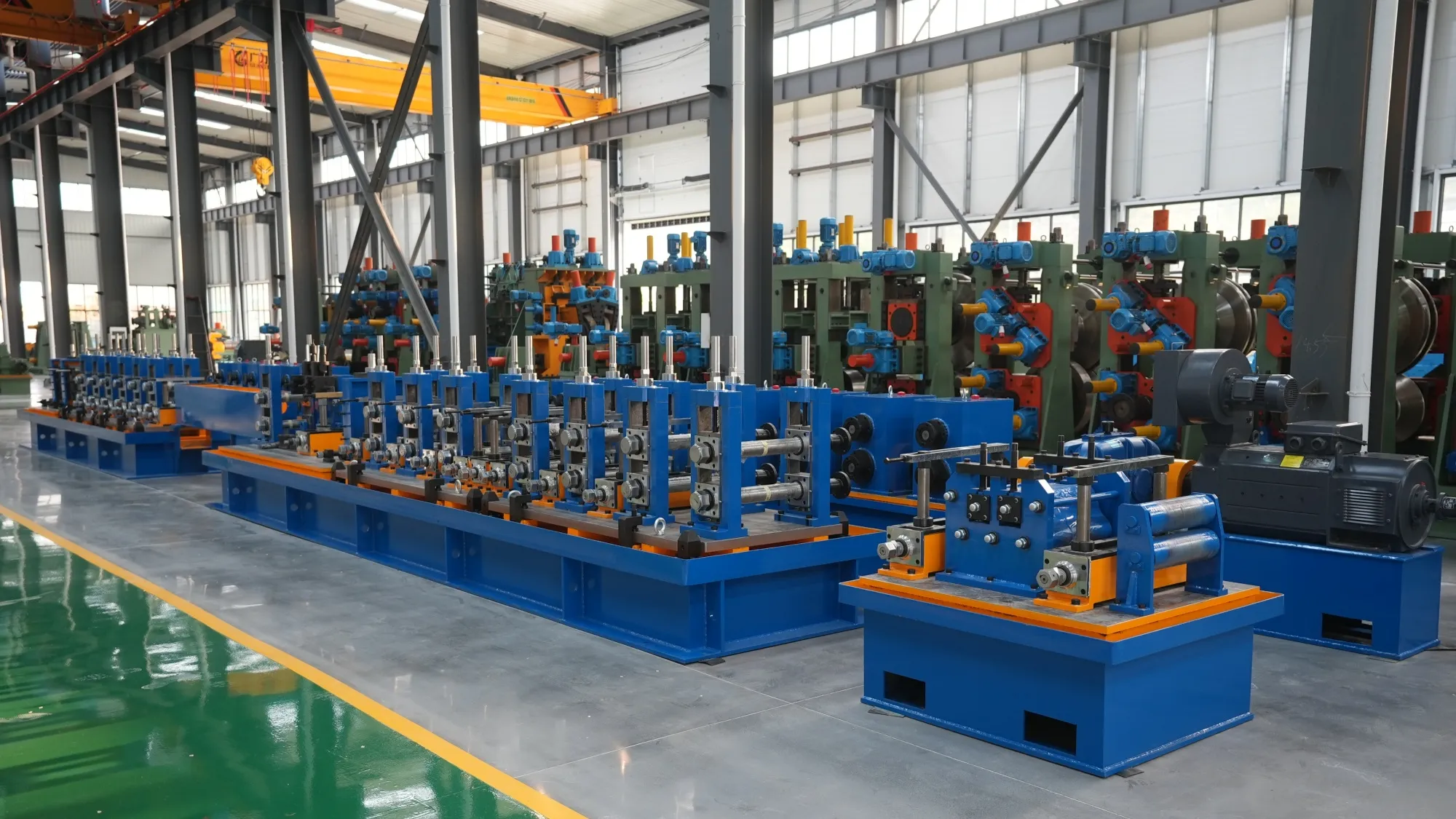 What Is an ERW Tube Mill
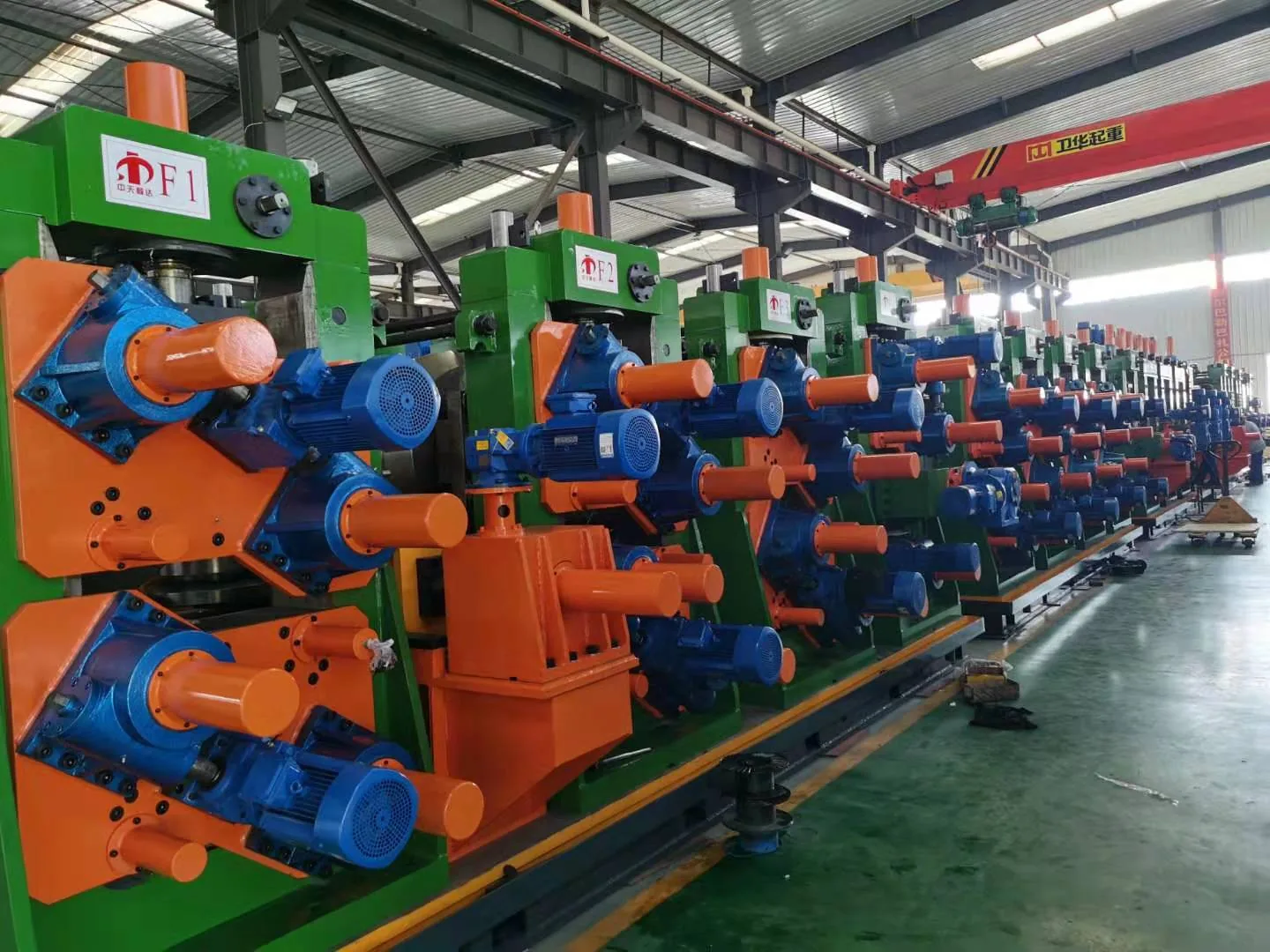 HGF150 Fully Automatic Square and Rectangular Tube Forming and Welding Equipment
 The API Pipe Mill Inspection Chain
Send Your Enquiry
Tell us the pipe outside-diameter range, the wall thickness and the output you need. An engineer reads every enquiry — it does not land in a general sales inbox.