
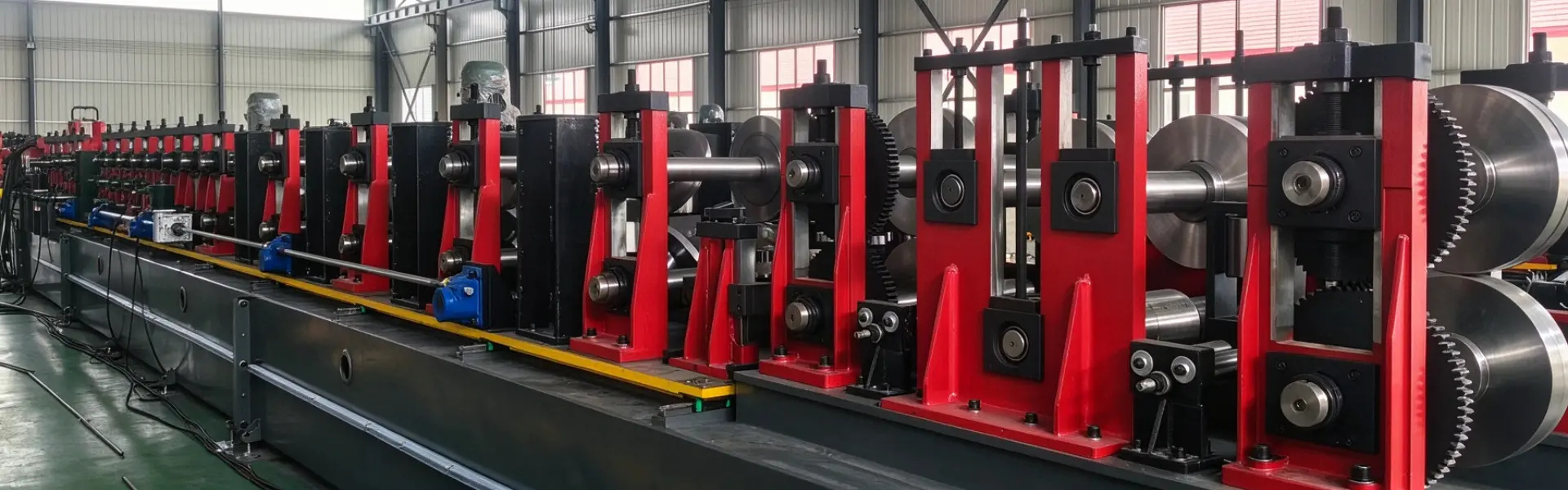
Purlin Machine Lines
This range covers the C, Z and Ω purlin roll forming machine: a cold forming line that punches, cuts and forms structural purlins from strip, with no welding anywhere in the process.
What Is Purlin Roll Forming Machine
The machine is a semi-automatic C/Z interchangeable line: one set of tooling produces multiple purlin sizes through stepless adjustment, so changing size does not mean changing rolls. It punches holes, cuts and forms automatically, reaches 20 m/min forming speed, and works material 2–4 mm thick.
It is cold forming with no welding — strip is bent progressively into an open section by roll pressure and then punched and cut hydraulically. That is the structural difference from the welded pipe lines we build, which form and then weld a closed section. For other cold-formed profiles, see our roll forming machines & cold roll forming lines.
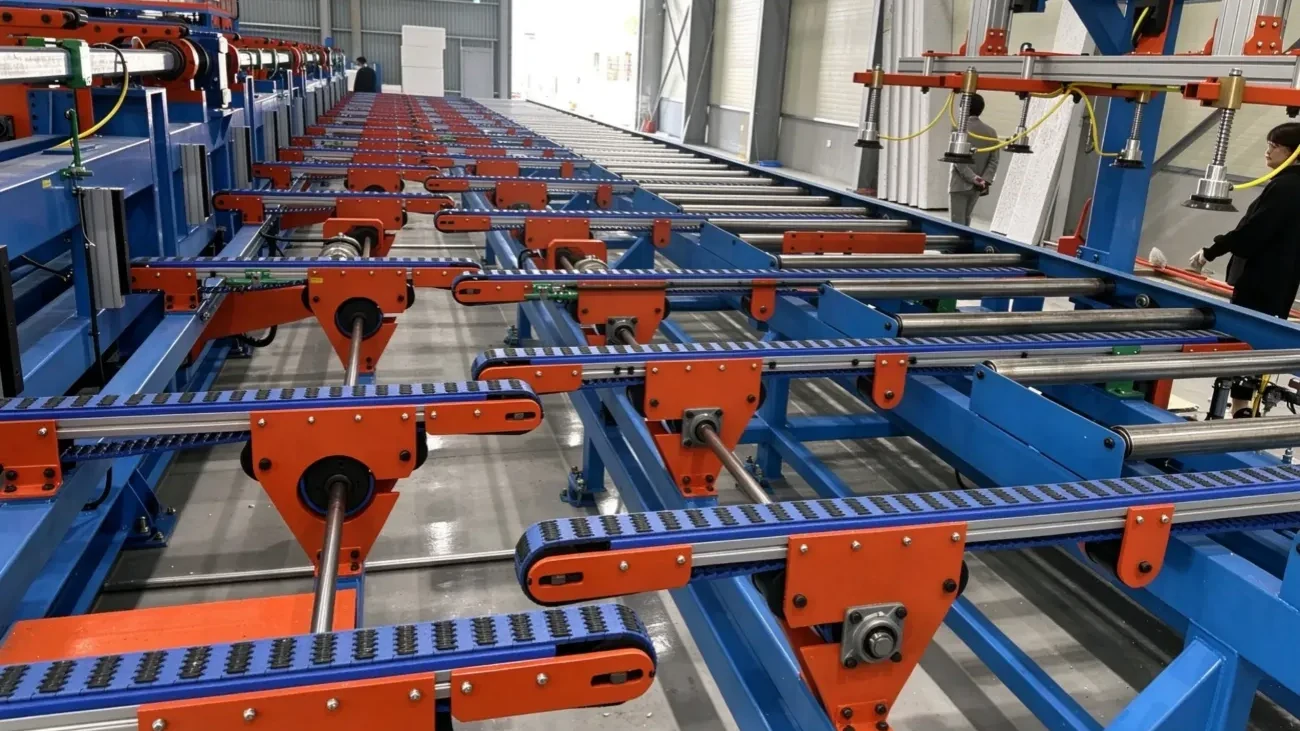 CZ Purlin Roll Forming MachineOne set of dies and cutters travels with the line, so the plant is not sourcing tooling during commissioning.See the line →
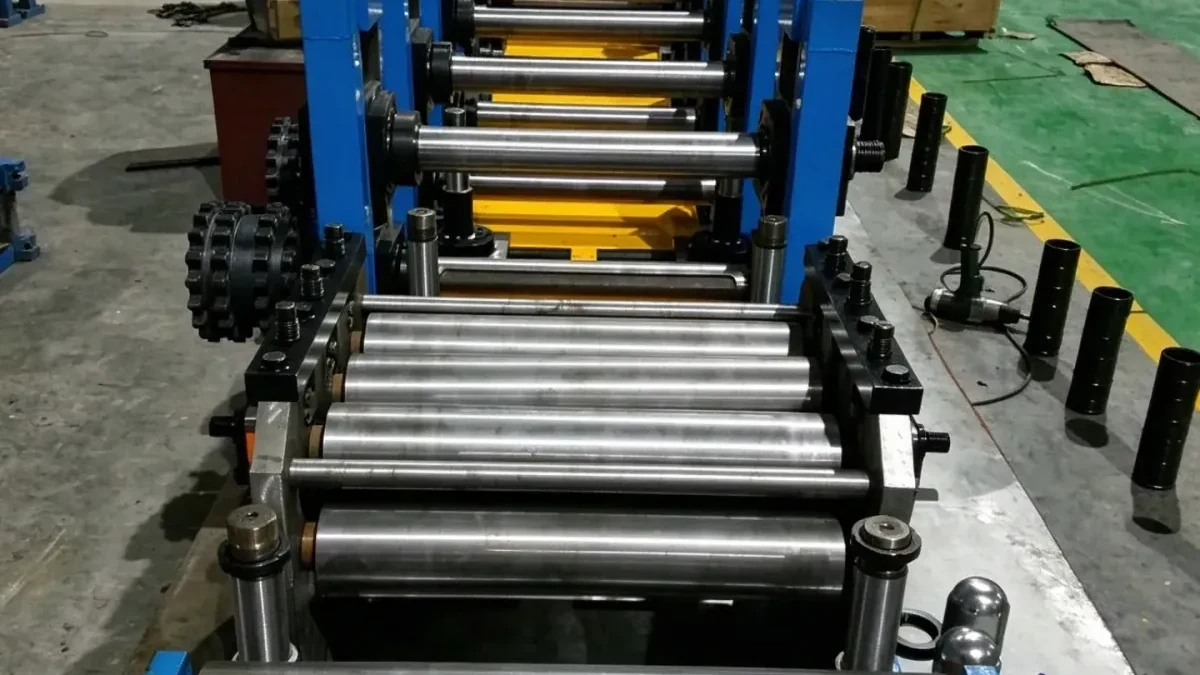 Changing Section Size on a Purlin Roll Forming MachineA purlin roll former is a cold forming line, not a welding line.See the line →
Purlin Roll Forming Machine — Range, Configuration and Output
The forming section is an 18-pass roll former with hydraulic punching and cutting, running up to 20 m/min.
The operating pattern is parameter-driven rather than tooling-driven: the operator enters purlin length, hole pitch and quantity, and the line punches, forms and cuts to those numbers automatically.
Three profile types come off the same machine — C, Z and Ω — with stepless adjustment between them.
Key Parameters: Size Range, Wall Thickness and Line Speed
- Profile types: C / Z / Ω, interchangeable on the same machine.
- Material thickness: 2–4 mm.
- Forming speed: up to 20 m/min.
- Forming passes: 18.
- Roll material: bearing steel, hardened after machining.
- Die and cutter material: hardened Cr12.
Material thickness, line speed and output are confirmed against your profile section, steel grade and finished length at quotation. Send us those three and we will state the figures.
How to Choose the Right Model
The choice is driven by the mix of purlin sizes you run rather than by throughput. Three things decide it: whether a size change needs a roll change, how accurately holes are positioned, and forming speed.
Because stepless adjustment covers C and Z on one machine, the question to answer before quoting is the spread of purlin sizes actually run, not the peak size. A mix that stays inside the adjustment range removes the roll change entirely; a mix that does not is a different conversation.
The second question is hole pattern. Since punching is parameter-driven, hole pitch changes are a setting rather than a tooling change — but punch and die wear is driven by punching count, so a dense hole pattern consumes tooling faster.
Scope of Supply, Installation and Commissioning
One set of dies and cutters ships with the line, and Cr12 dies and cutters can be supplied continuously as they are reground or replaced by punching count.
The line is dismantled into units and shipped in containers: heavy frames are braced and secured, while precision parts and wear items travel in wooden cases together with a spare-parts pack.
What decides accuracy on a cold-formed profile
Two things decide it. The first is tooling: forming rolls are bearing steel, finished after quenching, and dies and cutters are quenched Cr12; if either falls short, profile edges, hole positions and cutting edges drift. The second is the process: the strip is bent through 18 passes at room temperature, so pass count, roll profile and the yield strength of the incoming strip set the geometry and springback. That is why the steel grade belongs in the enquiry.
Where responsibility sits on the finished purlin
Hole position and profile geometry are held on the equipment side by hydraulic punching accuracy and the roll profile; the entered parameters are set by the operator. A wrong parameter or stepless-adjustment setting gives offset holes and a twisted profile, so operator training is part of commissioning.
Steel purlin forming machine
Our steel purlin forming machine makes C and Z purlins for steel-structure buildings and solar mounting frames, from 2–4 mm strip at up to 20 m/min, with holes punched and lengths cut automatically from the entered parameters.
Purlin forming machine price
A quotation is built from the scope you need: the complete line or individual machines, the purlin sizes and hole patterns to be covered, and any spare tooling. Prices are quoted ex-works (EXW), with payment 30% on signing, 65% before shipment and 5% after installation and commissioning.
Certification
The company is certified to ISO 9001:2015, and our cold roll forming equipment is CE marked under the EC Machinery Directive 2006/42/EC. Tengtian holds a national high-tech enterprise certificate and a Madrid international trademark registration, and has 30 granted utility model patents, with 7 invention patents applied for.
Delivery, payment and after-sales
Standard lines ship within 90 working days of the deposit, with plant-level customisation scheduled from our own manufacturing base.
Installation and commissioning are guided on site by our engineers, with online support; the buyer provides the installation crew and covers the engineers’ travel, lodging and daily allowance. Our after-sales team handles enquiries. Payment is 30% by T/T on signing, 65% by T/T before shipment and 5% after installation and commissioning, or L/C at sight; prices are quoted ex-works (EXW).
What to send with an enquiry
The profile type and drawing, material thickness and grade, hole pitch and length range, and the size spread you expect to run. Because punching is parameter-driven and adjustment is stepless, the spread matters more than the peak size.
Distributors can see our purlin machine distributors page.
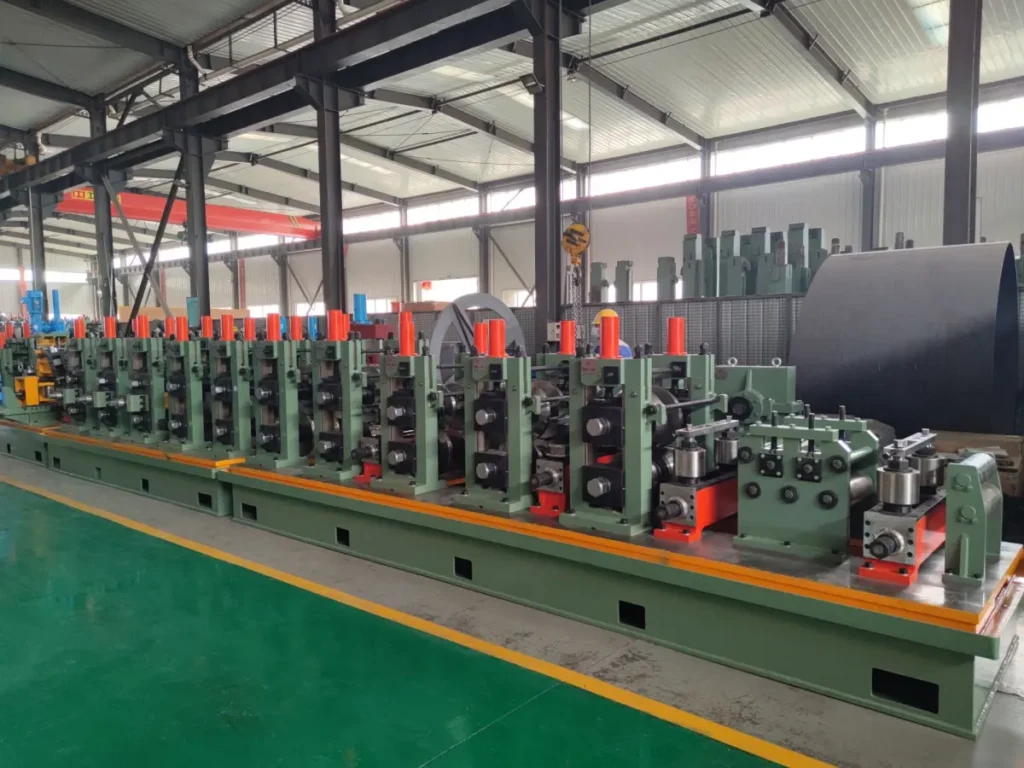 Pipe Production Applications
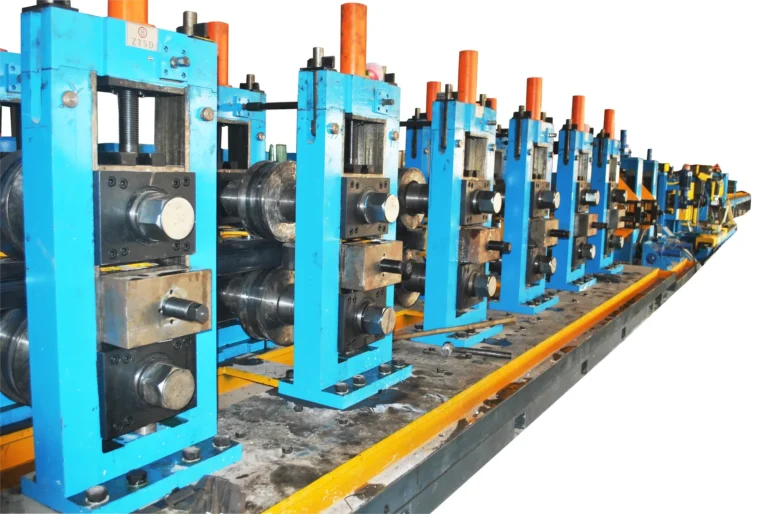 Large Diameter Tube Mill
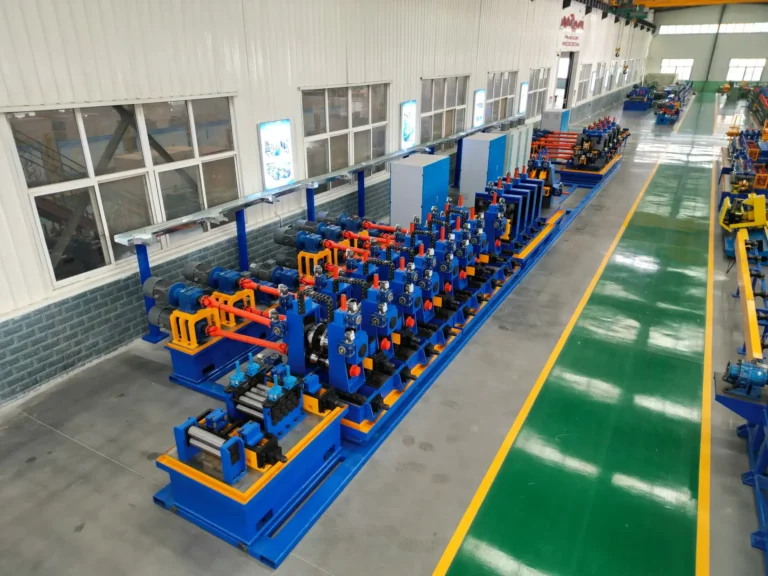 High-Frequency Welded Pipe Mill
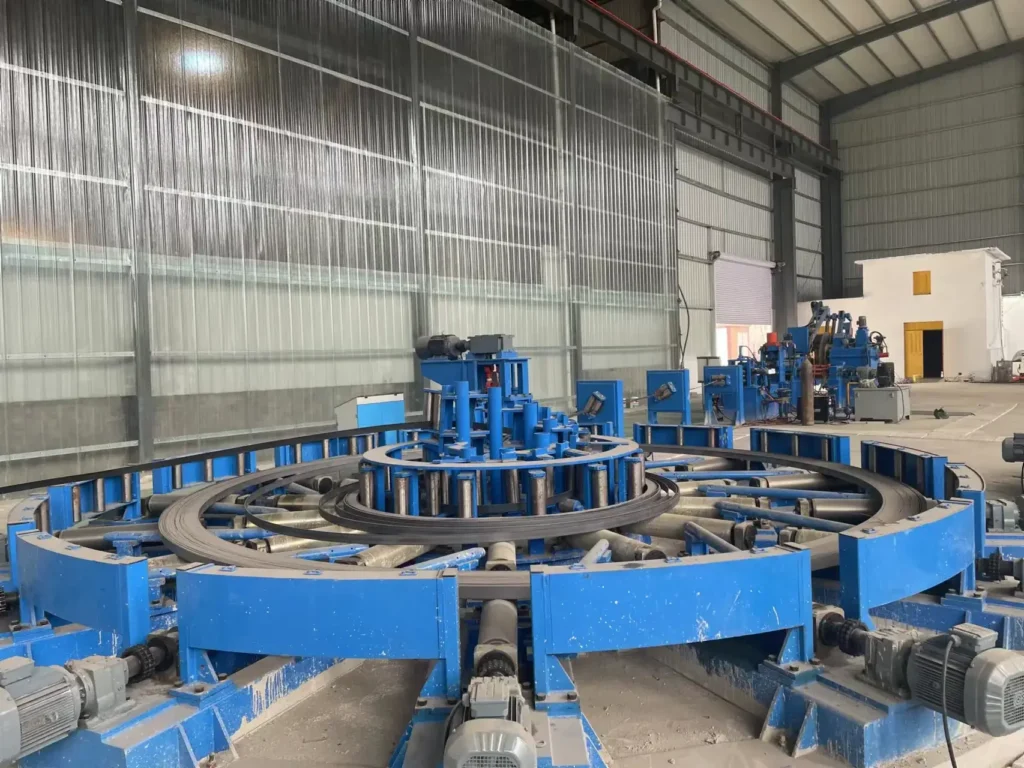 H-Beam Production Line
Send Your Enquiry
Tell us the pipe outside-diameter range, the wall thickness and the output you need. An engineer reads every enquiry — it does not land in a general sales inbox.