
Home › Direct Forming Square Tube Mill › Two Routes to Square Section, Side by Side
Both routes end at a square tube.
In This Line
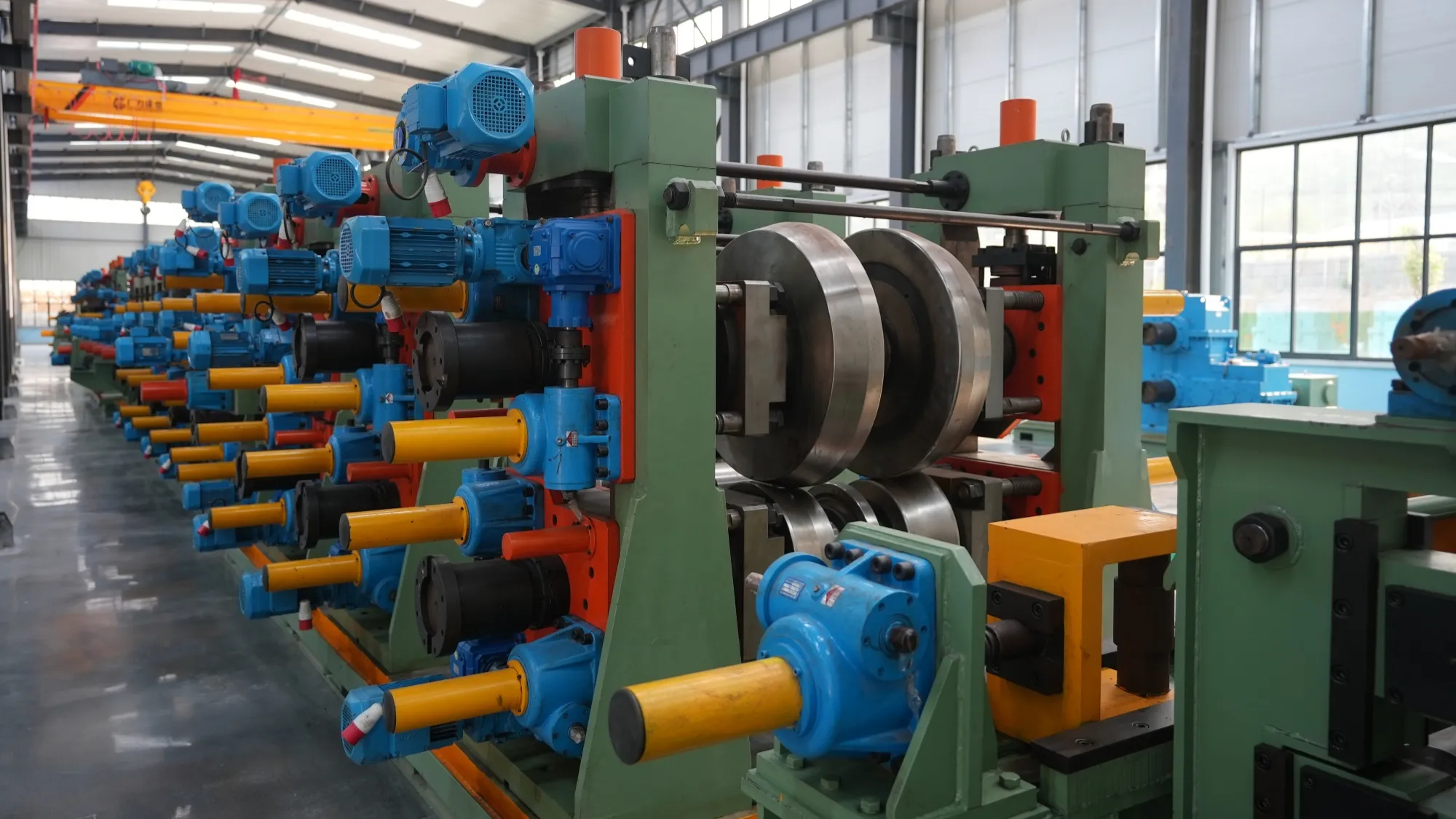
A round and square tube mill can reach a square section by two routes. Round-to-square forms a round shell first and then sizes it square; direct forming shapes the square directly with one combined mould. Direct forming needs fewer passes and no roll change between sizes, because the combined mould is adjusted by servo motors instead of being swapped.
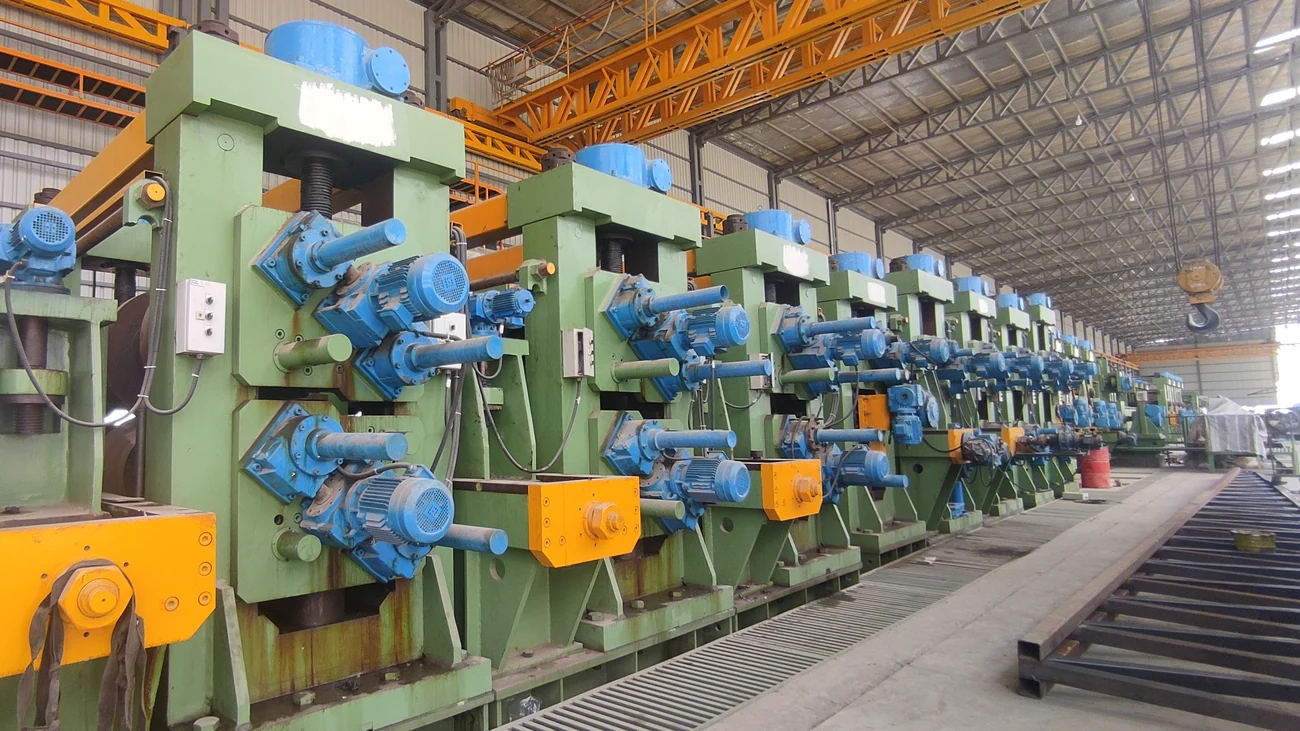
Where Direct Forming Beats Round-to-Square
- Fewer forming passes and fewer roll changes than round-to-square, with faster size changes — the result of one combined mould plus servo adjustment.
- Square tube from 30×30 to 500×500 mm across seven bands, wall 1.5 to 20 mm.
- One combined mould covers every size in its band; a size change needs only servo adjustment, with no roll change.
- Roll saving of over 90%, with point contact reducing roll wear. One exception: making 100 × 100 mm tube needs the upper roll on the final open stand changed.
What Is Direct Forming vs Round-to-Square
Both routes make the same product and differ in how they get there. The conventional route forms the strip into a round shell, welds it, and then sizes that round tube into a square or rectangular section. The direct-forming route shapes the square section from the start, using one combined mould instead of a size-specific roll set; a size change needs servo adjustment only, with no roll change. Across seven bands the direct forming square tube mill covers square tube from 30 × 30 to 500 × 500 mm, wall 1.5 to 20 mm.
That route sits inside the wider high-frequency welded family rather than beside it. Forming technology is one of the ways the HFW range is classified — conventional roll forming and direct forming square — and the second is a distinct selling point precisely because it allows size changes without changing rolls.
Tube mill for round and square pipe
A line that makes both is the normal case rather than the exception. Most HG size classes can produce round, square and rectangular tube on the same line, and the finished section is one of the ways the range is classified, alongside diameter.
What differs between running round and running square on such a line is the forming section. Forming and sizing rolls are a core component because they set shape accuracy, roundness or squareness, edge appearance and dimensional consistency — and in the direct-forming alternative, a combined roll arrangement reduces wear through point contact.
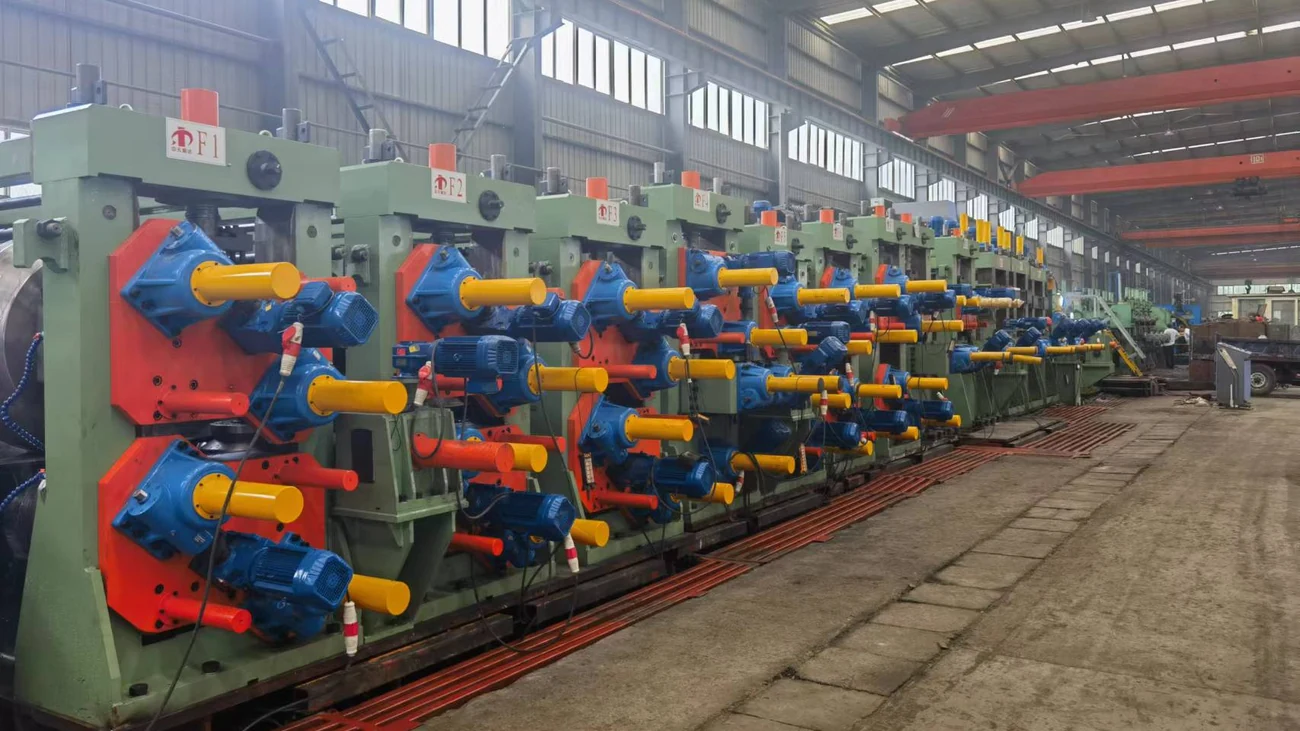
Direct Forming vs Round-to-Square Explained
Point contact between the combined mould and the strip reduces roll wear, and because one mould set serves every size in its band, the roll saving is over 90%.
On a conventional line, setting a new size means changing rolls and then re-setting roll gap and alignment. On a direct-forming line the operator sets the target size by servo adjustment, with no roll change; the changeover crew still needs training to bring the first tubes after a size change into tolerance.
Square and rectangular tube mill
Rectangular section sits alongside square rather than as a separate capability: round, square and rectangular are the three finished sections, and most HG classes can make all three.
The distinction that matters is what the finished square or rectangular section is used for. Structural and scaffolding tube is its own application group — load-bearing construction, scaffolding and general machinery sections — where flexible size switching, stable square and rectangular forming, and good straightness and edge appearance matter most.
Side-by-Side Comparison Table
The clearest difference is the size change: on a direct-forming line it is a servo adjustment instead of a roll change.
| Item | Round-to-square | Direct forming |
|---|---|---|
| How the section is formed | Strip formed into a round shell, welded, then sized into a square or rectangle | Strip shaped into the square section from the start |
| Tooling for a new size | Roll change | Same combined mould, servo adjustment |
| Forming passes | More | Fewer |
| Roll saving | — | Over 90% |
| Exception | — | 100 × 100 mm needs the upper roll on the final open stand changed |
| Finished sections | Round, square and rectangular | Square and rectangular |
| Size range | Φ10–630 mm across HG32–HG630 | 30 × 30 to 500 × 500 mm across seven bands |
| Wall thickness | 0.5–16 mm across the series | 1.5–20 mm across seven bands |
| Changeover time | Not published | Not published |
| Delivery | Standard lines ship within 90 working days of the deposit | |
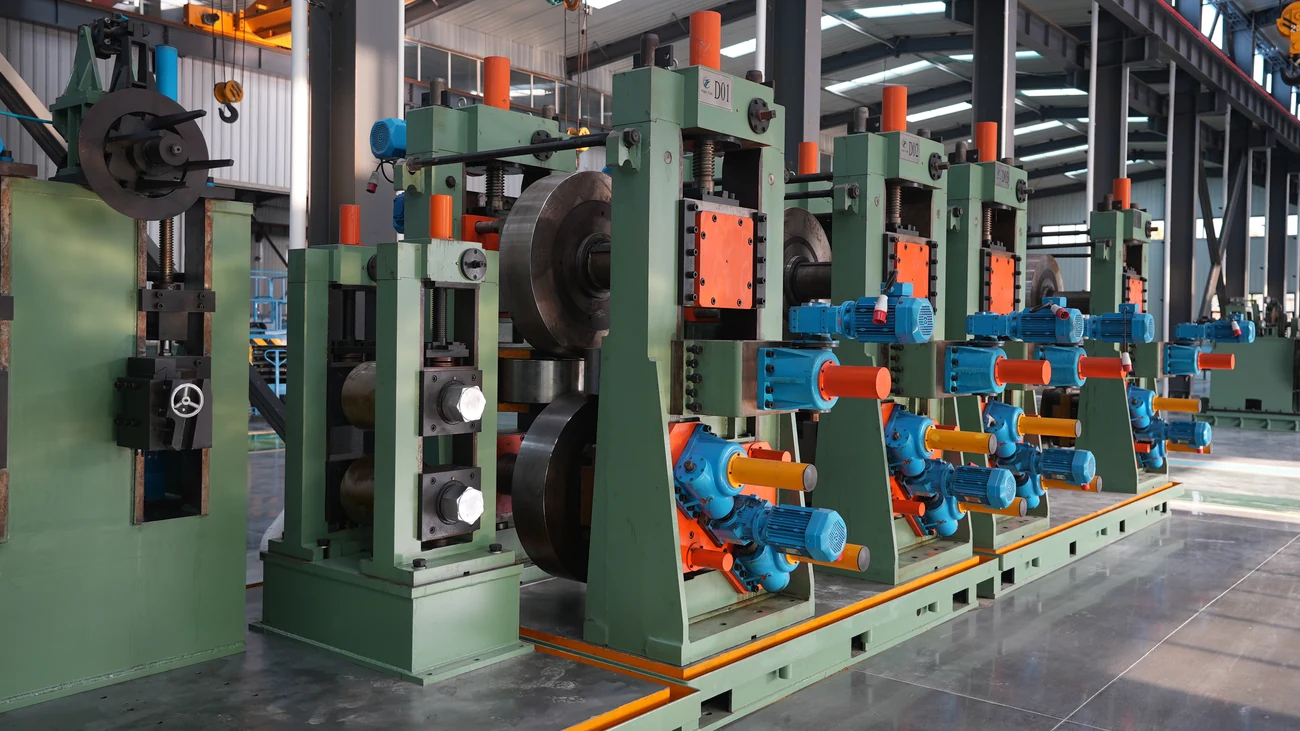
How to Decide: Target Diameter, Application and Volume
First, size range. The direct-forming line covers 30 × 30 to 500 × 500 mm square across seven bands, wall 1.5 to 20 mm. A section outside that, or a round section, belongs on the conventional HFW classes — Φ10–630 mm, 0.5–16 mm wall, producing round, square and rectangular.
Second, how often you change size. This is the deciding variable. Direct forming pays back in a plant that switches sizes often, where roll-change downtime and roll cost add up; a plant running one or two sizes for long runs gains little from it.
Third, running cost. Low roll wear and quick changeover keep long-term running cost down, and material yield can reach 93% or more on some high-end lines.
Fourth, delivery. It is set by the line, not by the forming route: standard lines ship within 90 working days of the deposit, with plant-level customised scheduling from our own manufacturing base.
Frequently Asked Questions
What is the practical difference between direct forming and round-to-square? How the square gets made. Round-to-square forms a round shell first and then sizes it into a square section; direct forming shapes the square from the start with one combined mould.
Which route suits my section size and application? The direct-forming line applies to square tube from 30 × 30 to 500 × 500 mm at 1.5 to 20 mm wall across seven bands. If the section is round, or square outside that envelope, the conventional HFW classes apply — Φ10–630 mm at 0.5 to 16 mm wall, in round, square or rectangular. Application then narrows it: structural and scaffolding tube is the group for square section.
How do the running costs of the two routes compare? Direct forming gives a roll saving of over 90%, with point contact reducing roll wear, and low roll wear, high yield and quick changeover keep long-term running cost down. The 90% is a ratio; it is not converted into roll price, roll life, changeover hours or cost per tonne.
Which standards apply to each of the two routes? Neither route changes the standard. The finished tube is made to the product standard the buyer specifies, and the machinery itself follows the destination market’s machinery-safety rules rather than a single mandatory certification.
Which route ships and commissions sooner? Shipment is given for the whole line, not per forming route: within 90 working days of the deposit for standard lines, with plant-level customised scheduling. What differs after delivery is the size change — servo adjustment versus roll change — but neither comes with a duration figure, so no time comparison is made.
Can one supplier build either route? Yes. Conventional roll forming and direct forming square are two forming technologies within the same HFW product family, and we build both.
From the Workshop
 Direct Forming Size Range
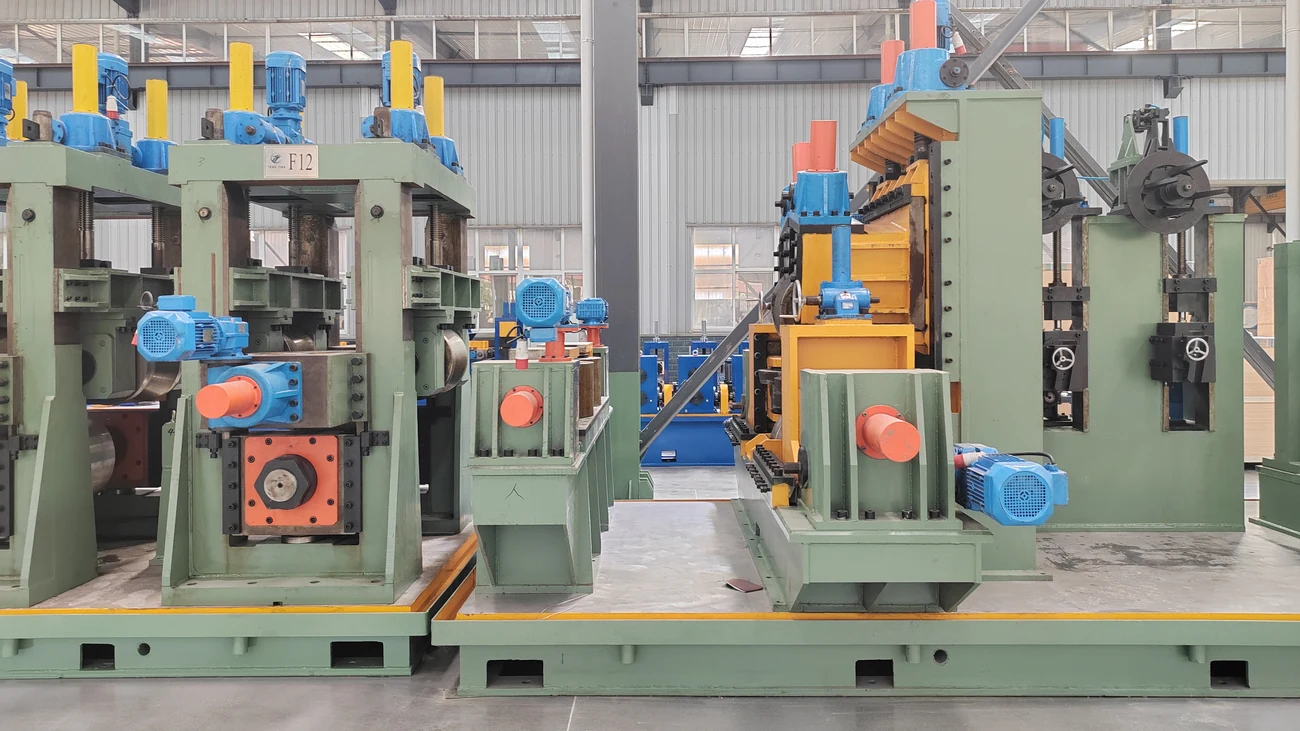 Roll Saving in Direct Forming
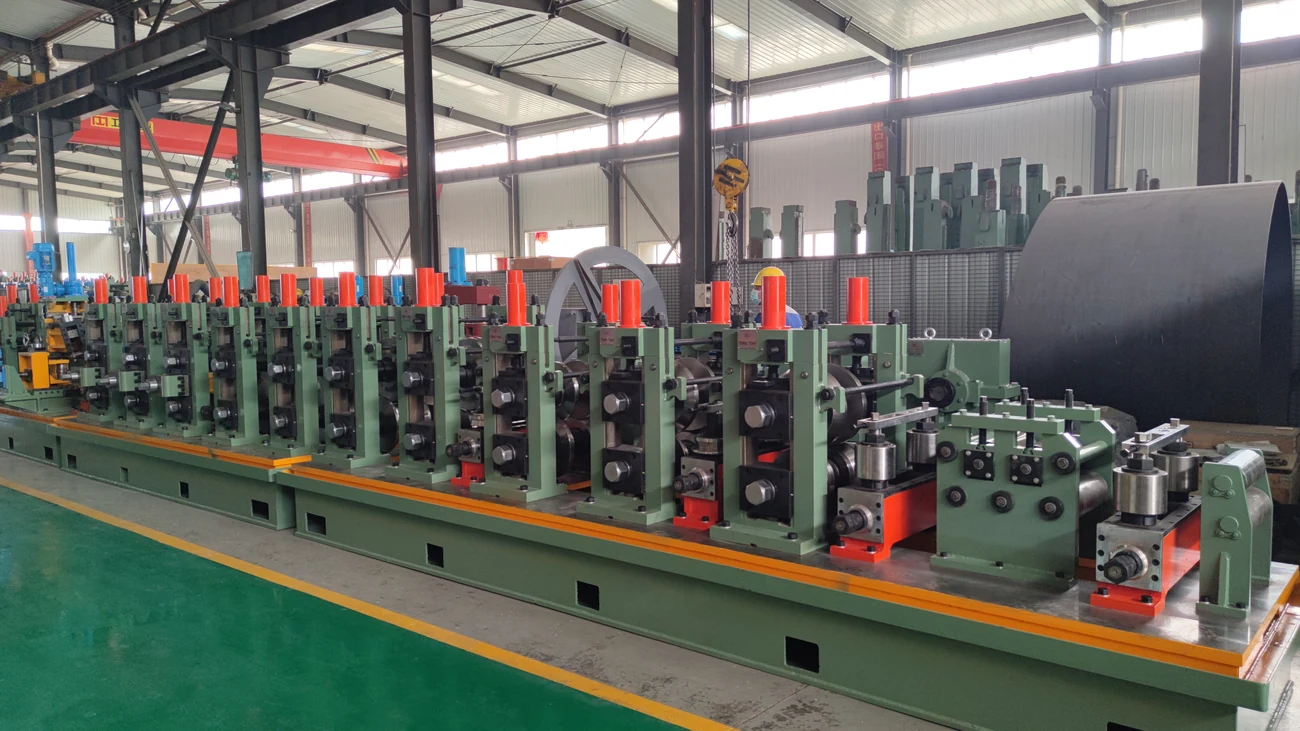 Direct Forming Square Tube Mill
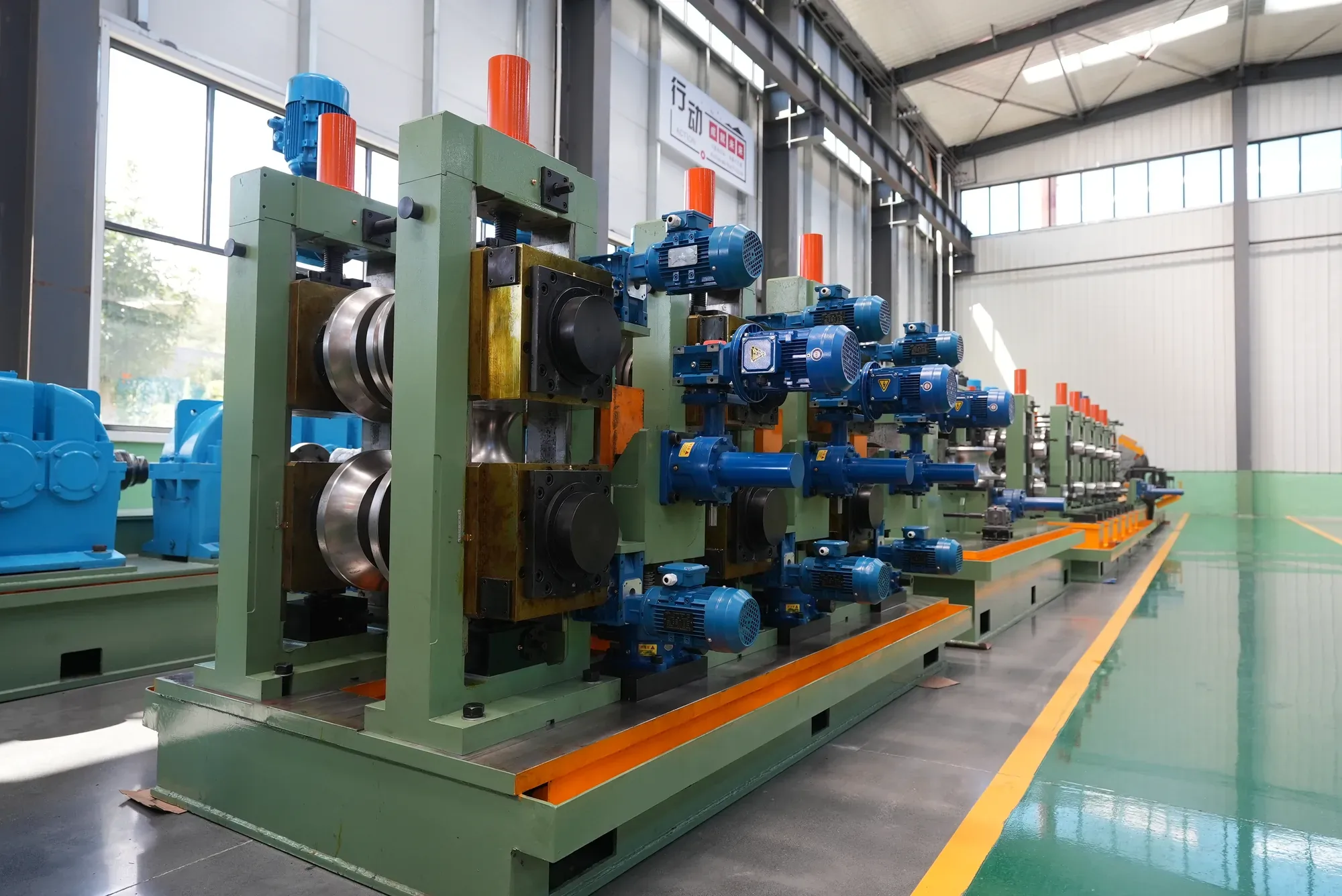 Welded Pipe Guide
Send Your Enquiry
Tell us the pipe outside-diameter range, the wall thickness and the output you need. An engineer reads every enquiry — it does not land in a general sales inbox.