
Home › Tube Mill › Large-Diameter Tube Mill › HG325
The ninth of the twelve model steps — Φ165 – Φ325 mm round pipe and 130×130 – 255×255 mm square section, on a 600 kW high-frequency welder.
Model Steps
In This Line
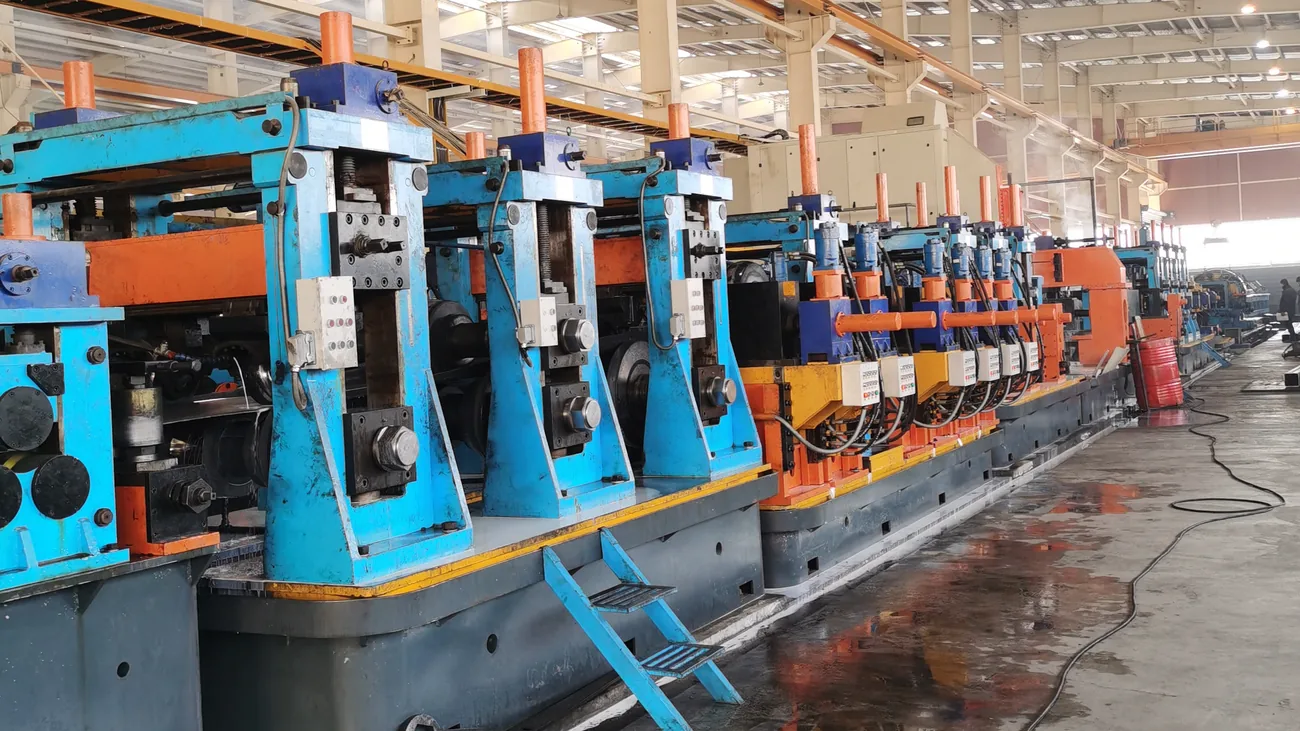
The HG325 tube mill is a Φ165–325 mm tube mill for round pipe with 4.0–10.0 mm wall and square pipe from 130×130 to 255×255 mm, welded by a 600 kW high-frequency welder. It is the fourth line in our large-diameter group.
Line Specification — HG325×10.0
| Round tube outside diameter | Φ165 – Φ325 mm |
|---|---|
| Wall thickness | 4.0 – 10.0 mm |
| High-frequency welder | 600 kW |
| Square / rectangular tube | Square 130×130 – 255×255 mm; wall 4.0 – 9.5 mm |
Watch This Line Running
HG325 High-Frequency Welded Pipe Mill — O.D. 165-325 mm
HG325 Tube Mill Specifications
- Outside diameter range: Φ165–325 mm.
- Wall thickness: 4.0–10.0 mm for round pipe; 4.0–9.5 mm for square pipe.
- Section shapes: round, square and rectangular.
- Forming: conventional roll forming.
- Welding: high-frequency induction, with a 600 kW welder.
- Automation: semi-automatic or full PLC.
Line speed and shift output depend on wall thickness, steel grade and cut length, so we confirm both at quotation once you send us your pipe size, material grade and cut length.
Pipe in this size range goes mainly into construction and structural work — most of our deliveries at these sizes are construction tube — and it is also used for low-pressure water and gas lines.
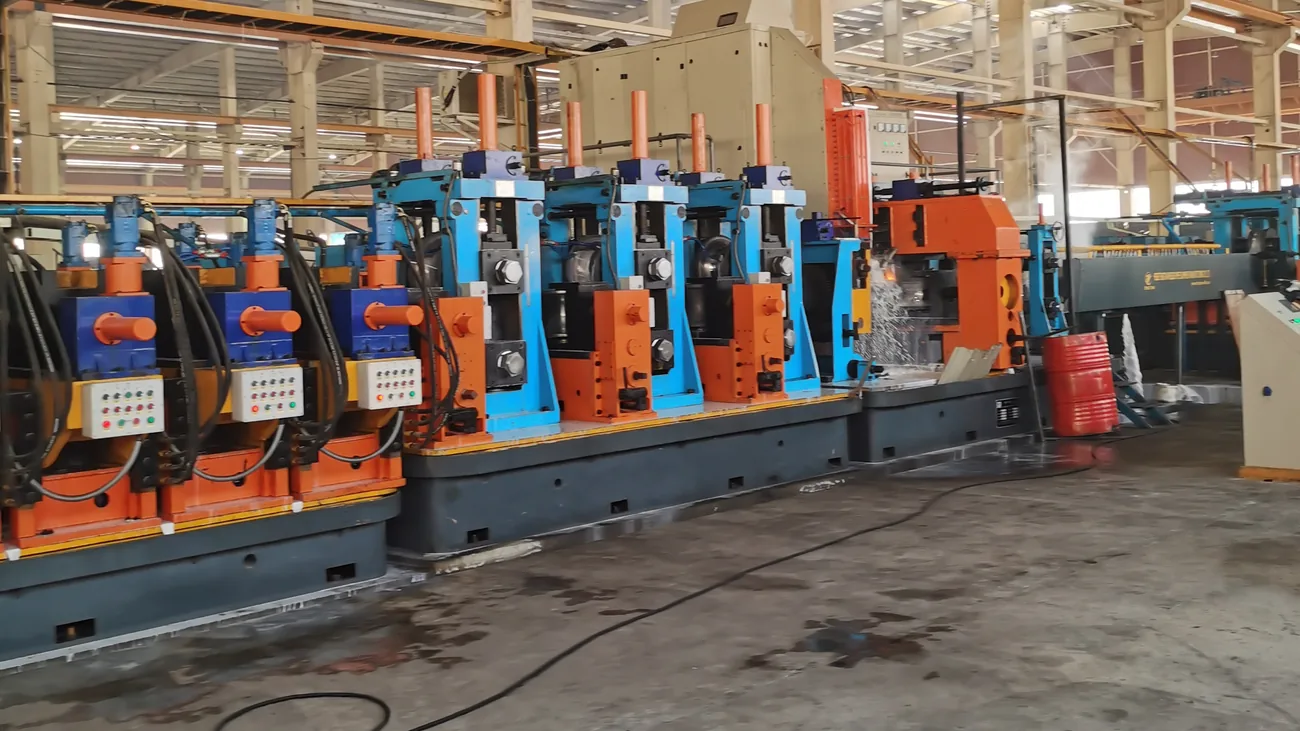
What a Large Diameter Tube Mill for 325mm Pipe Includes
As a large diameter tube mill for 325mm pipe, the HG325 line is built from the following units, from coil entry to finished pipe:
- Coil car, carrying the coil from the loading position onto the uncoiler.
- Uncoiler with a pneumatic four-link expanding mandrel.
- Strip-head opener, guiding the coil head smoothly into the line.
- Pinch leveller with five rollers, flattening the strip before forming.
- Automatic shear-welder, joining strip end to strip end so the line keeps running between coils.
- Spiral accumulator, storing strip while the next coil is prepared.
- Forming and sizing mill.
- 600 kW high-frequency welder.
- Flying saw, cutting to length while pipe is delivered continuously.
- Run-out table, carrying the finished pipe to the collecting table.
- PLC and variable-frequency control tying speed and cut length together.
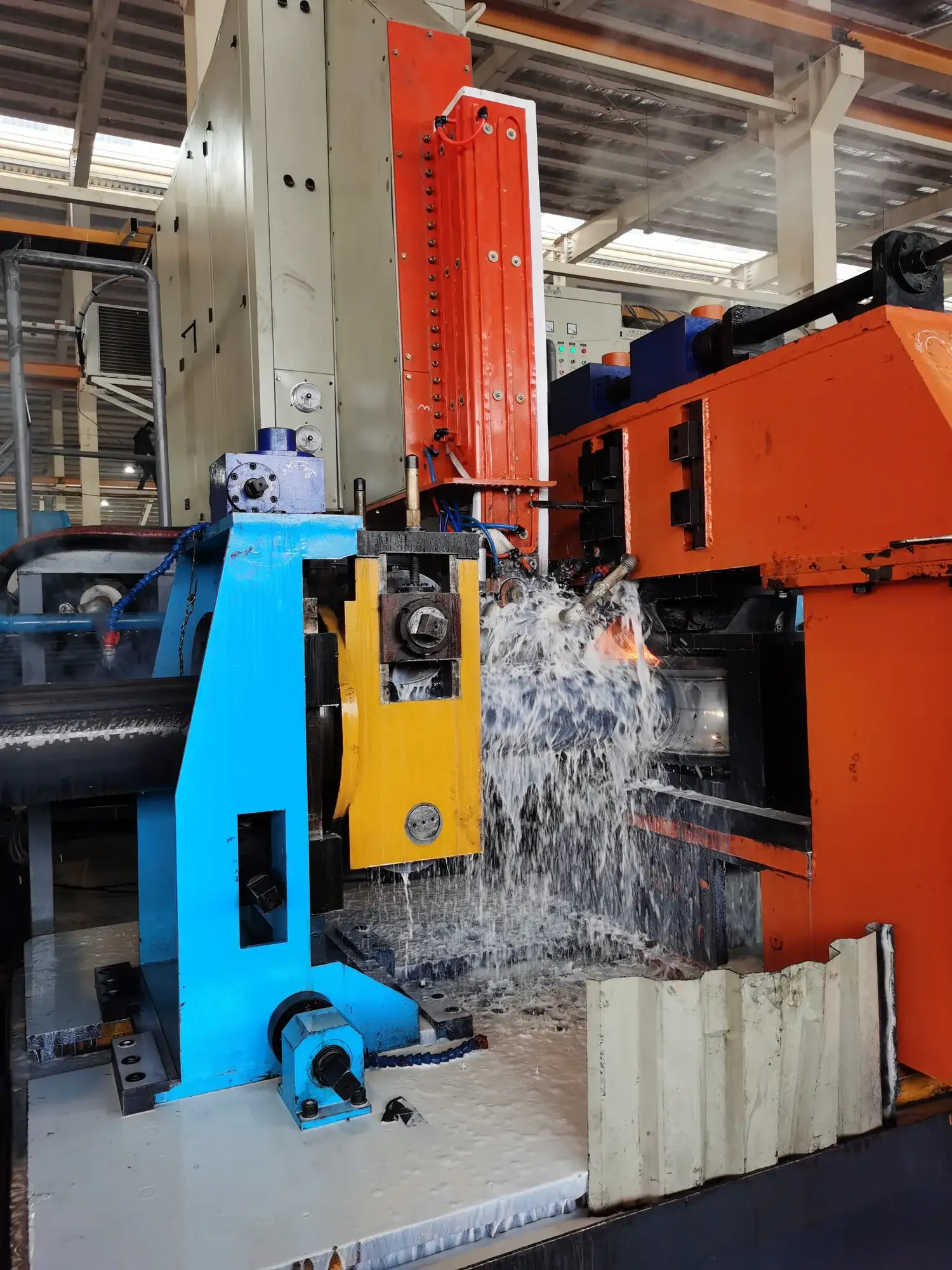
Rolls form the strip progressively into an open tube; high-frequency current concentrates at the open edges through skin and proximity effect and heats them to welding temperature; squeeze rolls press the edges together to form the seam, and the tube is then cooled, sized and straightened.
Wear Parts and Consumables
Saw blades wear with cutting volume, and impeders and induction coils wear with welding hours — their condition decides how well the welding energy concentrates at the seam. We keep supplying all of these wear parts. Forming and sizing rolls are replaced as they wear and are machined on our own CNC equipment, so replacements stay available. We specify the cooling medium, hydraulic oil and grease, and the plant buys them locally.
Size Change, Roll Wear and Yield
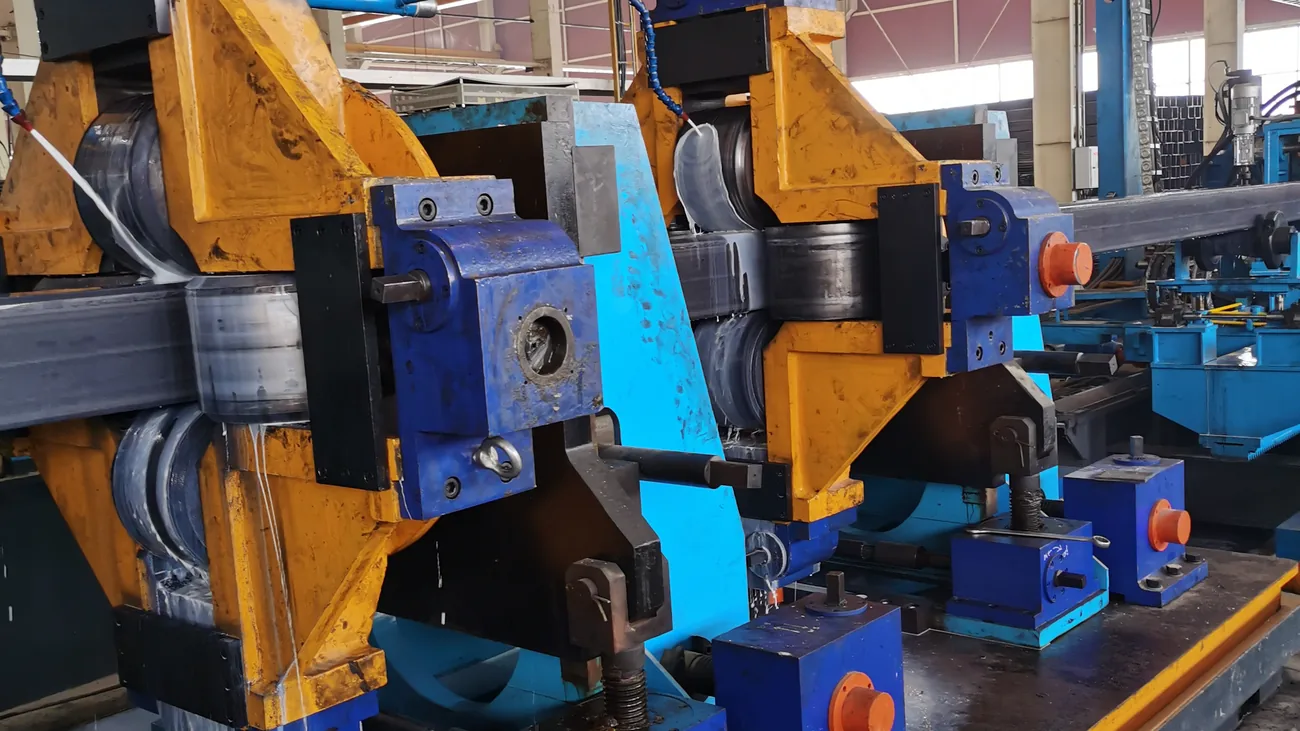
On the Φ165–325 mm tube mill, a size change means changing the roll set, and running cost at this diameter is dominated by tooling and changeover. This line uses FFX forming, a variant of W forming in which the rolls of the open forming section are shared across sizes and stay on the mill, so part of the set is never changed and roll cost comes down. A trained change crew keeps scrap during a size change down.
Forming and sizing rolls set shape accuracy, roundness and squareness, edge definition and dimensional consistency; roll material and heat treatment decide how long that accuracy holds. When either is wrong, the symptoms are early wear, diameter drift, uneven corner lines and repeated re-machining at every size change.
After a size change, PLC and variable-frequency drive control keep line speed and cut length repeatable from batch to batch, instead of leaving them to the operator.
On some of our higher-specification lines, material yield can reach 93 per cent; the yield actually achieved on any line also depends on the buyer’s scheduling and operating practice.
Where the Φ165–325 mm Tube Mill Sits in the Series
HG325 is the ninth of twelve models. Its range overlaps the HG219 (Φ114–219 mm) and the HG273 (Φ114–273 mm) below it and sits inside the HG426 (Φ165–426 mm) above it. Wall thickness separates it only from the HG219: this line runs 4.0–10.0 mm, like the HG273 and the HG426, while the HG219 stops at 8.0 mm. So a Φ165–325 mm tube mill is the line when your largest pipe falls between Φ273 and 325 mm; if everything you make is below Φ273 mm the HG273 covers it, and above Φ325 mm the HG426 takes over. Choose the step that contains your whole product list with the least unused range, and check where your smallest pipe sits as well as your largest.
Where Our Lines Are Running
Our lines have gone to 25 countries — most make construction tube, and others run fire-extinguisher tube, furniture tube and other sections. In this size range: Afghanistan (165 × 5), Thailand (165 × 6), Russia (HG165 × 6), Kyrgyzstan (HG168 × 5), South Korea (254 × 8) and Kenya (150 × 150 × 6) for construction tube, and Russia (168 × 7) for fire-extinguisher tube.
Delivery, installation and support
The line is dismantled into units and shipped in containers: heavy frames are braced and secured, while precision parts and wear items travel in wooden cases together with a spare-parts pack. Shipment is within 90 working days of the deposit.
Installation and commissioning are guided on site by our engineers, with online support behind them; the buyer provides the installation crew and covers the engineers’ travel, lodging and daily allowance. Our after-sales team handles enquiries.
Payment is staged — 30% by T/T on signing, 65% by T/T before shipment and 5% after installation and commissioning — or made by L/C at sight; prices are quoted ex-works (EXW).
The steps that need operator training are coil loading and threading, shear-weld coil joining, size setting and roll changes, and weld parameter setting; cutting and collecting are routine.
Certifications: ISO 9001:2015 quality management system; CE marked under the EC Machinery Directive 2006/42/EC.
When the Pipe Needs an Inspection Record
If your pipe has to carry an inspection record, that is a job for one of our API lines rather than the HG325. In this size range the API 406 line covers Φ152–406 mm with wall 3.0–12.7 mm and the API 426 line covers Φ159–426 mm with wall 3.0–14 mm; both add medium-frequency annealing, straightening, end facing, hydrostatic testing, and ultrasonic and eddy-current inspection to the tube mill. The difference is post-weld heat treatment and a full inspection chain, not a larger welder.
Weld Quality at This Diameter
Quality is set in the order the strip meets the line: incoming strip grade, thickness tolerance and flatness; forming roll material and heat treatment; high-frequency power and frequency matched to welding speed; squeeze amount and seam alignment; post-weld cooling matched to the same speed; sizing and straightening; impeder and induction coil condition; and setup at each size change. At this diameter the strip is wide, and camber in the strip is something a forming mill cannot correct once it is there — a slitting line such as our SL-12×2000 holds slit width to ±0.2 mm and camber to 0.5 mm per 1000 mm.
Weld fusion is on the equipment side — power matching, seam alignment and squeeze control — while strip quality and operating practice are on the buyer’s. Dimensional accuracy divides the same way: sizing and straightening on the equipment side, incoming strip thickness tolerance on the buyer’s.
What to send with an enquiry
Outside diameter, wall thickness, section shape, steel grade and target output, and whether the pipe has to carry an inspection record — that last point decides between this line and an API line. Welder power comes with the size range: on the HG325 tube mill it is 600 kW.
When you compare lines at this size, check weld pass rate, the diameter and wall range covered, whether a coil change stops the line, corner definition and straightness on square pipe, changeover time between sizes, and energy use and yield per tonne.
Line Photos from the Works
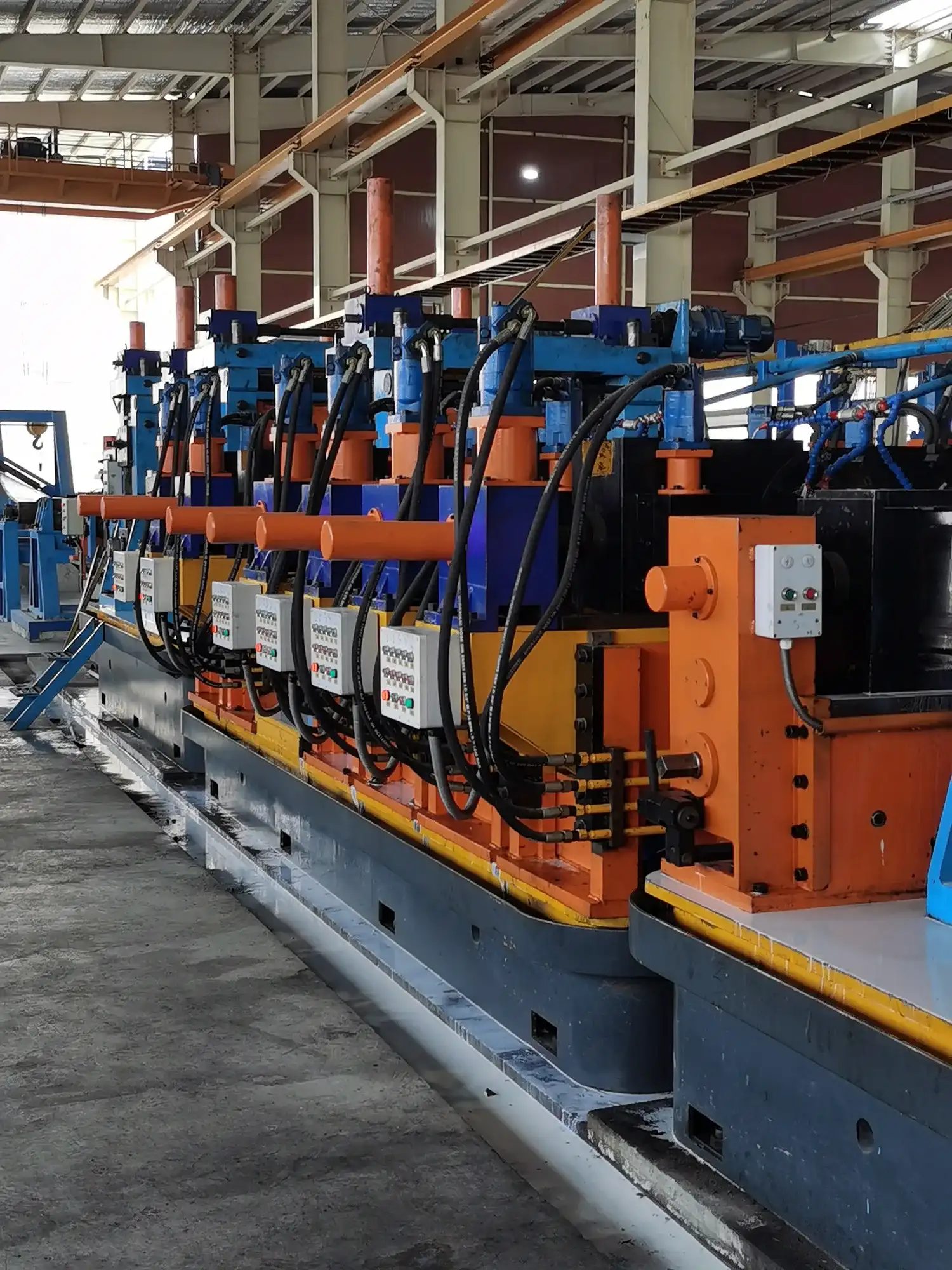
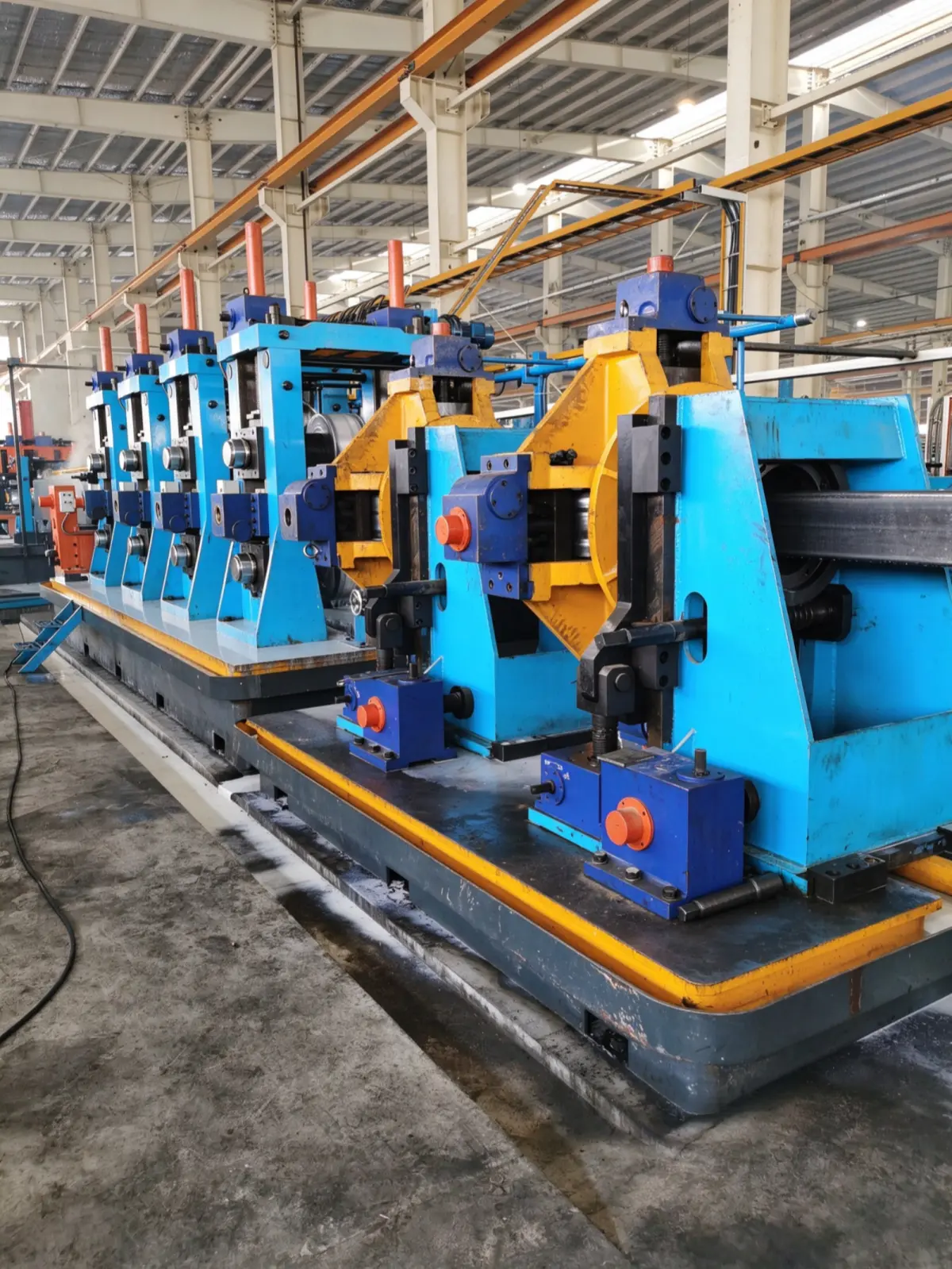
Three photographs of the HG325 tube mill, taken in our own workshop. Click any photo for the full-size image.
More from this line
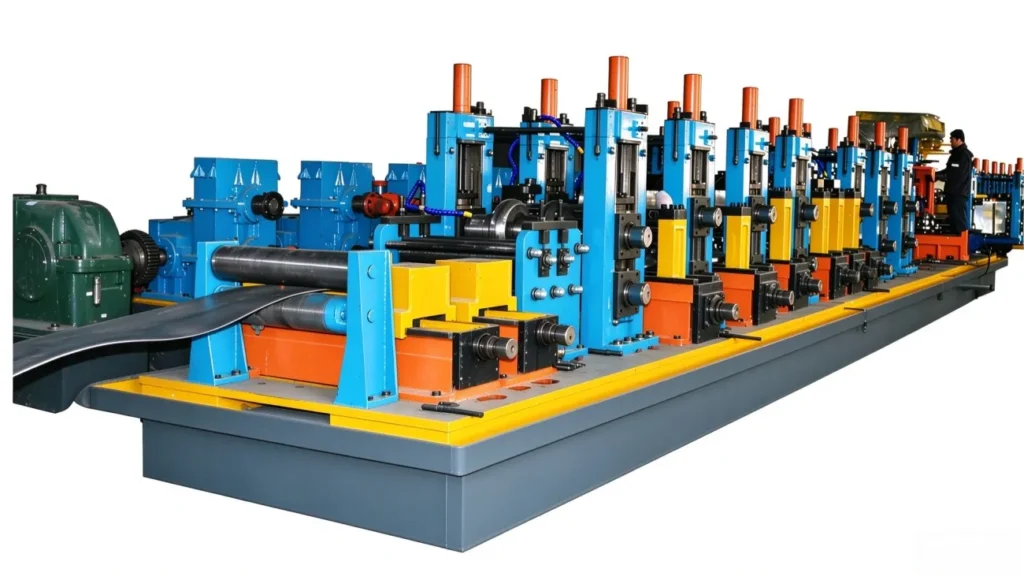 HG219
HG219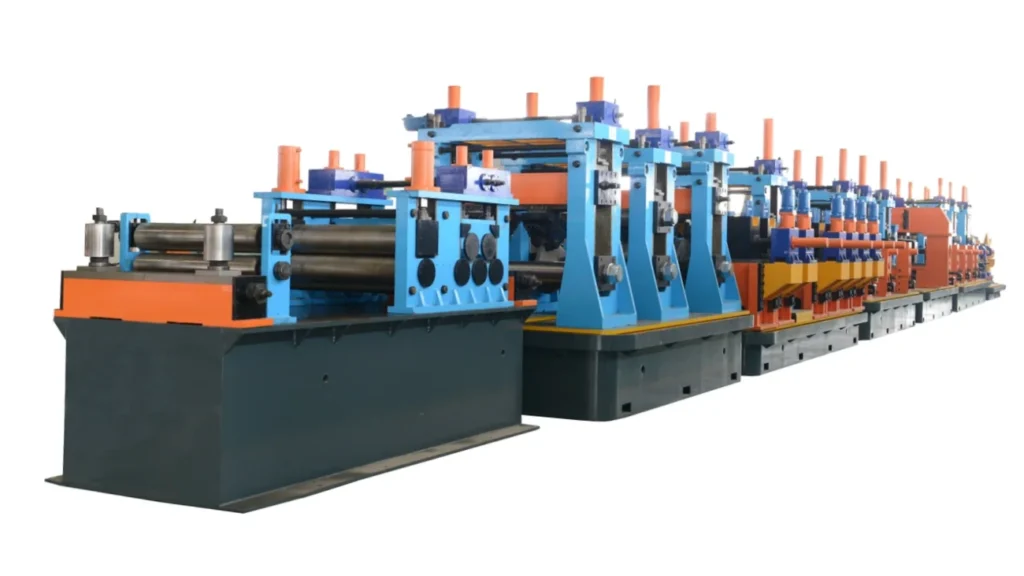 HG273
HG273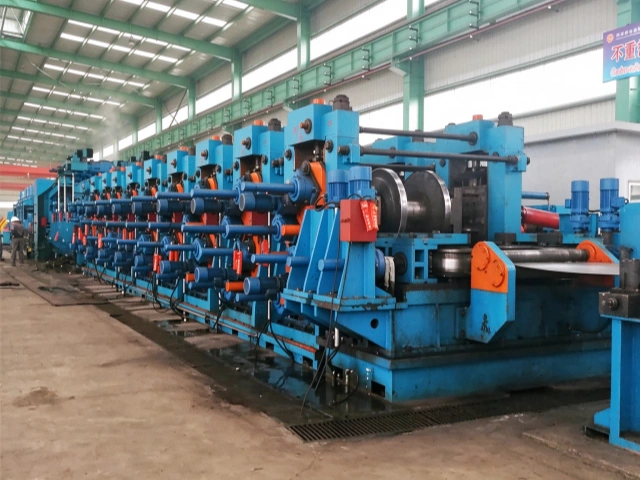 HG426
HG426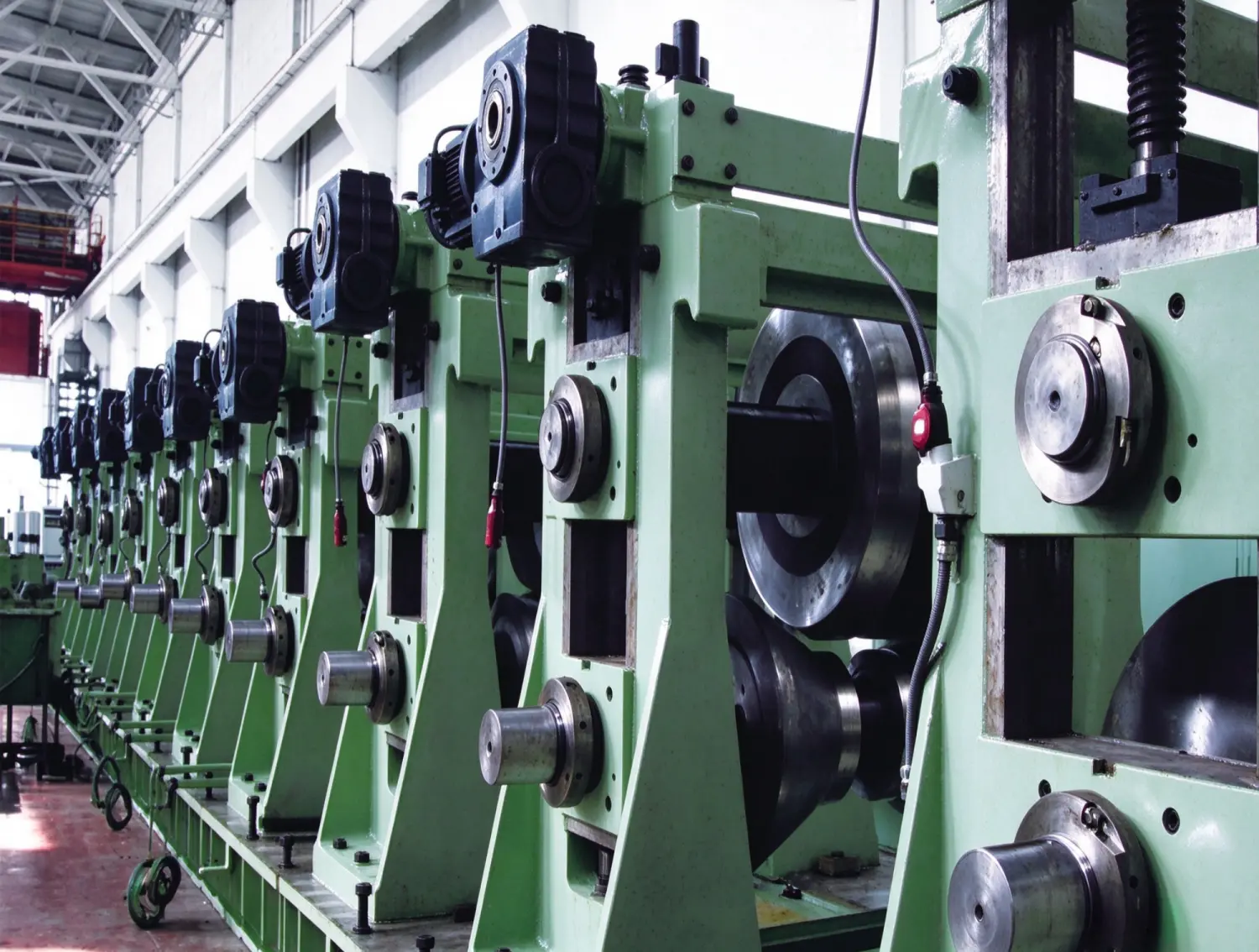 HG508
HG508Send Your Enquiry
Tell us the pipe outside-diameter range, the wall thickness and the output you need. An engineer reads every enquiry — it does not land in a general sales inbox.