
Home › Tube Mill › Small-Diameter Tube Mill › HG76
The third of the twelve model steps — Φ25 to 76 mm round pipe and 20×20 to 60×60 mm square section, on a 250 kW high-frequency welder.
Model Steps
In This Line
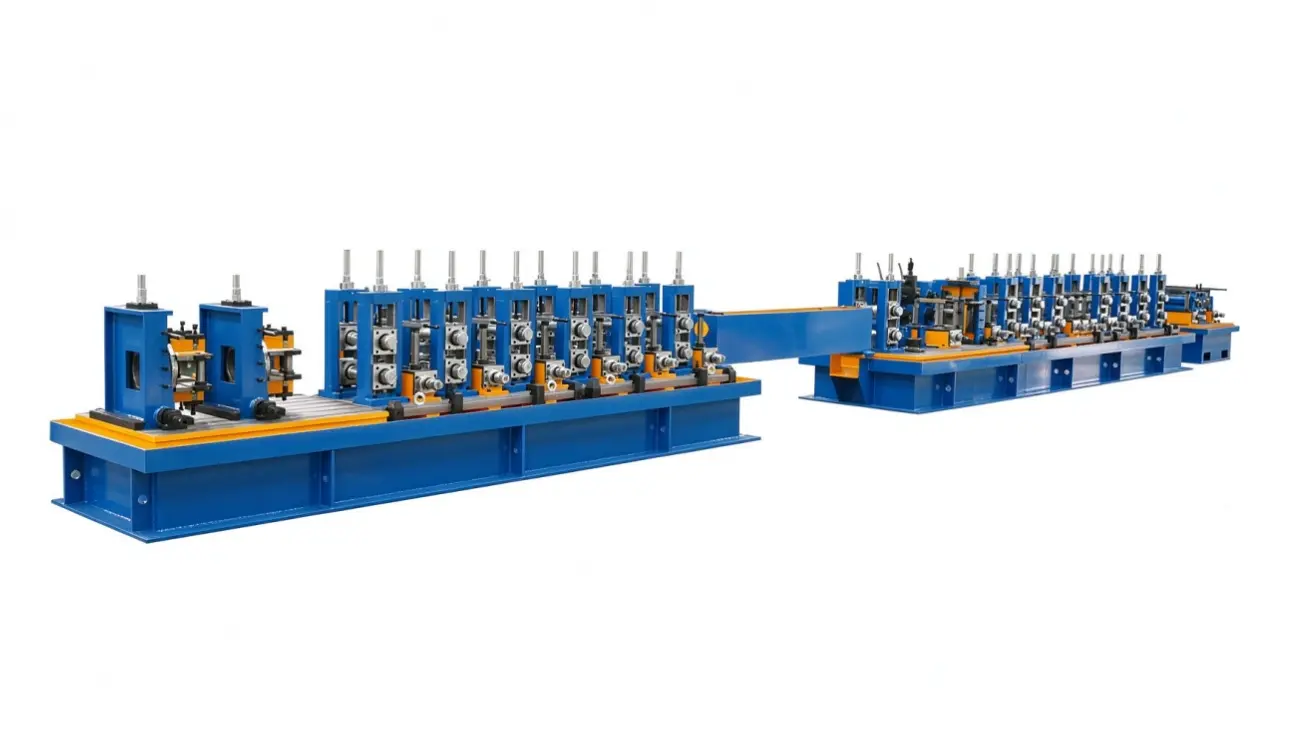
The HG76 tube mill is a Φ25–76 mm tube mill for round pipe with 1.5–3.0 mm wall and square pipe from 20×20 to 60×60 mm, welded by a 250 kW high-frequency welder. Its diameter range overlaps the HG50 from Φ25 to 50.8 mm and the HG32 from Φ25 to 32 mm. Wall thickness starts at 1.5 mm, so tube below Φ25 mm or thinner than 1.5 mm belongs on those smaller lines.
Line Specification — HG76×3.0
| Round tube outside diameter | Φ25 – Φ76 mm |
|---|---|
| Wall thickness | 1.5 – 3.0 mm |
| Square / rectangular tube | Square 20×20 – 60×60 mm; wall 1.5 – 2.5 mm |
HG76 Tube Mill Specifications
- Outside diameter range: Φ25–76 mm.
- Wall thickness: 1.5–3.0 mm for round pipe; 1.5–2.5 mm for square pipe.
- Section shapes: round, square and rectangular.
- Forming: conventional roll forming.
- Welding: high-frequency induction, with a 250 kW welder.
- Automation: semi-automatic or full PLC.
Line speed and shift output depend on wall thickness, steel grade and cut length, so we confirm both at quotation once you send us your pipe size, material grade and cut length.
What a Tube Mill for 76mm Pipe Includes
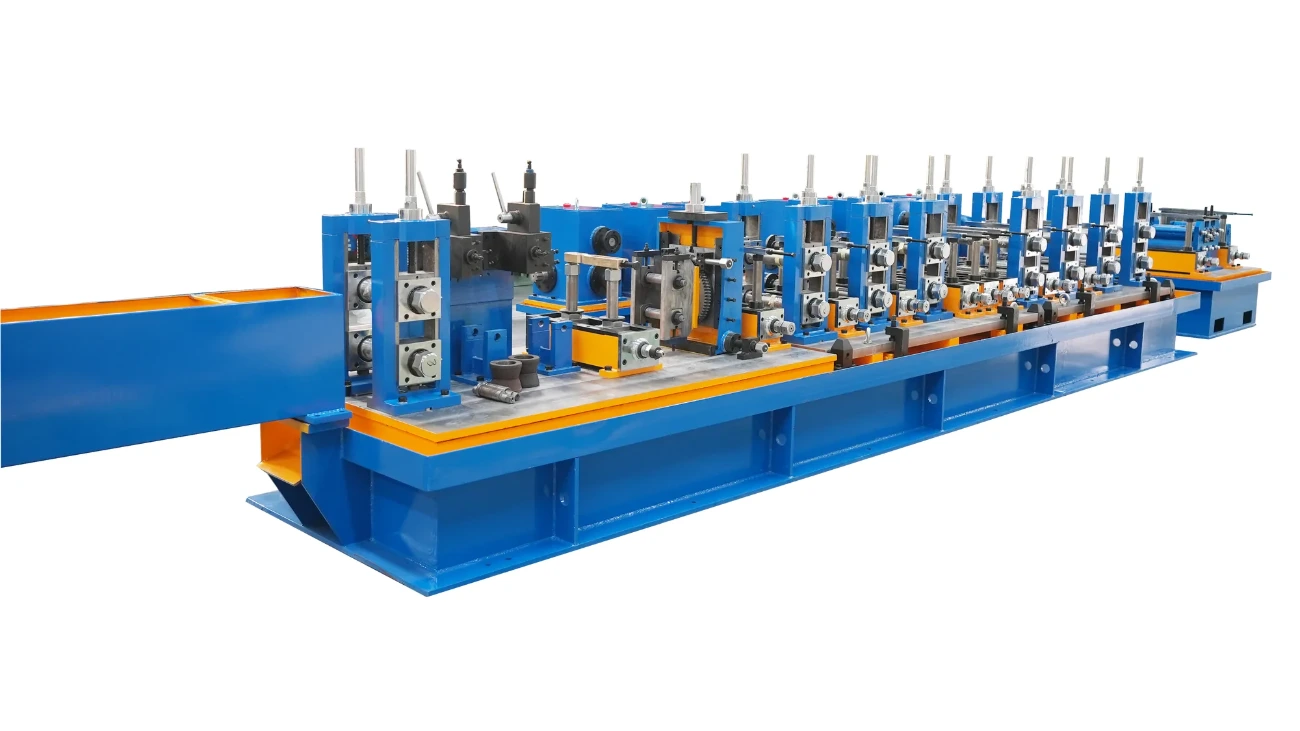
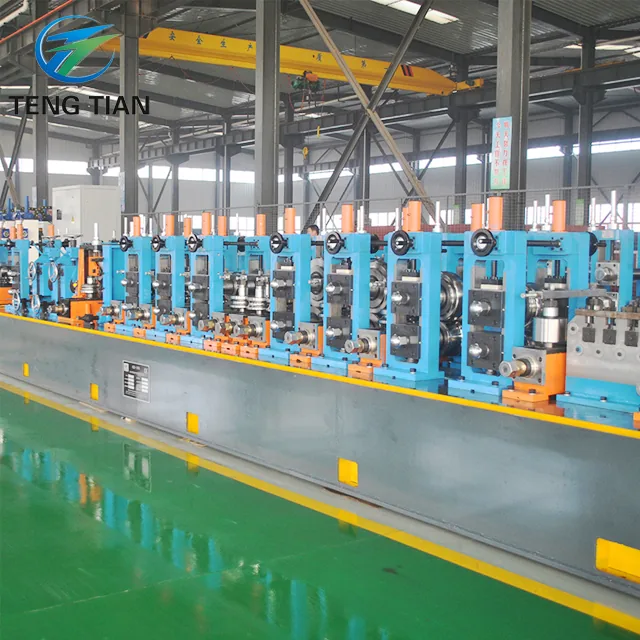
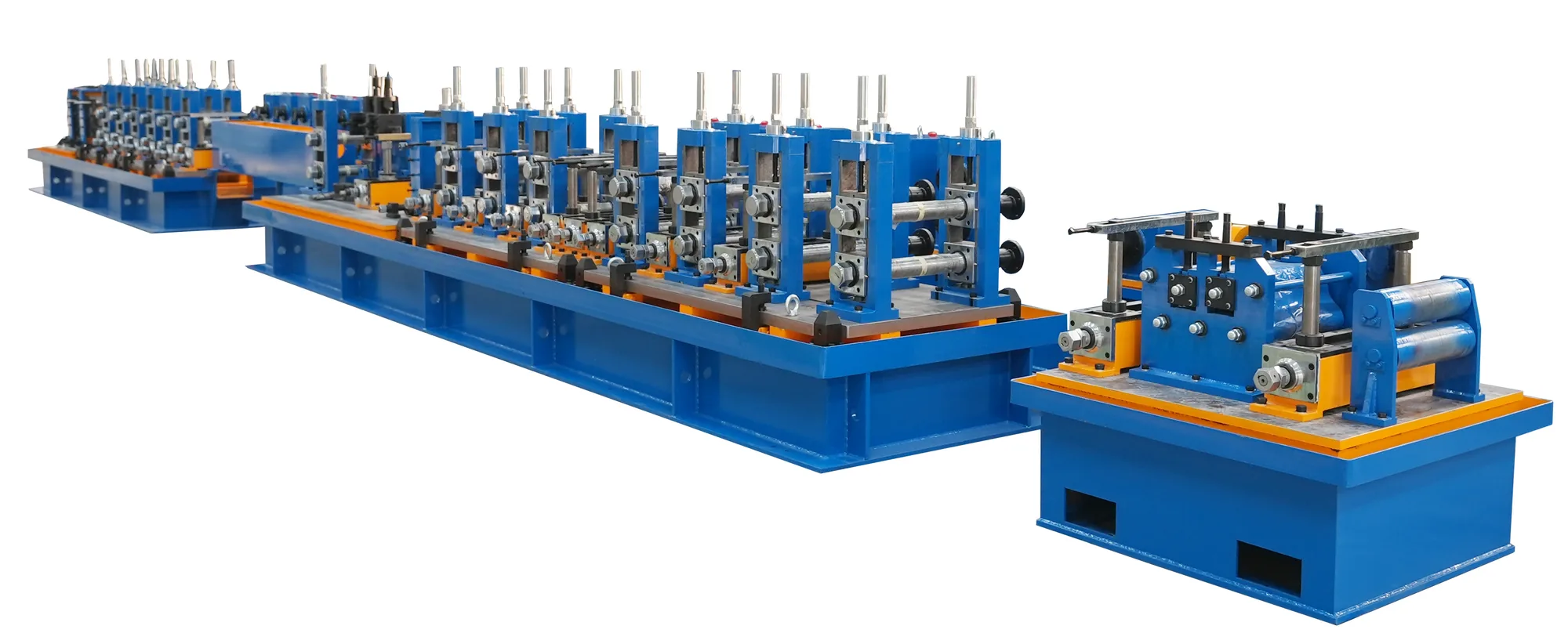
As a tube mill for 76mm pipe, the HG76 line is built from the following units, from coil entry to finished pipe:
- Uncoiler with a pneumatic four-link expanding mandrel.
- Automatic shear-welder, joining strip end to strip end so the line keeps running between coils.
- Spiral accumulator, storing strip while the next coil is prepared.
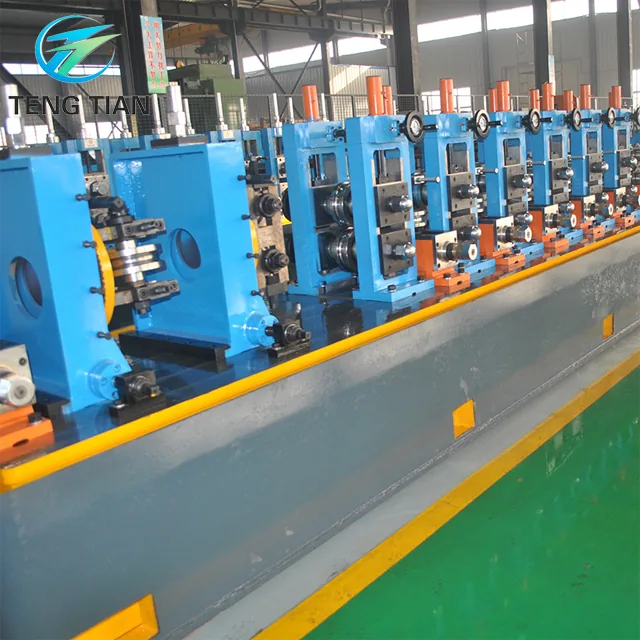
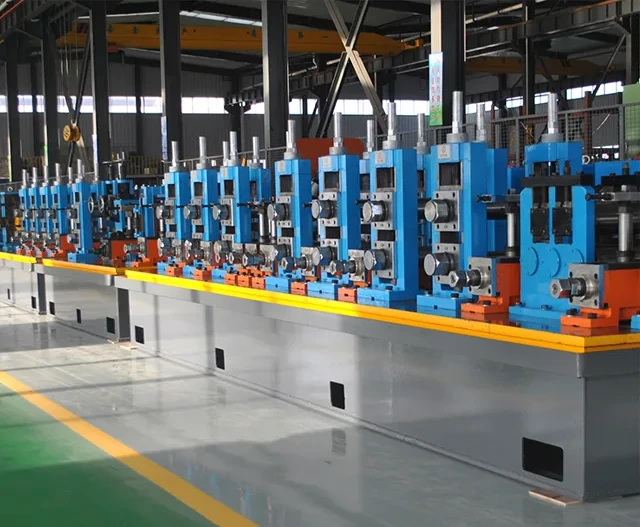
- Forming and sizing mill.
- 250 kW high-frequency welder.
- Flying saw, cutting to length while pipe is delivered continuously.
- Run-out table, carrying the finished pipe to the collecting table.
- PLC and variable-frequency control tying speed and cut length together.
On the heavier HG76×4.0 configuration, a five-roll leveller at the mill entry flattens the strip before forming.
Wear Parts and Consumables
Saw blades wear with cutting volume, and impeders and induction coils wear with welding hours; both are wear parts we keep supplying. Forming and sizing rolls are replaced as they wear and are machined on our own CNC equipment. We specify the cooling medium and hydraulic oil, and the plant buys them locally.
Size Change, Roll Wear and Yield
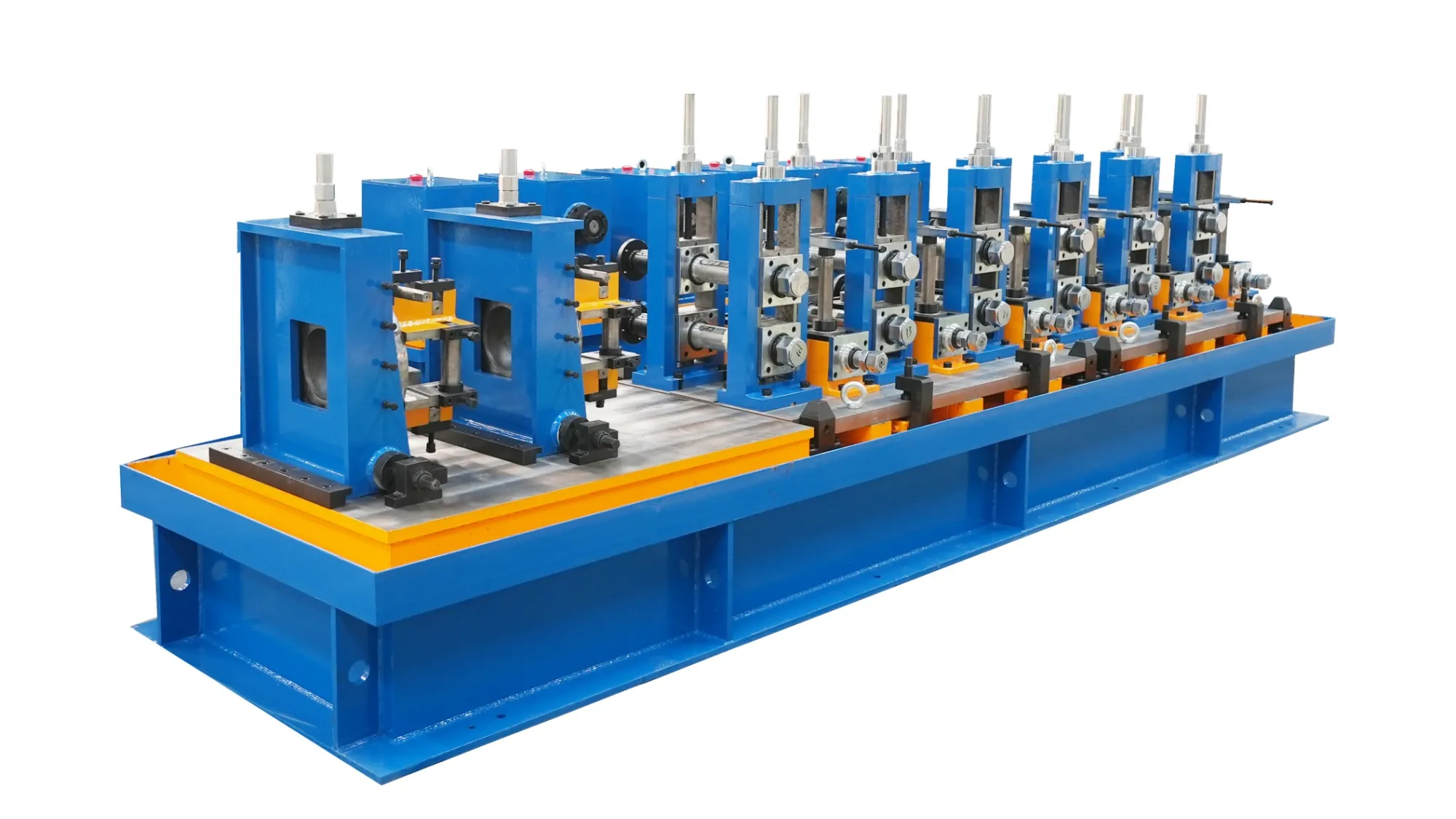
On the Φ25–76 mm tube mill, a size change means changing the roll set. Roll material and heat treatment decide how often that set has to be reworked: under-specified rolls wear early, drift on diameter and need frequent regrinding.
On the HG76×4.0 configuration, a quick roll-change system shortens the stop: the working table is lifted out by crane and a second table, already fitted with the rolls for the new size, is lifted in and locked.
After a size change, PLC and variable-frequency drive control keep line speed and cut length repeatable from batch to batch, instead of leaving them to the operator.
On some of our higher-specification lines, material yield can reach 93 per cent; the yield actually achieved on any line also depends on the buyer’s scheduling and operating practice.
Where the Φ25–76 mm Tube Mill Sits in the Series
HG76 is the third of twelve models. Its range overlaps the HG50 (Φ16–50.8 mm) below it and the HG89 (Φ32–89 mm) above it, and the series continues through HG114, HG165, HG219, HG273, HG325, HG426, HG508 and HG630. If your sizes fall in an overlap, compare the lines by their ranges rather than their model numbers before choosing a Φ25–76 mm tube mill.
Where Our Lines Are Running
Our lines have gone to 25 countries — most make construction tube, and others run fire-extinguisher tube, furniture tube and other sections. In this size range: Egypt (HG76 × 3) and India (76 × 3) for construction tube, and Malaysia (HG60 × 3) for furniture tube.
Spare Rolls and Size Changes
Two questions come up most often with this line. Will rolls and spare parts keep coming after handover? Yes: we machine forming and sizing rolls in-house, ship spare parts directly and send engineers on site when needed. Does a size change mean a long stop? On a conventional roll-forming line it means changing the roll set; the line that changes size without changing rolls is our direct-forming square tube mill.
Delivery, installation and support
The line is dismantled into units and shipped in containers: heavy frames are braced and secured, while precision parts and wear items travel in wooden cases together with a spare-parts pack. Shipment is within 90 working days of the deposit.
Installation and commissioning are guided on site by our engineers, with online support behind them; the buyer provides the installation crew and covers the engineers’ travel, lodging and daily allowance. Our after-sales team handles enquiries.
Payment is staged — 30% by T/T on signing, 65% by T/T before shipment and 5% after installation and commissioning — or made by L/C at sight; prices are quoted ex-works (EXW).
Weld and Size Quality on This Line
Four settings decide weld and dimension quality from day to day: high-frequency power, frequency and welding speed; squeeze and seam alignment; sizing and straightening; and the condition of the impeder and induction coil. Other factors sit upstream — incoming strip grade, thickness tolerance and flatness, and roll material and heat treatment — or in control and inspection: stable PLC and drive control, setup after a size change, post-weld cooling and final inspection.
Weld fusion is on the equipment side — power matching, seam alignment and squeeze control — while strip quality and operating practice are on the buyer’s. Dimensional accuracy divides the same way: sizing and straightening on the equipment side, incoming strip thickness tolerance on the buyer’s.
What to send with an enquiry
Outside diameter, wall thickness, section shape and target output, plus the full spread of sizes you expect to run. This range overlaps both the HG50 and the HG89, so the right line depends on your wall thickness and on which one spends the least time changing size for your mix, not only on which one reaches your largest size. Welder power comes with the size range: on the HG76 tube mill it is 250 kW.
Watch This Line Running
HG76 High-Frequency Welded Pipe Mill — O.D. 25-76 mm
HG76 Lines in Service
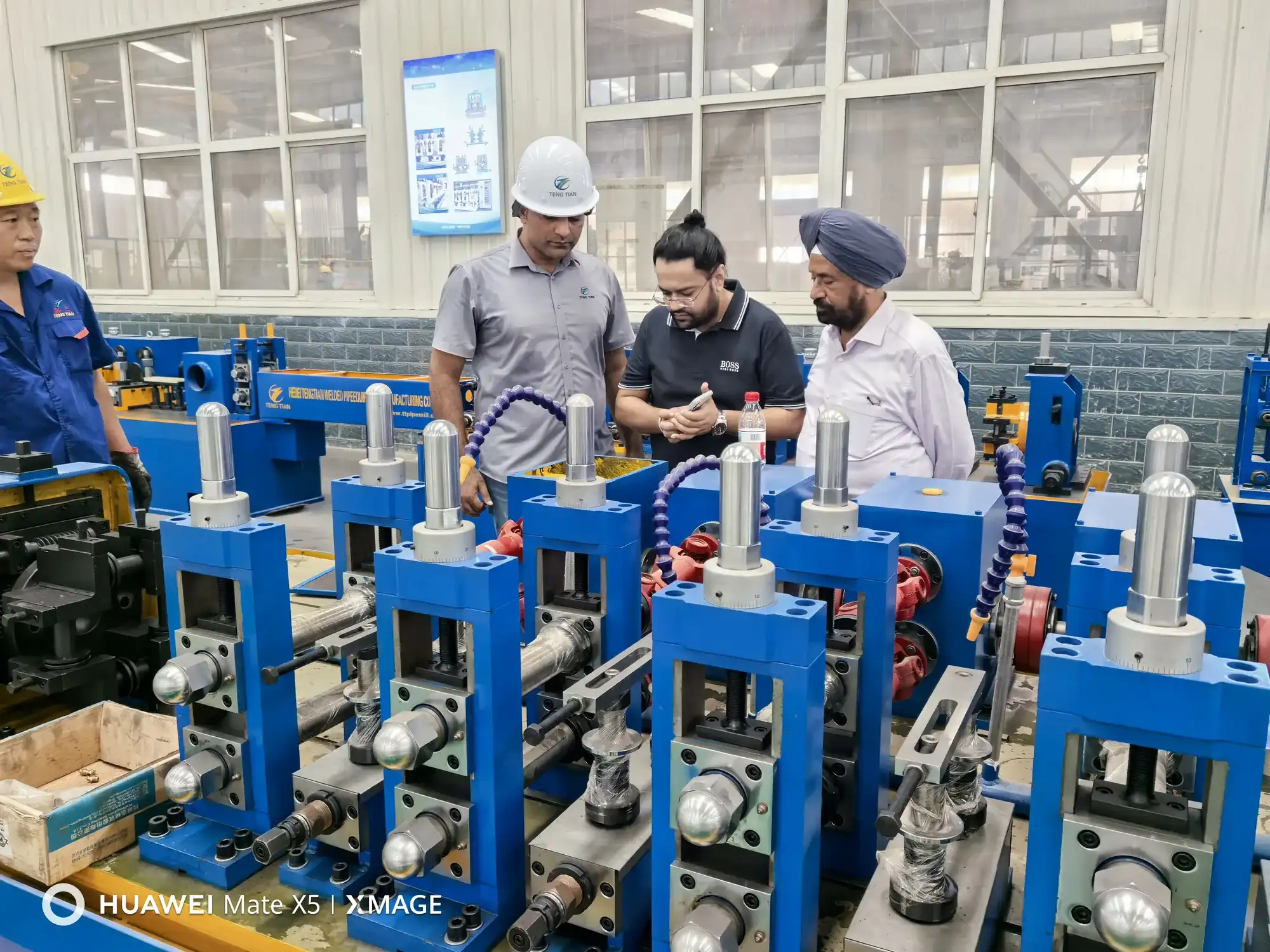
Photographs from customer projects, at their plants or on visits to our works. Customer names are withheld; each card shows the country, the industry and the model or size.
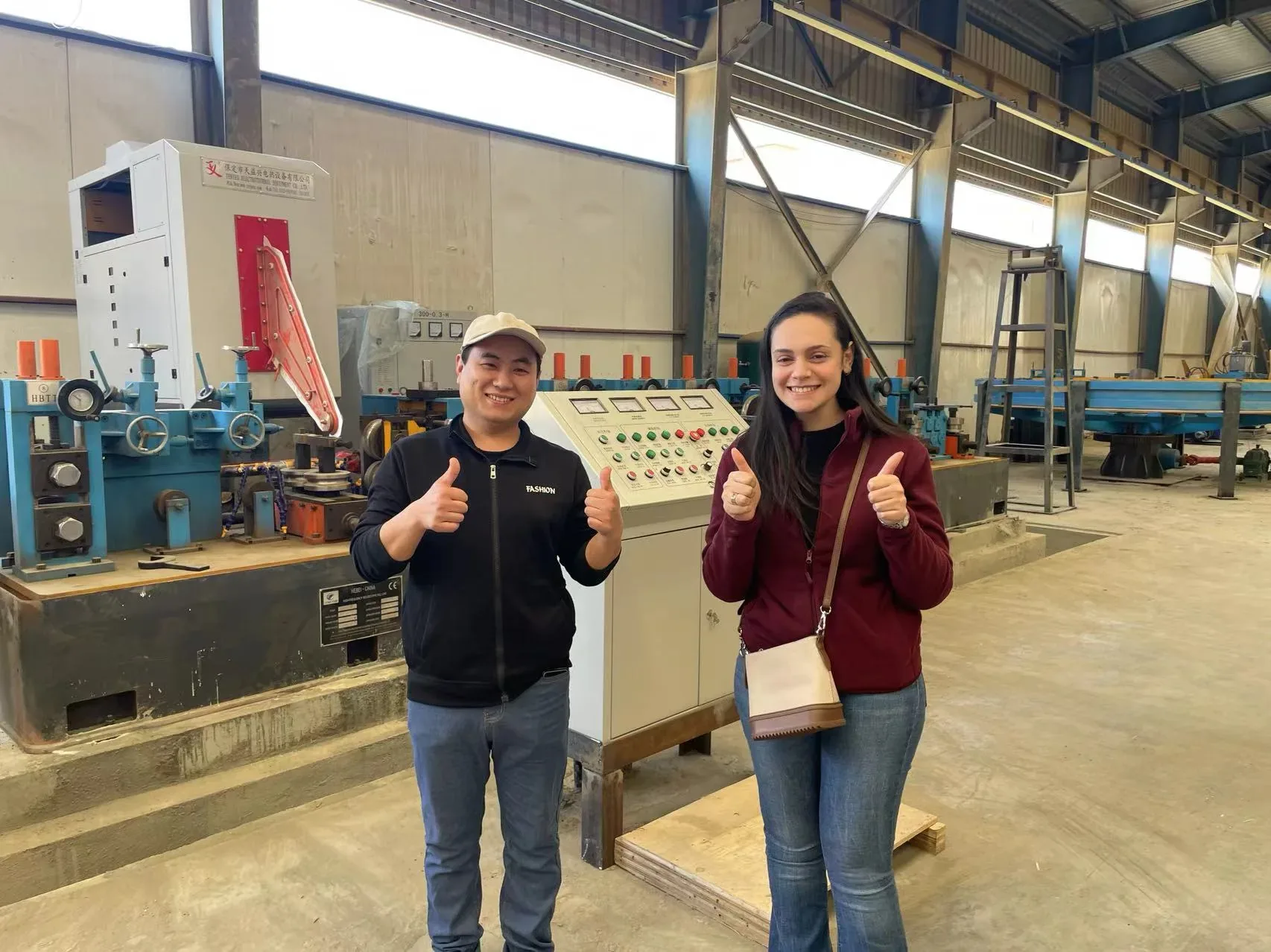
Line Photos from the Works
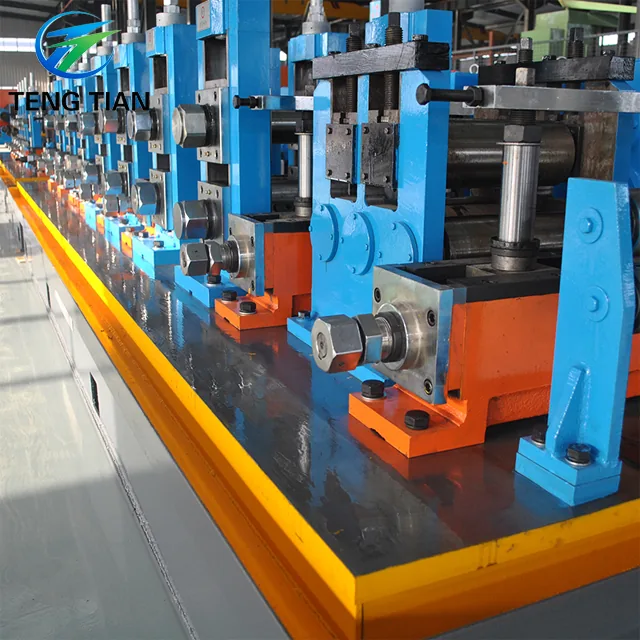
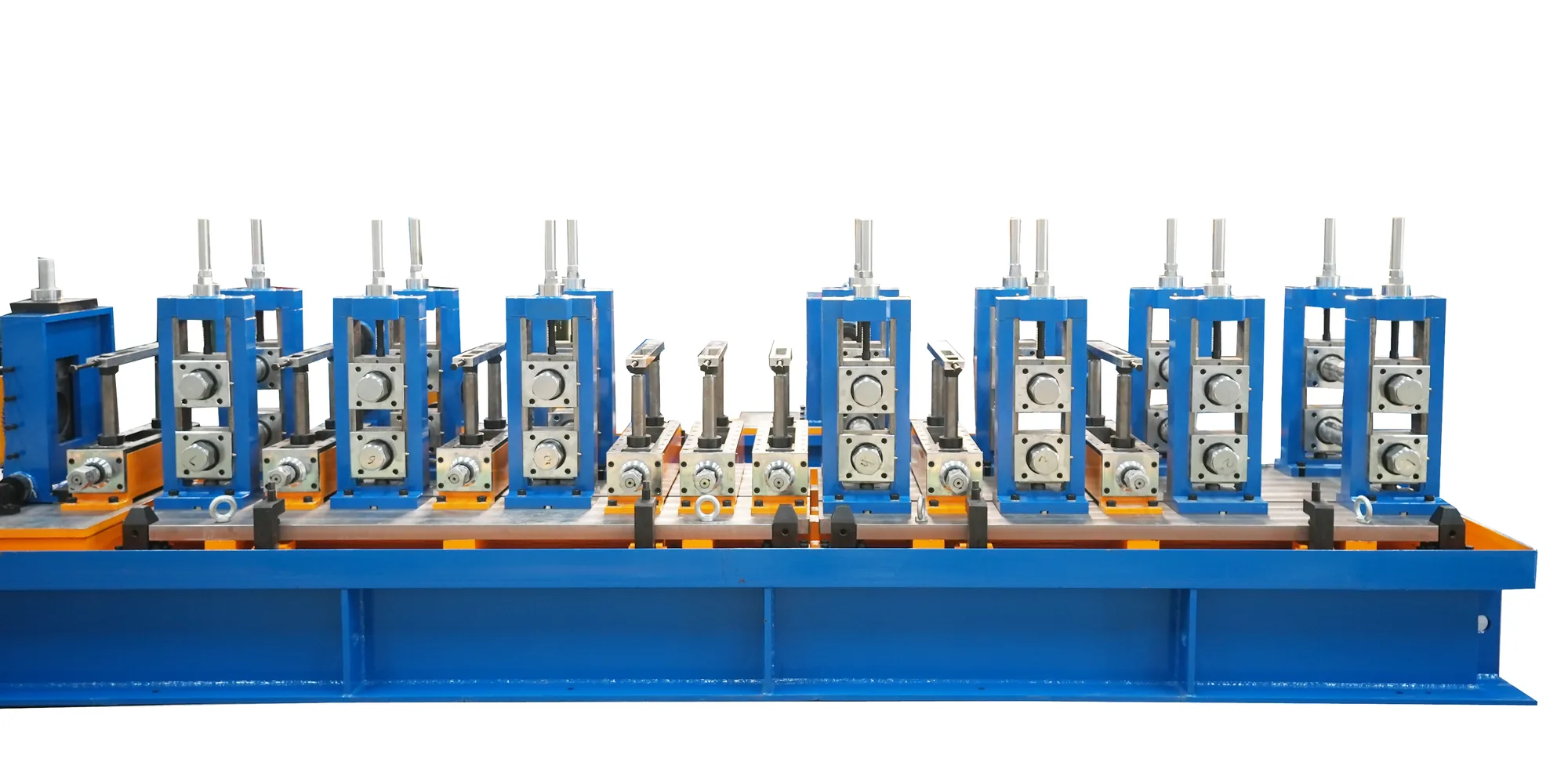
Six photographs of the HG76 tube mill. Click any photo for the full-size image.
More from this line
Neighbouring Model Steps
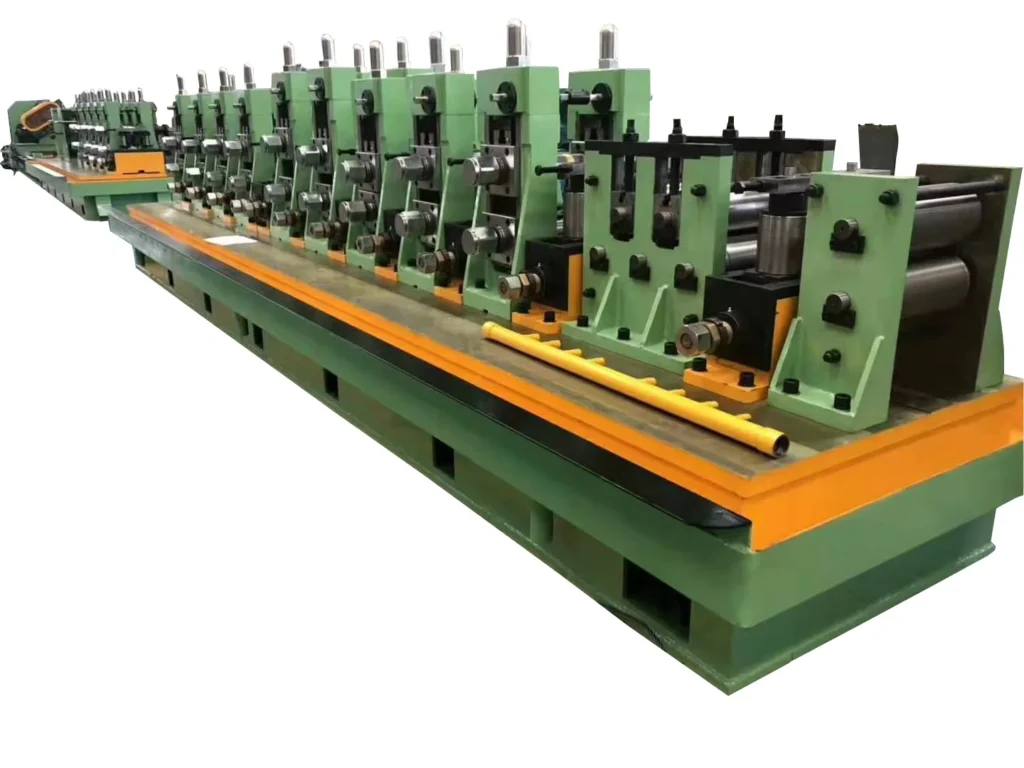 HG50 — Φ16 – 50.8 mm
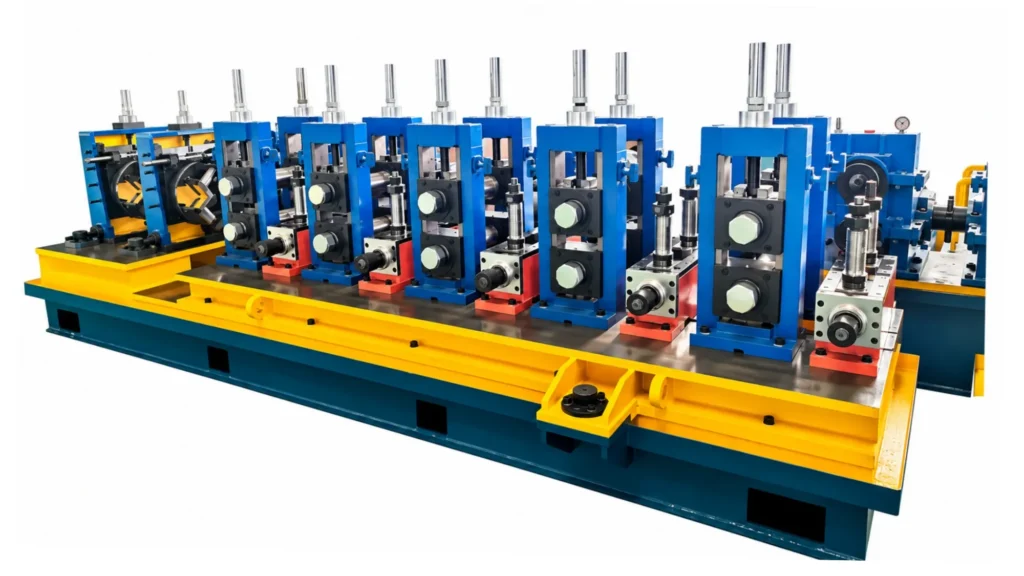 HG89 — Φ32 – 89 mm
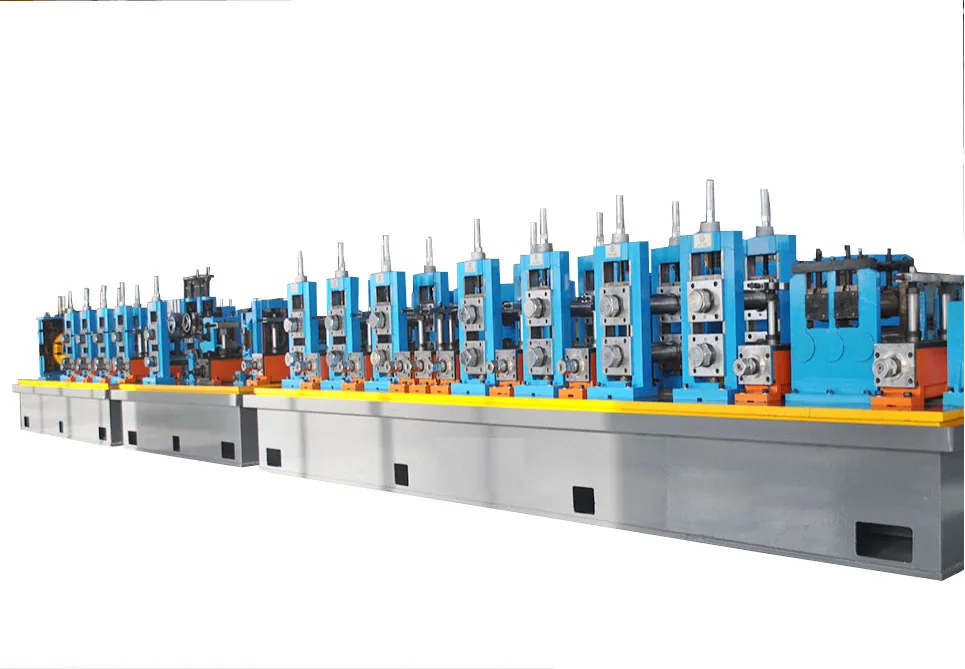 HG114 — Φ45 – 114 mm
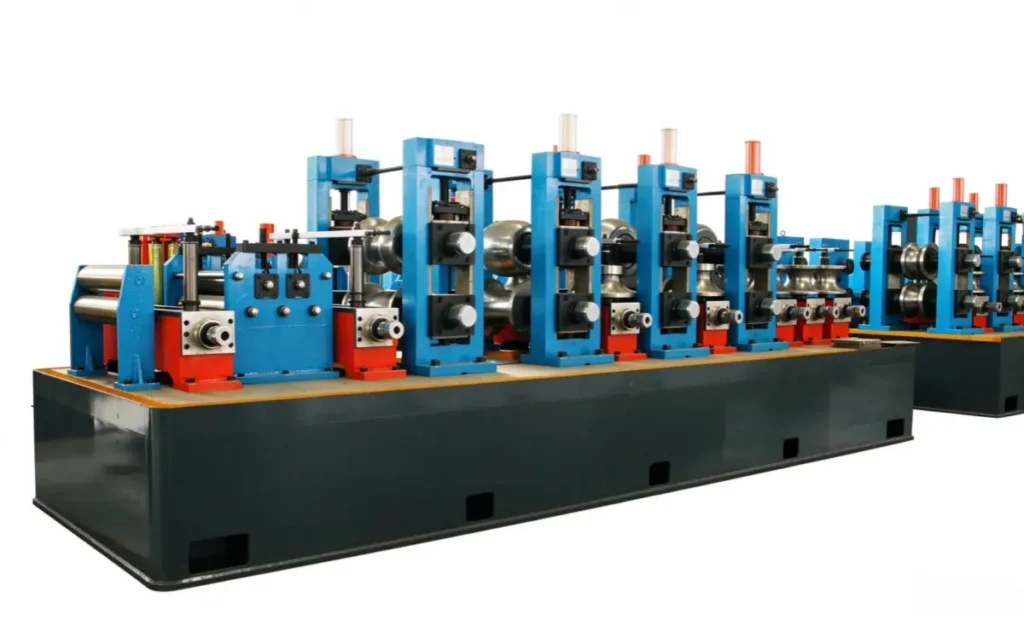 HG165 — Φ60 – 165 mm
Send Your Enquiry
Tell us the pipe outside-diameter range, the wall thickness and the output you need. An engineer reads every enquiry — it does not land in a general sales inbox.