
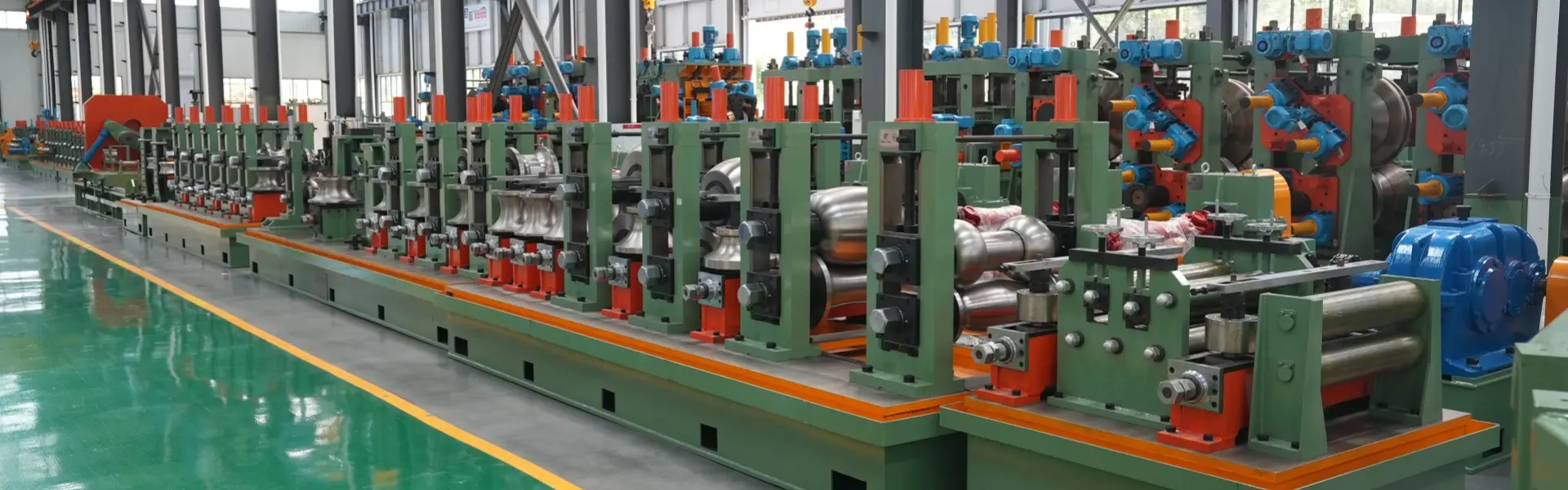
Tube Mill & Welded Pipe Production Lines
Twelve model steps, HG32 to HG630 — round, square and rectangular straight-seam welded pipe.
In This Line
Model Steps
Tengtian builds the tube mill as a continuous welded pipe production line: steel coil goes in at one end and straight-seam welded pipe comes off the other.Twelve model steps run from HG32 to HG630, covering finished outside diameters from Φ10 to Φ630 mm with wall 0.5 to 16 mm.
More from this line
More on this line — specifications, model steps and shop-floor photographs.
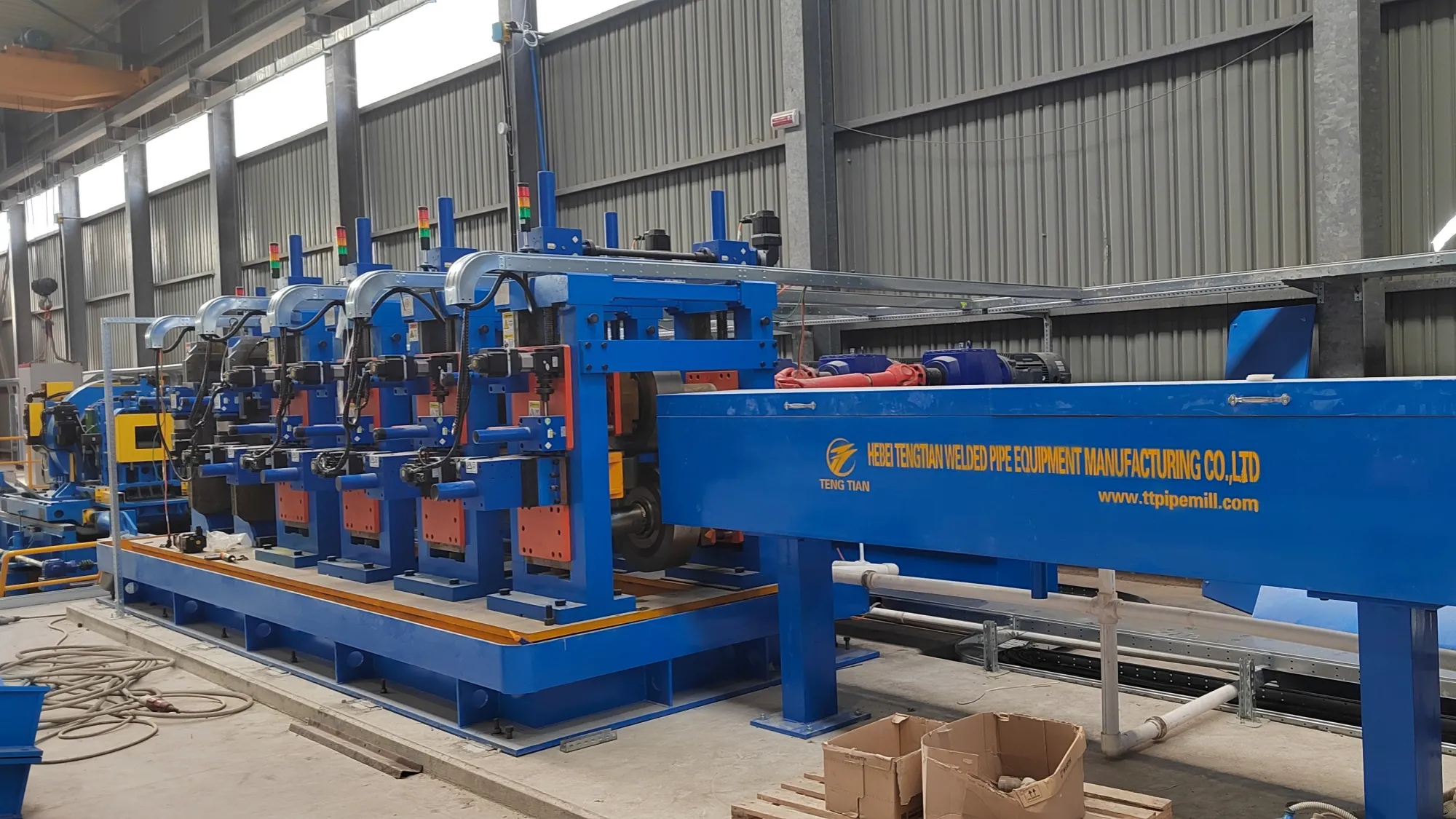 HGF150 Fully Automatic Square and Rectangular Tube Forming and Welding EquipmentA direct-forming line for square and rectangular tube from 70 × 70 mm to 150 × 150 mm.See the line →
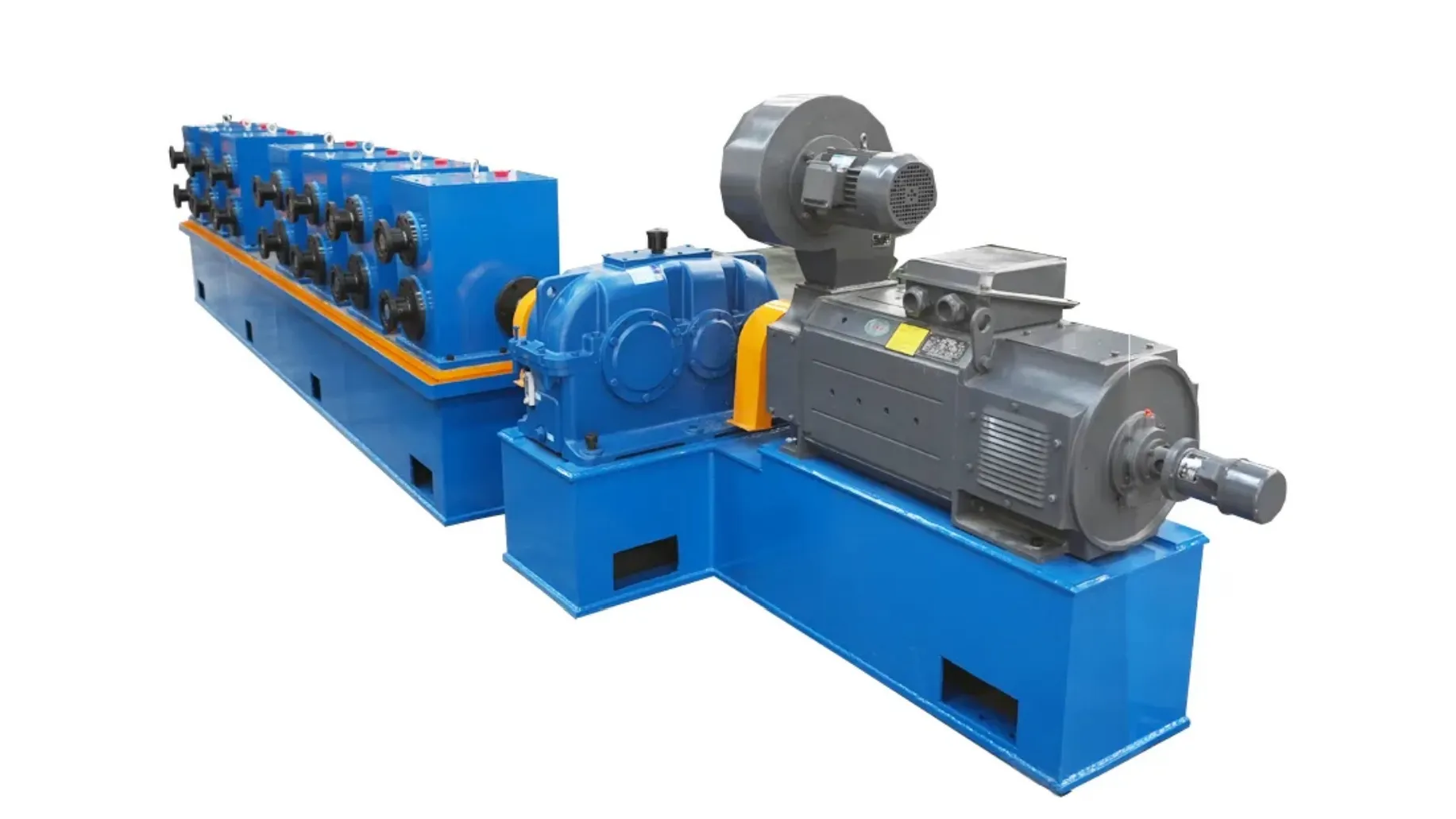 Tube Mill Machine for Steel Pipe ProductionOne continuous train: coil in at one end, cut-to-length welded pipe off the other.See the line →
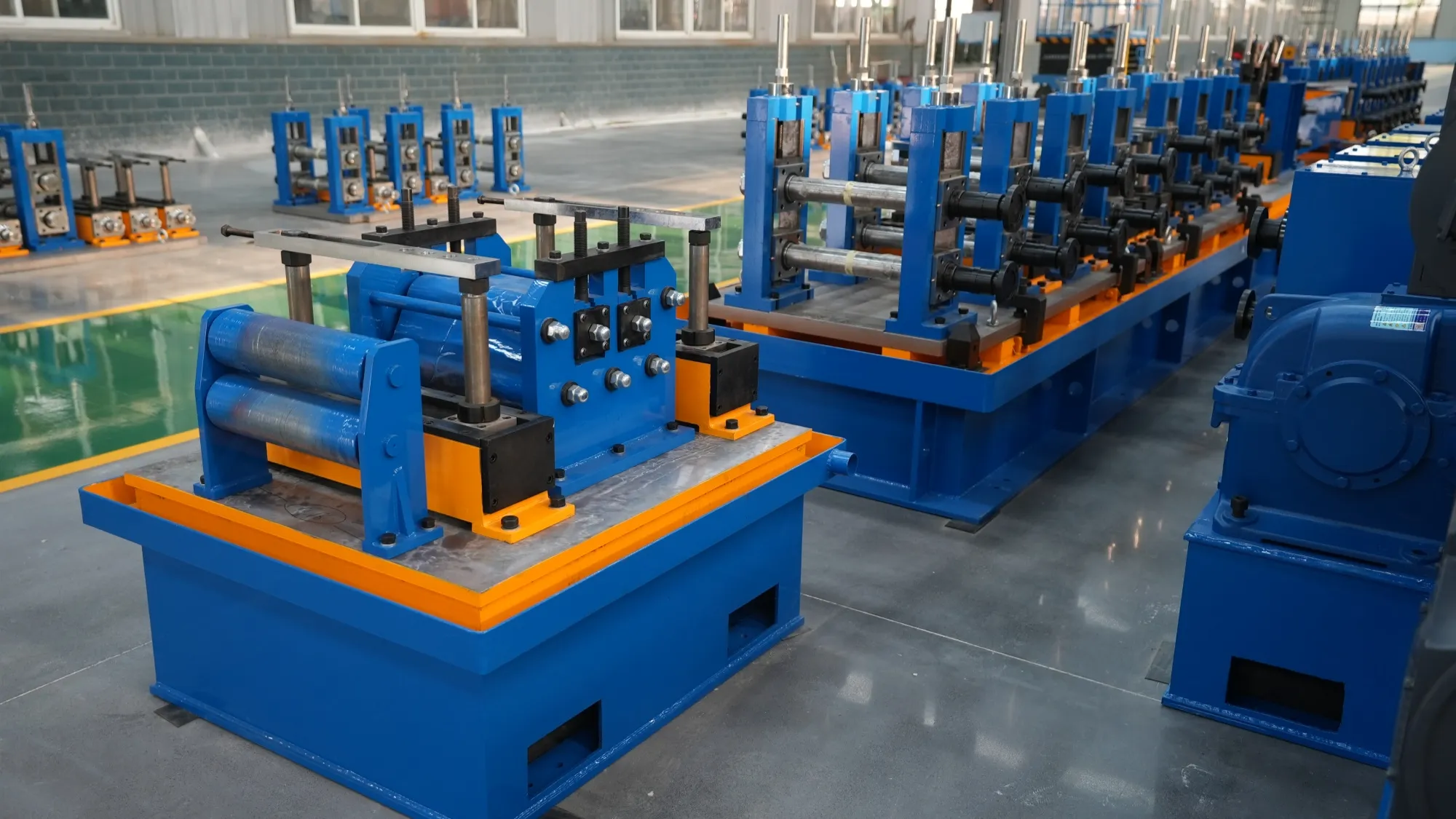 Tube Mill Output, Material Yield and Roll-Change CostMaterial yield can reach 93% or more on some high-end lines.See the line →
 What Is an ERW Tube MillUncoil, roll form, high-frequency induction weld, size, cut.See the line →
What Is a Tube Mill?
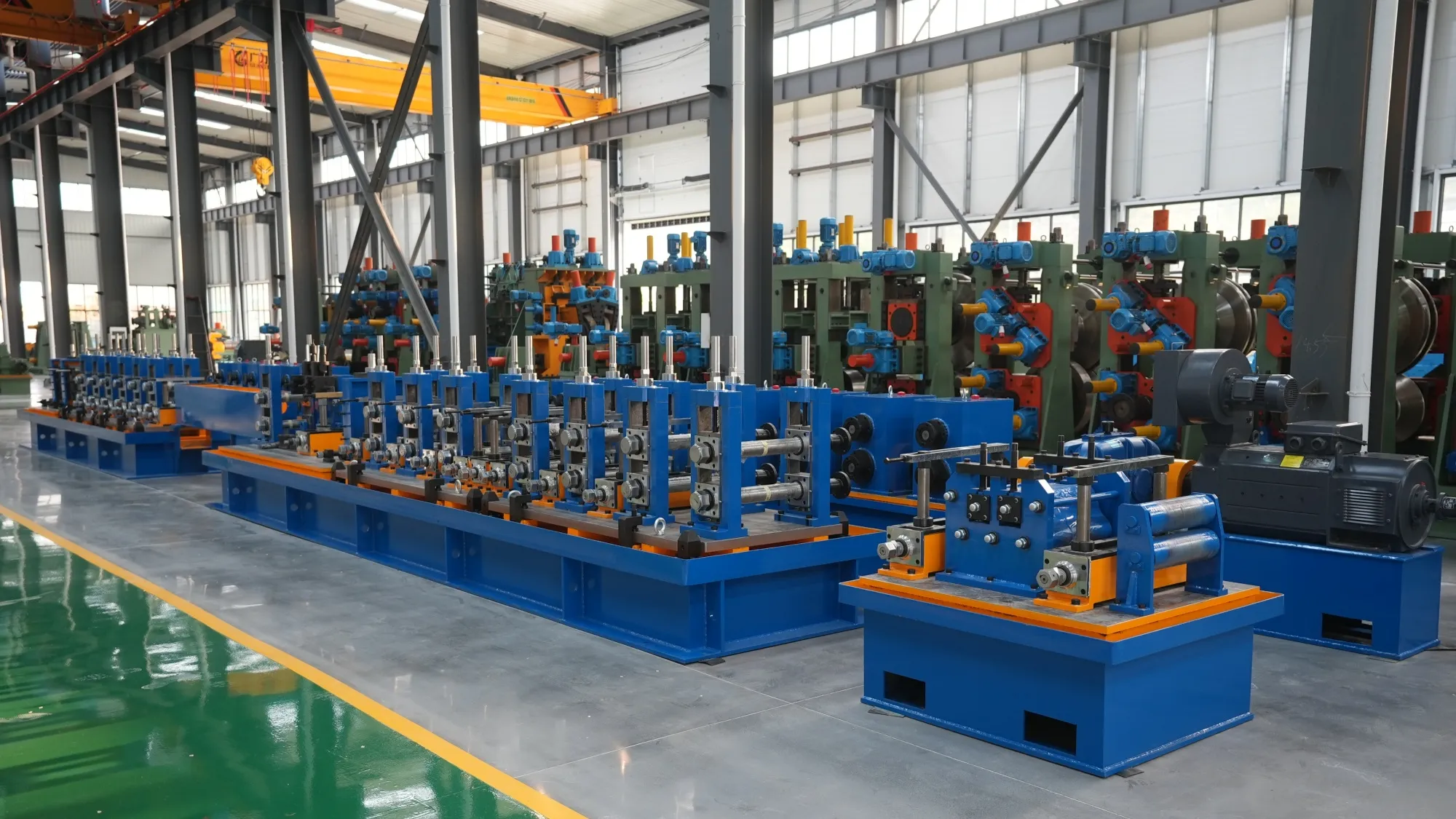
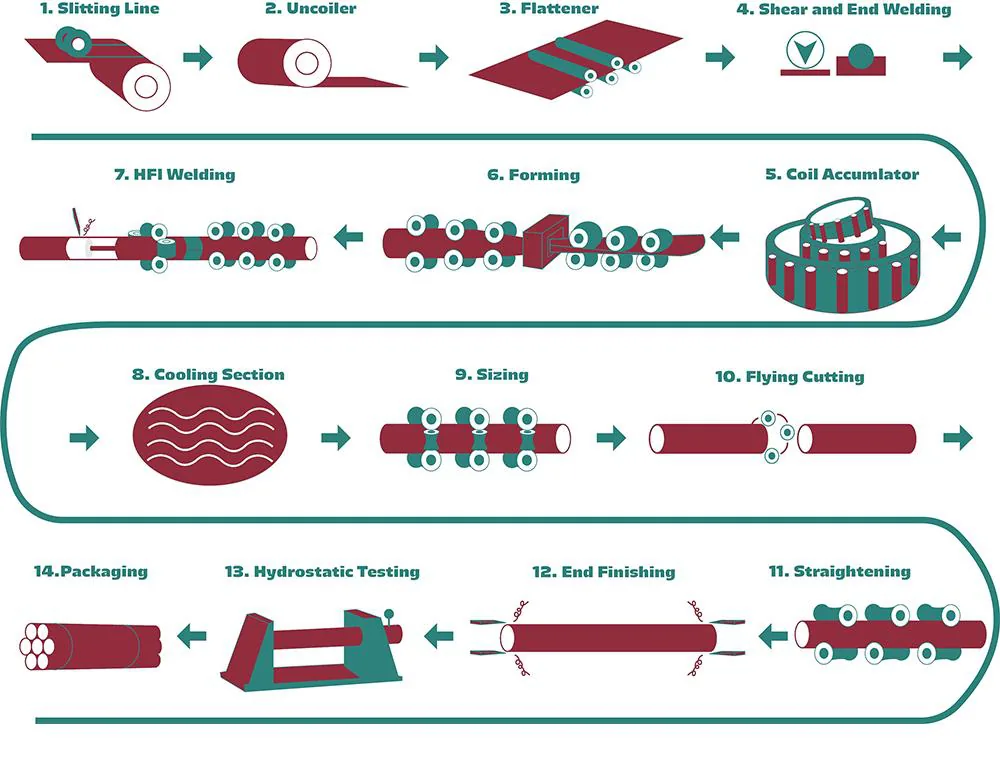
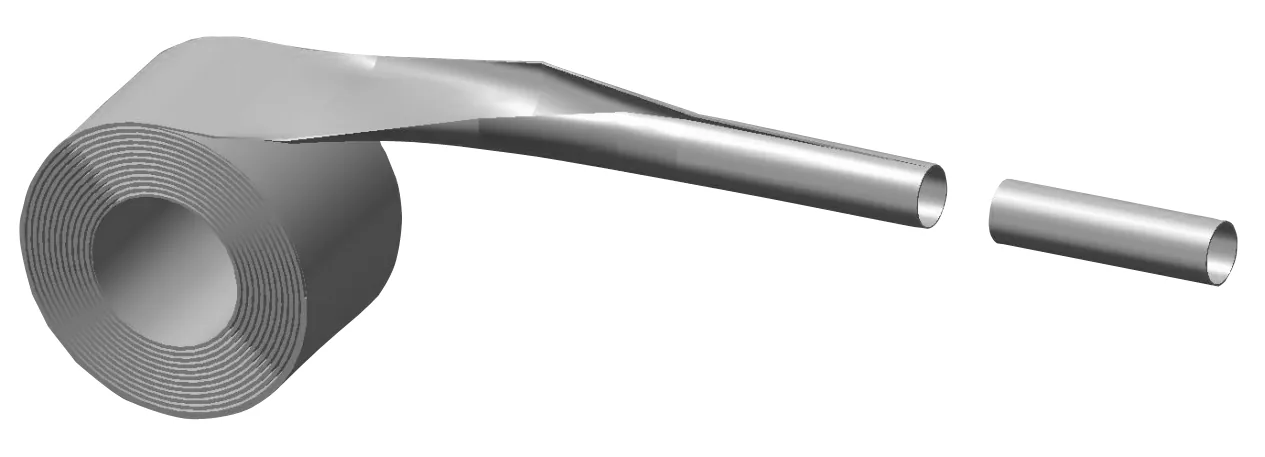
A tube mill — also called a steel pipe making machine — is a complete continuous forming, welding and sizing plant.Coil is uncoiled, rolled progressively into shape, welded along the seam by high-frequency induction, sized, and cut to length — producing round, square and rectangular straight-seam welded pipe.
What it solves is a capacity question rather than a part question: a plant that wants to build or expand pipe-making capacity needs a line that runs without stopping between coils, covers several specifications without a rebuild, holds yield and weld quality steady, and changes size quickly.
How it compares with the alternatives.Compared with seamless rolling or UOE/JCOE, high-frequency welding has lower investment and running cost and higher continuity, which suits medium and small diameters in volume. Compared with spiral submerged-arc welding, it is faster, straight-seam, and suited to structural and general fluid pipe.
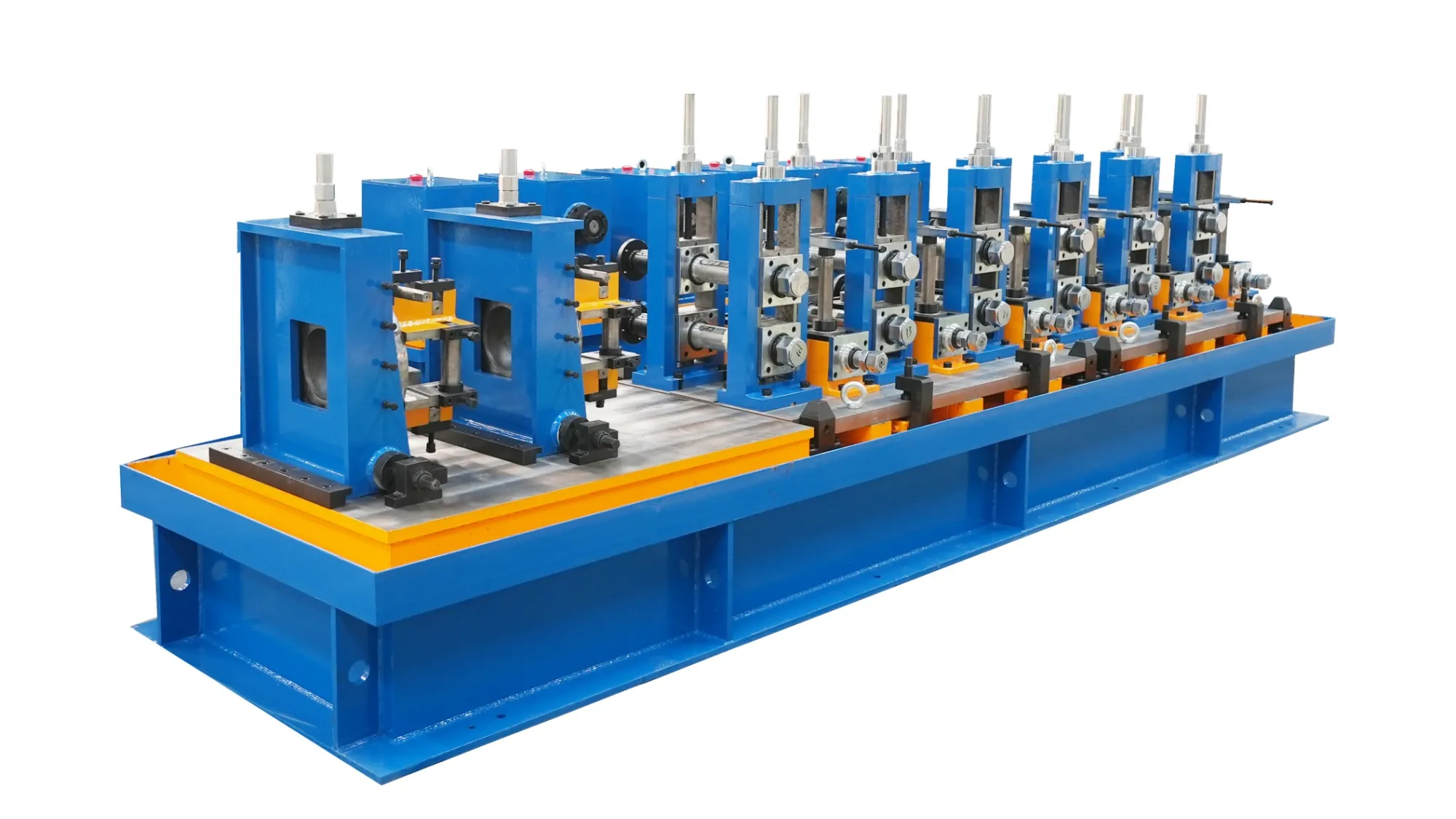
Tube Mill & Welded Pipe Production Line — Twelve Model Steps and Eight Line Units
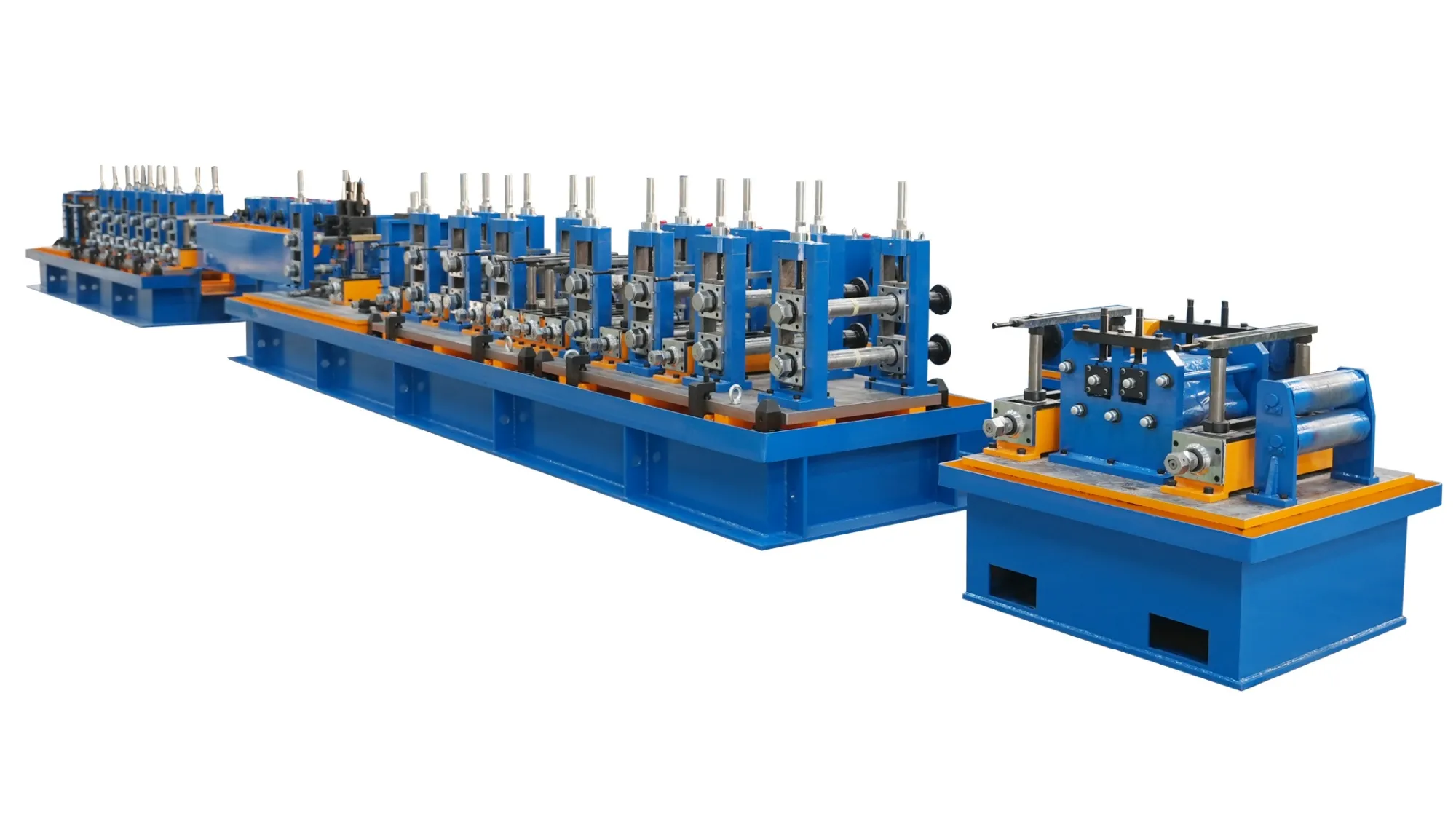
The twelve steps are the selection axis buyers actually use: Φ10–32, 16–50.8, 25–76, 32–89, 45–114, 60–165, 114–219, 114–273, 165–325, 165–426, 219–508 and 325–630 mm.
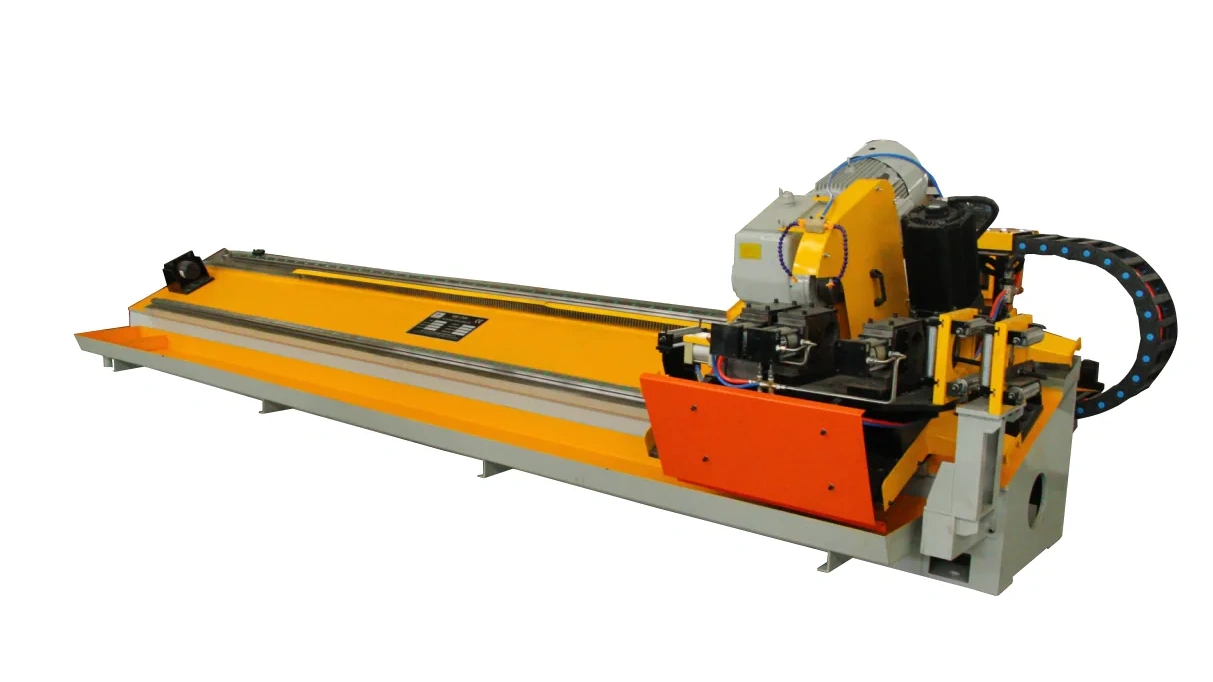
A full line is built from eight units: expanding-mandrel uncoiler, five-roller leveller (HG89 and above), automatic shear-welder, spiral accumulator, forming and sizing mill, HF induction welder, flying saw, and PLC with variable-frequency control.
Two of those units exist purely so the mill does not stop.The shear-welder joins the tail of one coil to the head of the next; the spiral accumulator stores strip while that join is made. Together they are what “non-stop running” means on this line, and they are the reason a coil change is not a production stop.
Key Parameters: Size Range, Wall Thickness and Welder Power Band
- Outside diameter across the series: Φ10–630 mm.
- Wall thickness across the series: 0.5–16 mm.
- Welder power: matched to the pipe range, 150 kW to 1500 kW by step.
- Material yield: can reach 93% or more on some high-end lines.
Line speed and shift output per step: available on request.
Control on these HG lines comes in two grades, semi-automatic or full PLC. The fully automatic line is a separate machine, the HGF150, which makes square and rectangular tube only.
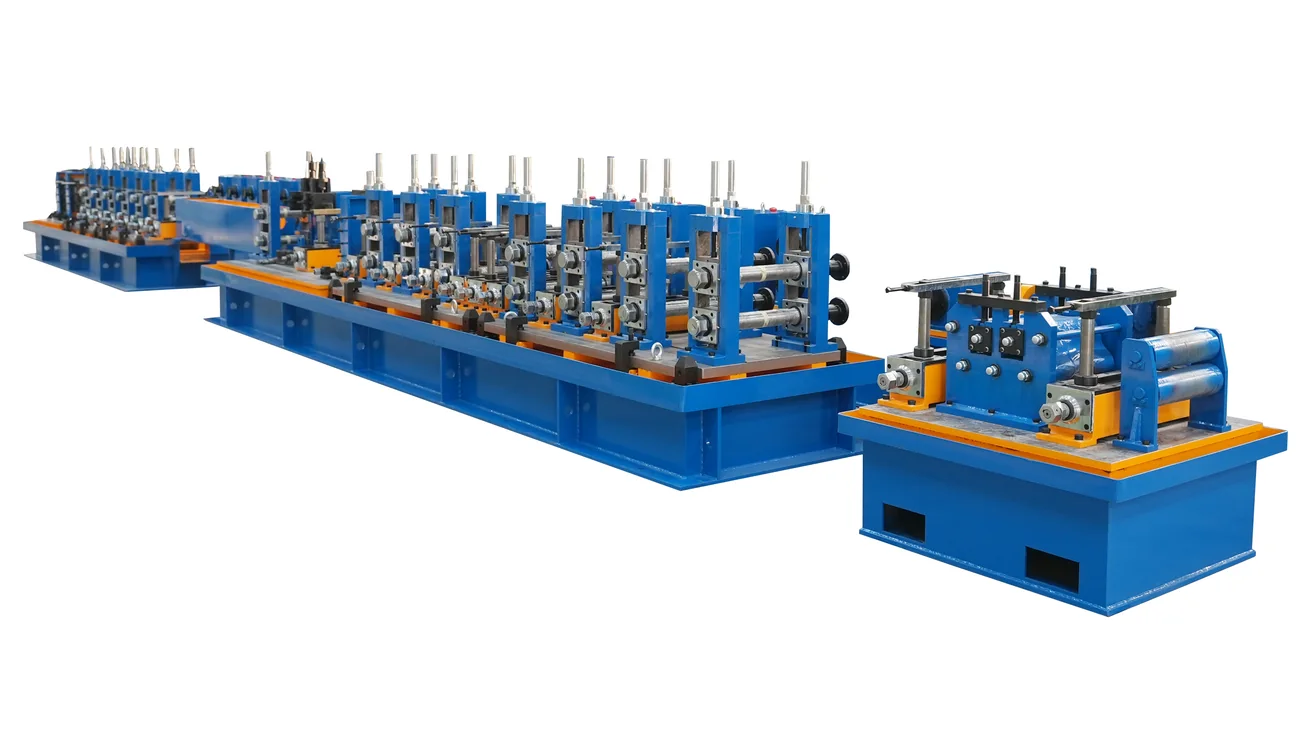
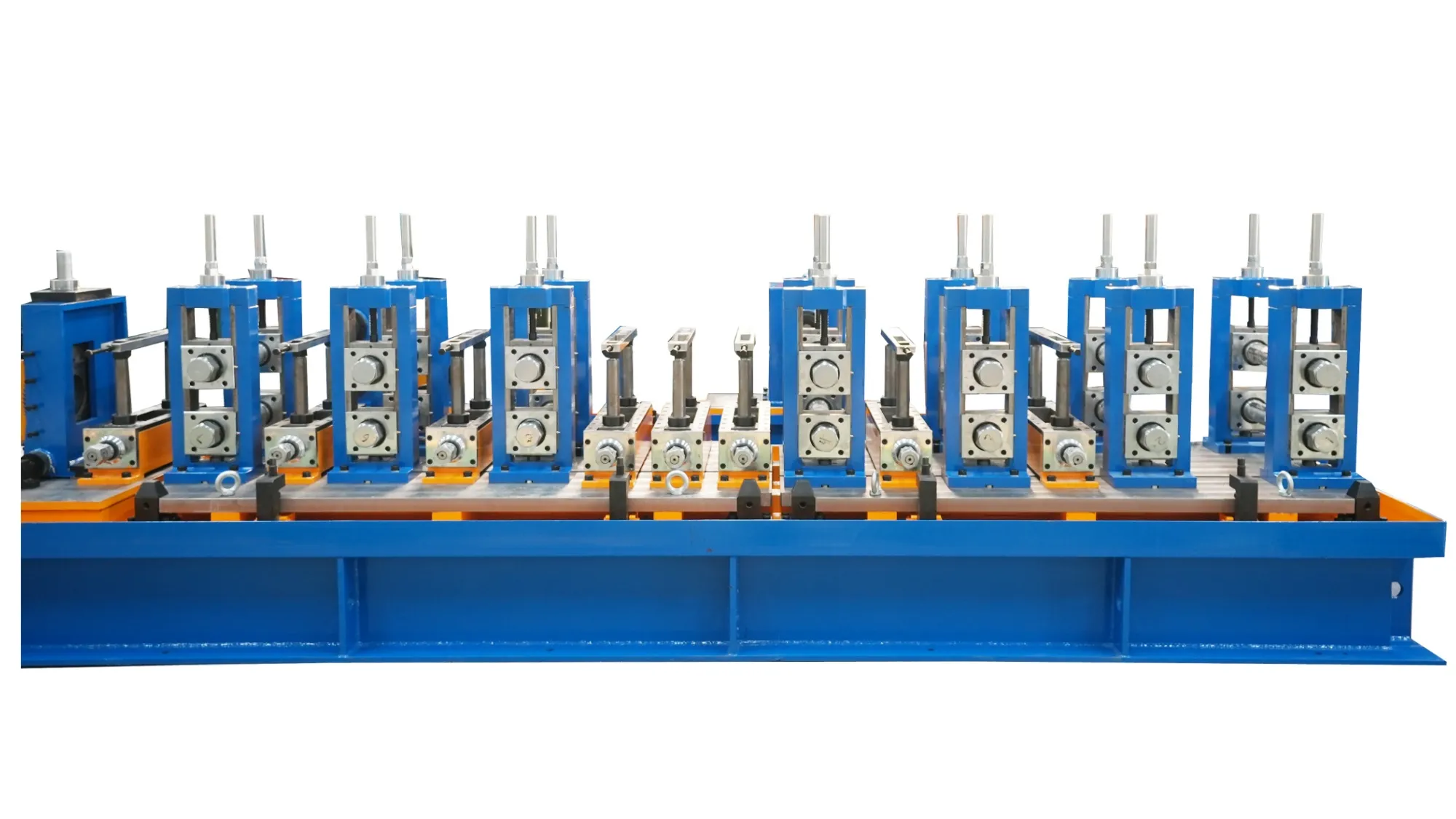
Forming on these lines uses the W, FFX and FF forming methods.W forming suits a line that has to make both round and square pipe: switching shape or size means changing the full roll set or half of it. The roll pass is designed in the German COPRA roll-forming design software, which serves both as the design guide for the roll tooling and as the final verification before the rolls are cut.
Model Specifications
| Model | Outside diameter | Wall thickness | Square section | HF welder |
|---|---|---|---|---|
| HG32 | Φ10 – 32 mm | 0.5 – 1.5 mm | 10×10 – 25×25 mm | 150 kW |
| HG50 | Φ16 – 50.8 mm | 0.8 – 2.0 mm | 12×12 – 40×40 mm | 200 kW |
| HG76 | Φ25 – 76 mm | 1.5 – 3.0 mm | 20×20 – 60×60 mm | 250 kW |
| HG89 | Φ32 – 89 mm | 1.0 – 4.0 mm | 25×25 – 70×70 mm | 300 kW |
| HG114 | Φ45 – 114 mm | 1.5 – 5.0 mm | 35×35 – 90×90 mm | 300 kW |
| HG165 | Φ60 – 165 mm | 3.0 – 7.0 mm | 50×50 – 130×130 mm | 400 kW |
| HG219 | Φ114 – 219 mm | 4.0 – 8.0 mm | 90×90 – 170×170 mm | 500 kW |
| HG273 | Φ114 – 273 mm | 4.0 – 10.0 mm | 90×90 – 215×215 mm | 600 kW |
| HG325 | Φ165 – 325 mm | 4.0 – 10.0 mm | 130×130 – 255×255 mm | 600 kW |
| HG426 | Φ165 – 426 mm | 4.0 – 10.0 mm | 130×130 – 330×330 mm | 800 kW |
| HG508 | Φ219 – 508 mm | 4.0 – 16.0 mm | 170×170 – 400×400 mm | 1000 kW |
| HG630 | Φ325 – 630 mm | 4.0 – 16.0 mm | 250×250 – 500×500 mm | 1500 kW |
How to Choose the Right Model
Start from the largest finished outside diameter you need and read it against the twelve steps — that is the axis the series is built on.
Then three questions narrow it further.What section do you need: round only, or square and rectangular as well, since most steps run all three. How often do you change size, because that decides whether a conventional roll-forming step or the direct-forming square line fits your schedule.
And does the pipe need in-line non-destructive testing, because that is the API line — a separate configuration built on the tube mill with intermediate annealing, straightening, end facing, hydrostatic testing, ultrasonic and eddy-current inspection added.
Scope of Supply: Spare Rolls and Wear Parts
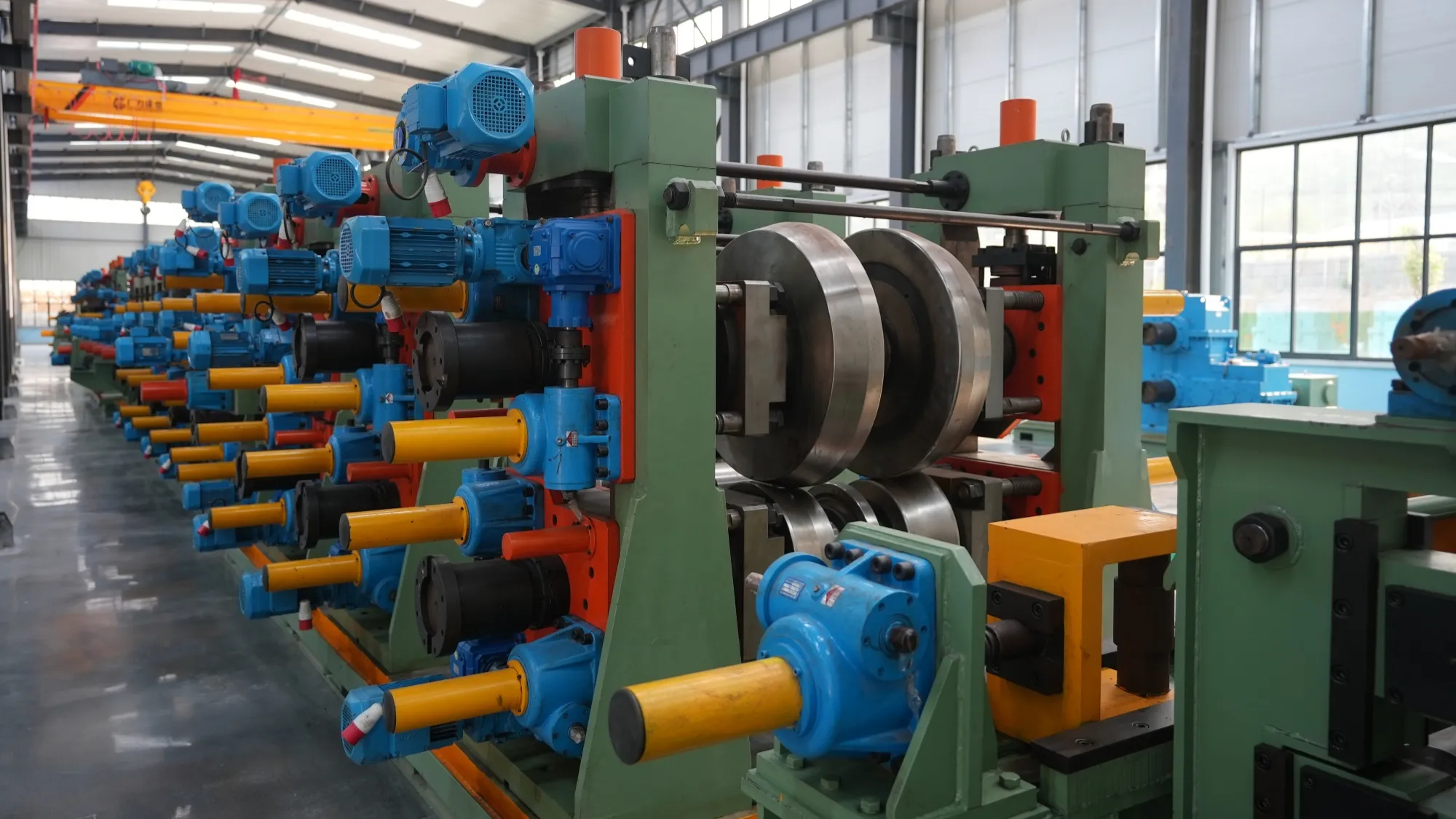
Forming rolls and key wear parts are machined in-house on our own CNC equipment — the reason spare rolls stay available years after handover.Wear items are supplied continuously: saw blades and cutting tools by cutting volume, impeders and induction coils by welding hours. Cooling medium and hydraulic oil are specified by us and sourced locally by the plant.
The engineering team is twenty people averaging twenty years’ experience and the production base is open to factory audit.
Common Objections, Answered
Four questions come up most often from buyers of this range.
Can the equipment meet a required standard such as API 5L or GOST?The API line’s inspection chain and the GOST H-beam line show that capability at equipment level.
Will after-sales and spare parts from a Chinese supplier keep up?Rolls are machined in-house on our own CNC equipment, spare parts ship directly, and engineers are dispatched on site.
Does a size change mean a long stoppage?That depends on the forming route: conventional roll forming needs a roll change, while the direct-forming square line adjusts the same combined rolls instead, with 100 × 100 mm tube as the one exception.
Is delivery secure on a large investment?There is a stated shipment date, within 90 working days of the deposit for standard lines, and plant-level customisation from an owned manufacturing base.
Certification, and what each certificate actually covers
ISO 9001 is held under certificate number 18524Q11269R2S, issued by National Standard Integration (Beijing) Certification Co., Ltd. under IAF MLA and CNAS accreditation.
CE certificates are held from UDEM under three separate numbers, and each covers a different line type: welded pipe equipment under M.2022.206.C72171, cold roll forming equipment under M.2022.206.C72172, and slitting lines under M.2022.206.C72173. A fourth CE certificate for cold forming is held from Ente Certificazione Macchine in Italy under 0P250616.HTWTT37.
Each number can be checked at the issuing body rather than taken on trust.
An enterprise standard, Q/GYL TT01-2023 for HGF150 high-frequency welded pipe equipment, is published on the national enterprise-standard platform.High-Tech Enterprise certificate GR202413001148 is held. The Madrid international trademark for TENGTIAN is registered under number 1 707 606. The patent portfolio is 30 granted utility model patents, with 7 invention patents applied for.
Delivery, payment and after-sales
Lines are dismantled into units and shipped in containers: heavy frames braced bare on cradles with designated lifting points and rust protection, precision and wear items in moisture-protected wooden cases with a spare-parts pack.Standard lines ship within 90 working days of the deposit.
Installation and commissioning are guided on site by our engineers, with online support; the buyer provides the installation crew and covers the engineers’ travel, lodging and daily allowance.Our after-sales team handles enquiries. Payment is 30% by T/T on signing, 65% by T/T before shipment and 5% after installation and commissioning, or L/C at sight; prices are quoted ex-works (EXW).
Anonymised reference deliveries
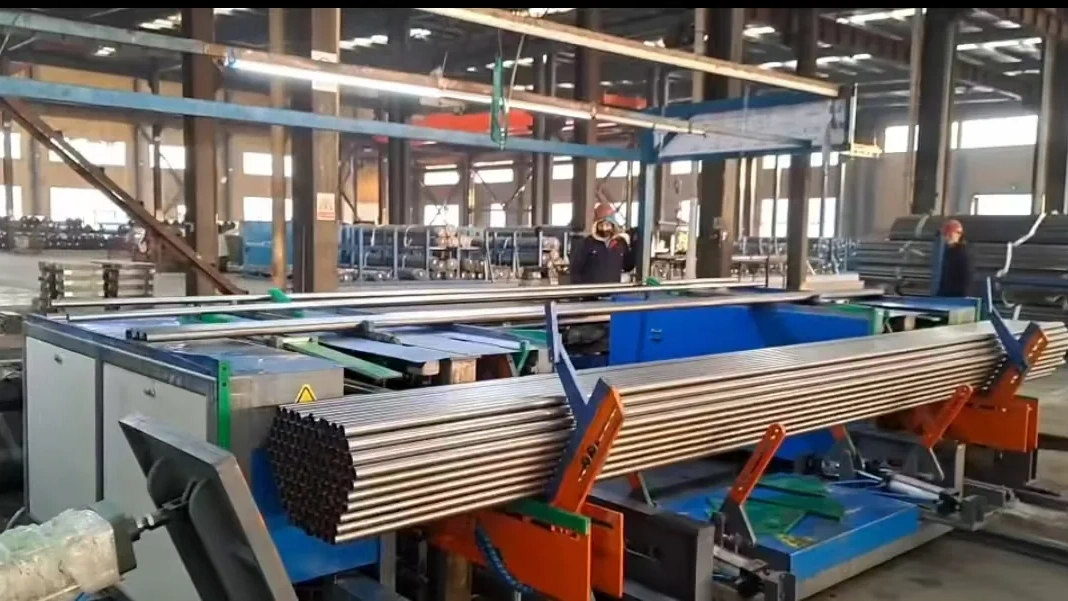
Our lines have gone to 25 countries — most make construction tube, and others run fire-extinguisher tube, furniture tube and other sections.
The process chain, stage by stage
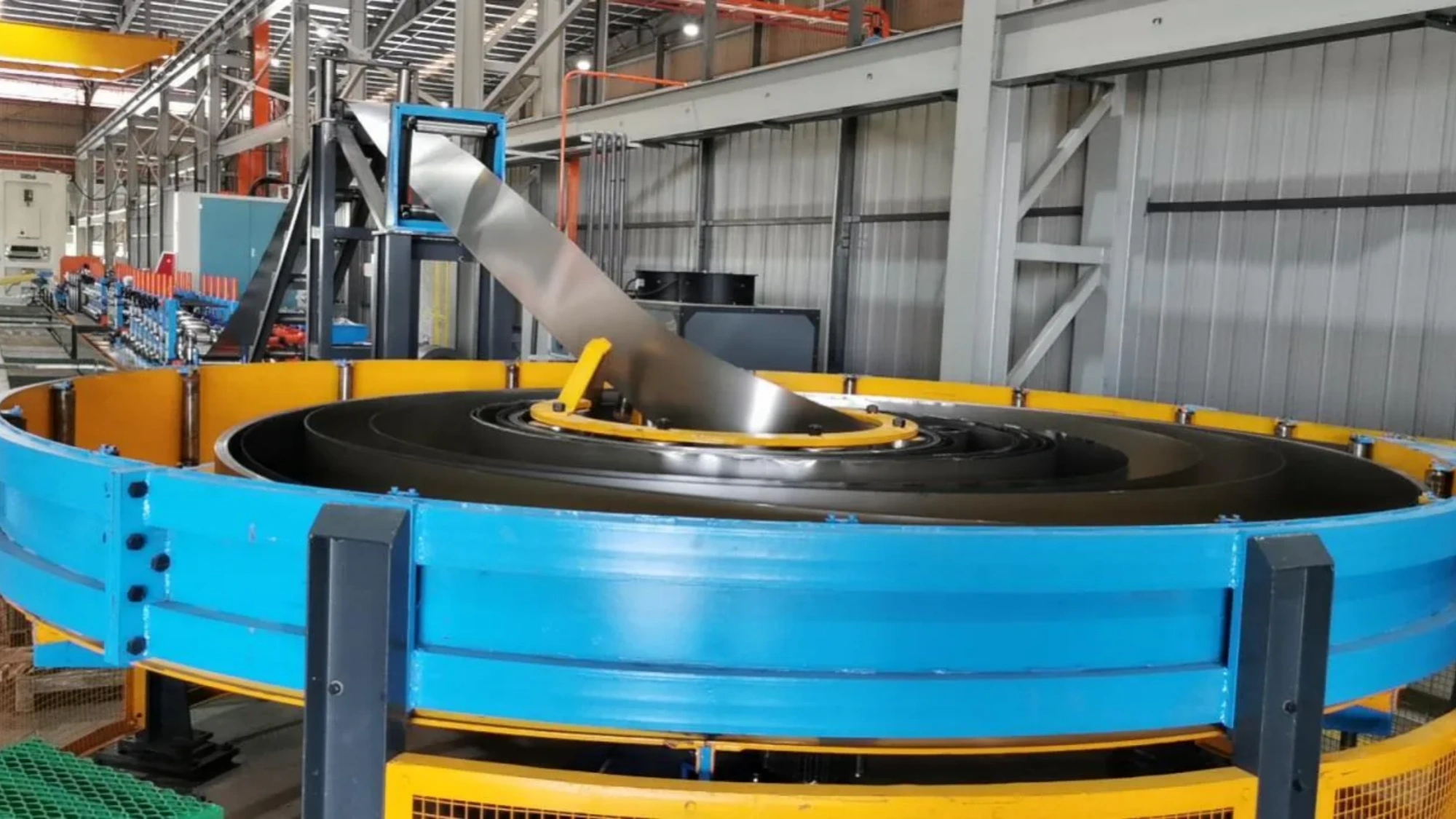
A full line (HG89 and above) has eight stages; on HG32 to HG76 the strip goes from the uncoiler straight to shear and weld. For each stage, we note whether it is a quality watershed and what goes wrong when it is set badly.
Uncoiling: a pneumatic four-link expanding mandrel tensions the coil, fed by a coil car on HG89 and above. Not a quality watershed — but poor centring or tension shows up later as strip wander.
Head straightening and levelling (HG89 and above): the coil head is flattened and a five-roller leveller makes the strip straight into the next stage. A watershed, because strip flatness is the precondition for forming quality.
Shear and weld: irregular head and tail are cut off and the strip ends joined, so production does not stop between coils. A watershed, because a bad joint means a broken strip and scrap pipe at the junction.
Spiral accumulator: strip is stored between the shear-welder and the mill so the mill keeps feeding during the change. A watershed — it is the buffer the whole continuity claim rests on.
Roll forming: rolls progressively bend the strip into shape. The decisive stage for shape and seam alignment.
High-frequency welding: current concentrates at the seam, heats the edges, and squeeze rolls press them together. The decisive stage for fusion.
Sizing and straightening: after cooling, the tube is sized and straightened to final dimension. The decisive stage for dimensional accuracy.
Cutting: the flying saw cuts to length at speed. Not a watershed — an end stage.
Reading that list backwards is how a plant diagnoses: a dimensional problem points to sizing and straightening, a seam problem to forming and welding, and a continuity problem to the shear-welder and accumulator.
The Ten Quality Factors
Ten factors govern output quality, and they divide into five groups that a buyer can act on separately.
Material: incoming strip grade, thickness tolerance and flatness — checked on entry, but the strip itself is the buyer’s side.Tooling: roll material and heat treatment, which govern shape stability, and impeder and coil condition, which govern where the weld energy goes.
Process: HF power, frequency and welding speed; squeeze amount and seam alignment; sizing and straightening; post-weld cooling.People and control: PLC and variable-frequency drive stability, and operator setup at size change. Inspection: final inspection, with UT and eddy current on API lines specifically.
Service lives for wear items are available on request; unit-level scope of supply is available on request.
Tube Mills Running
Footage from lines built at our own works. Each clip opens on our YouTube channel.


From the Workshop
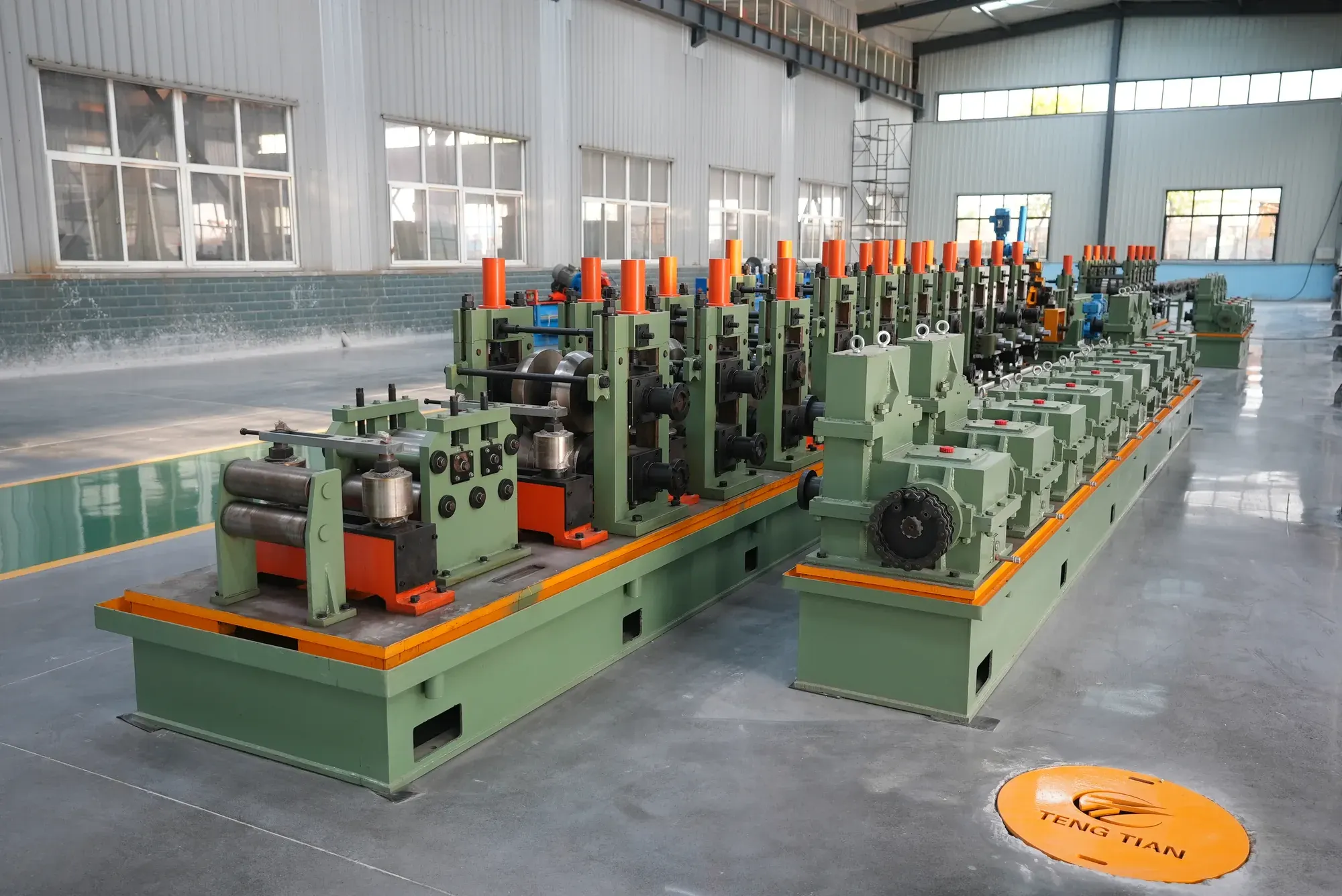
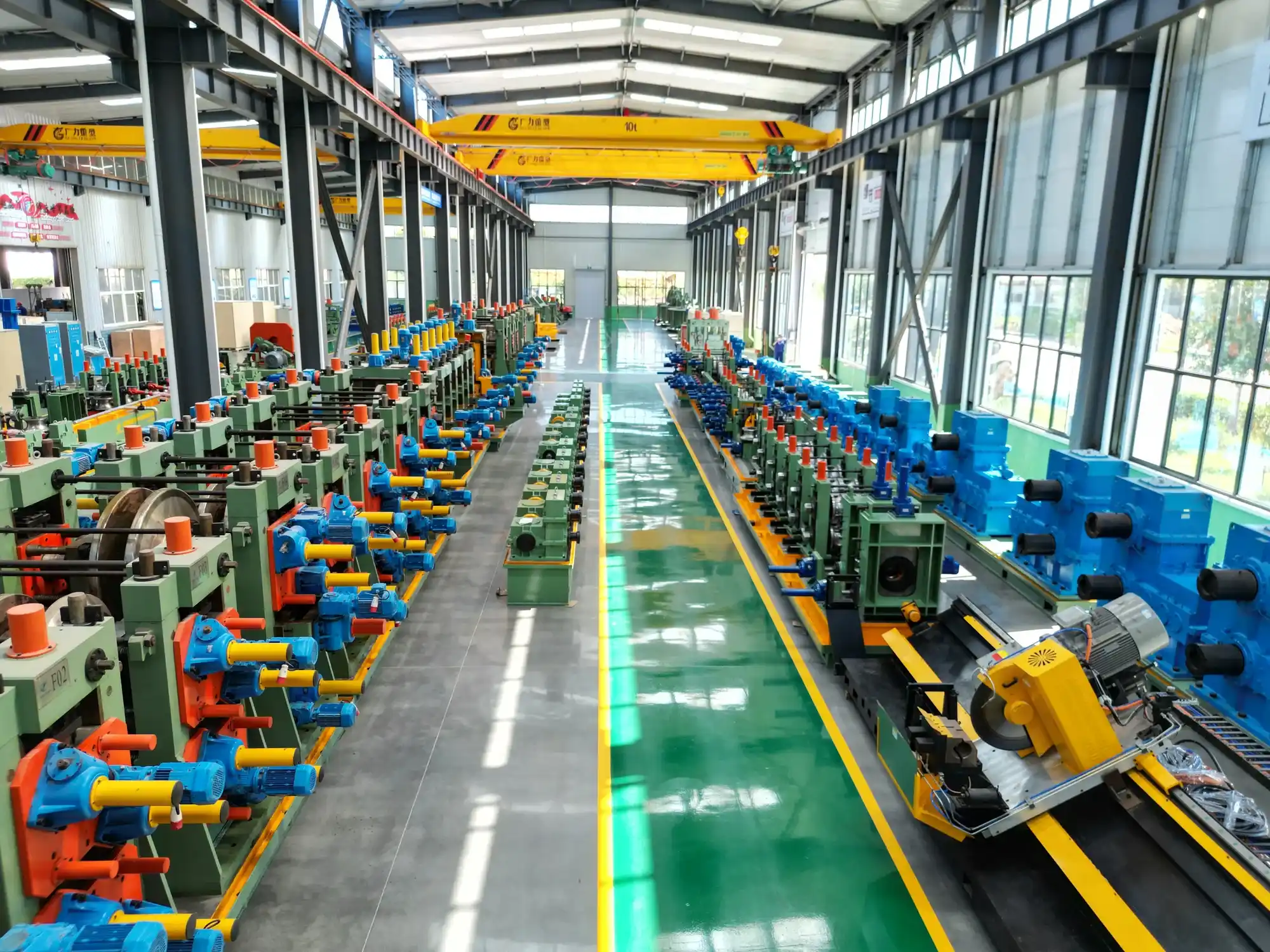
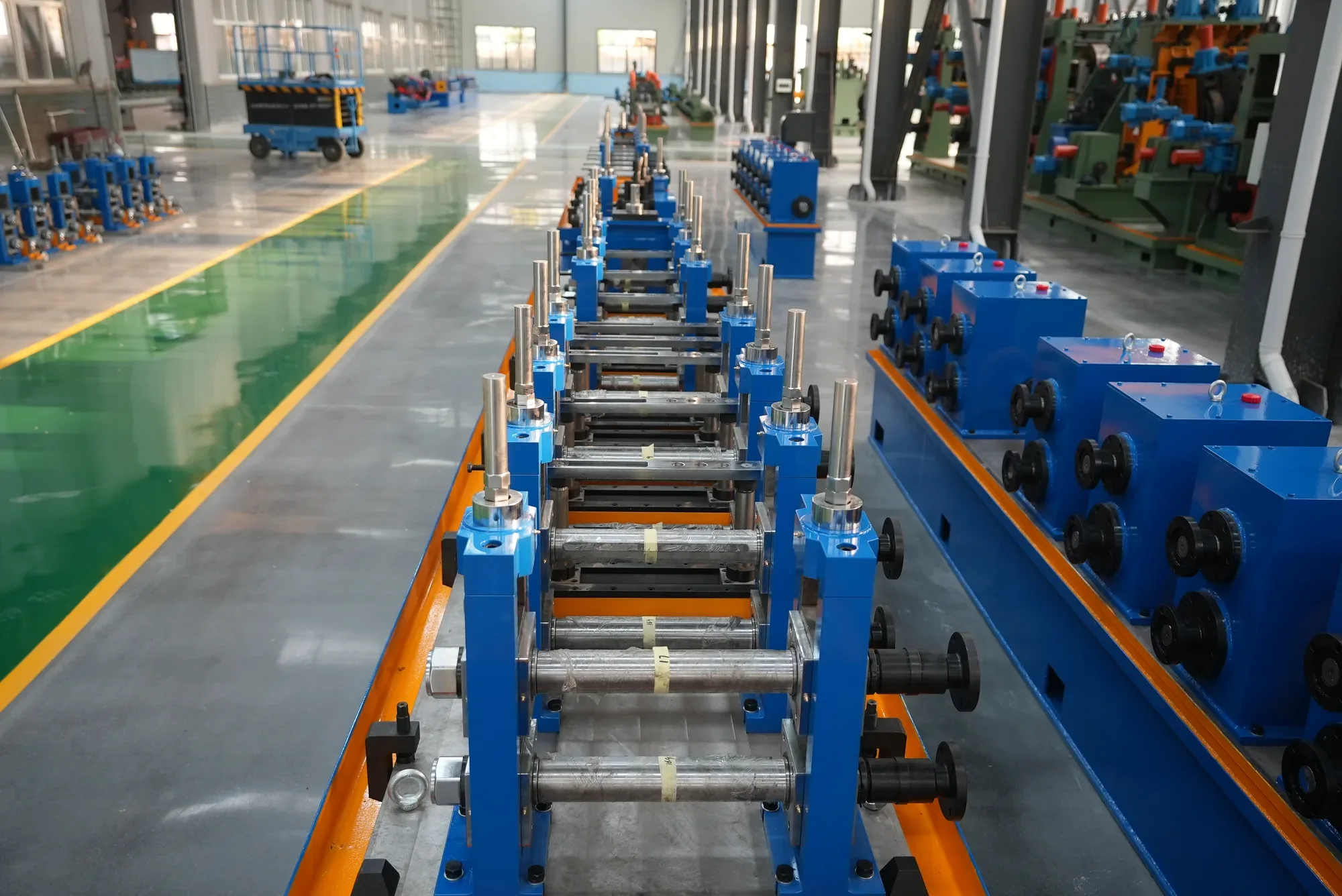
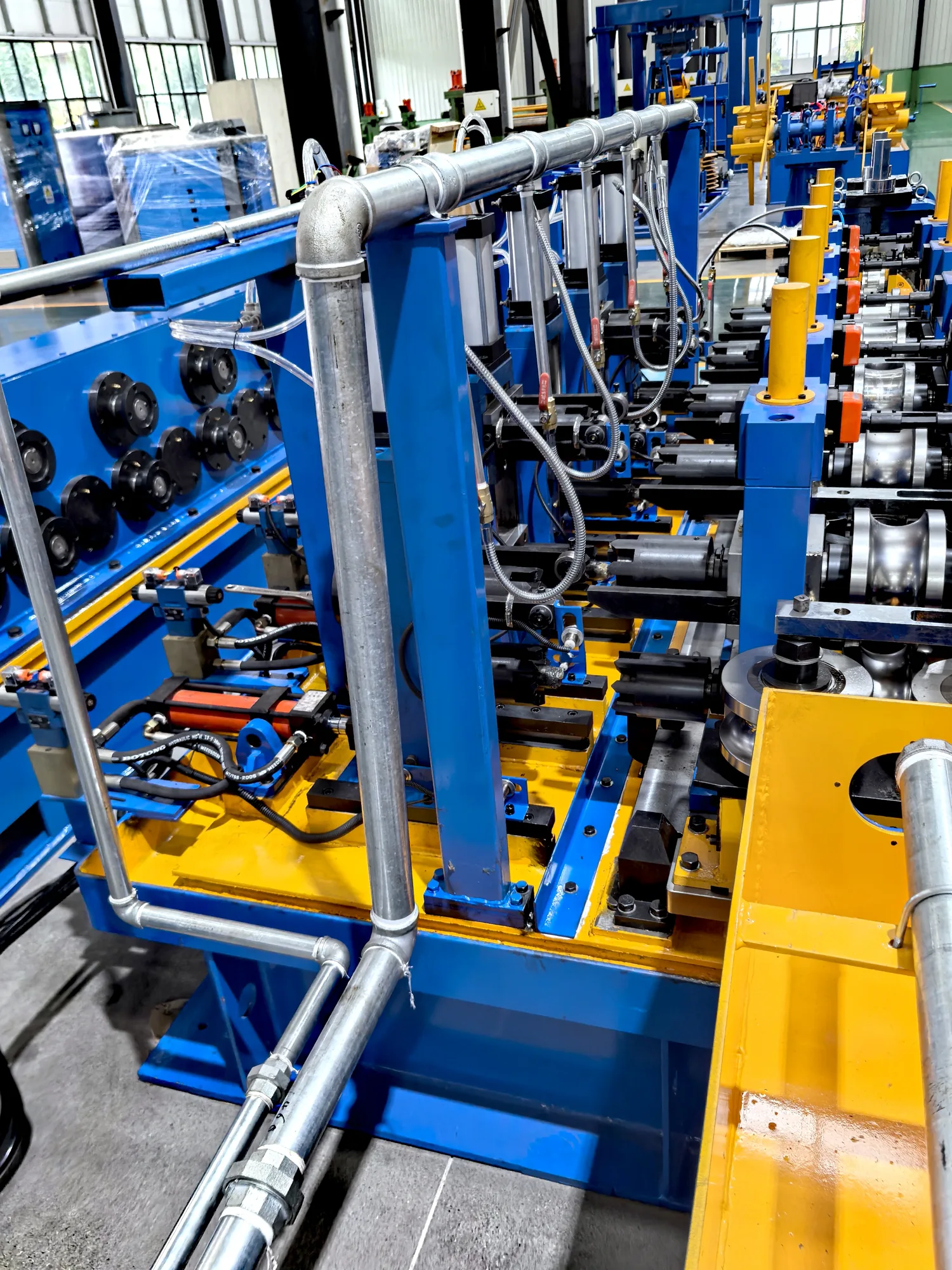 Small-Diameter Tube Mill
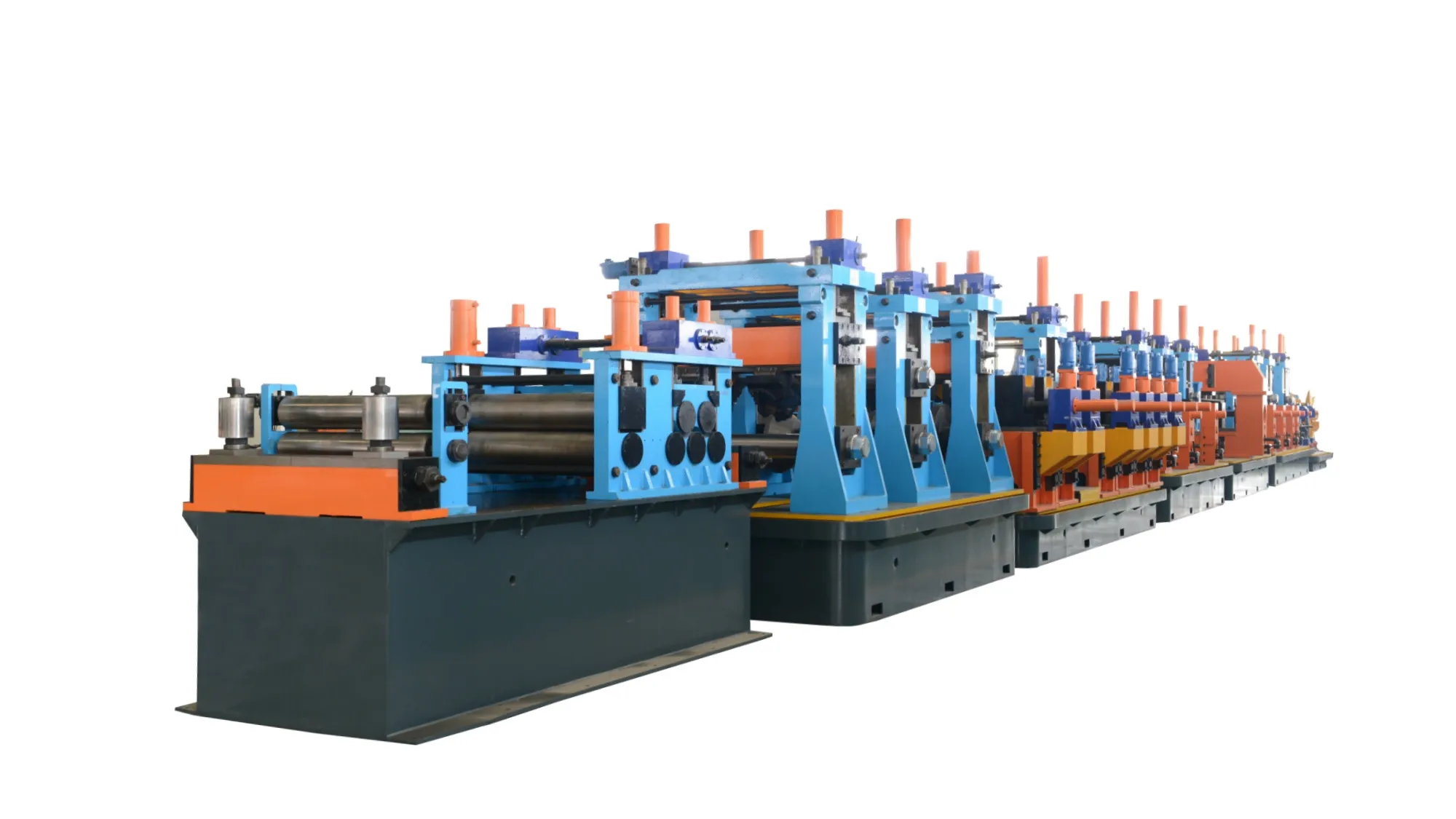 Large-Diameter Tube Mill
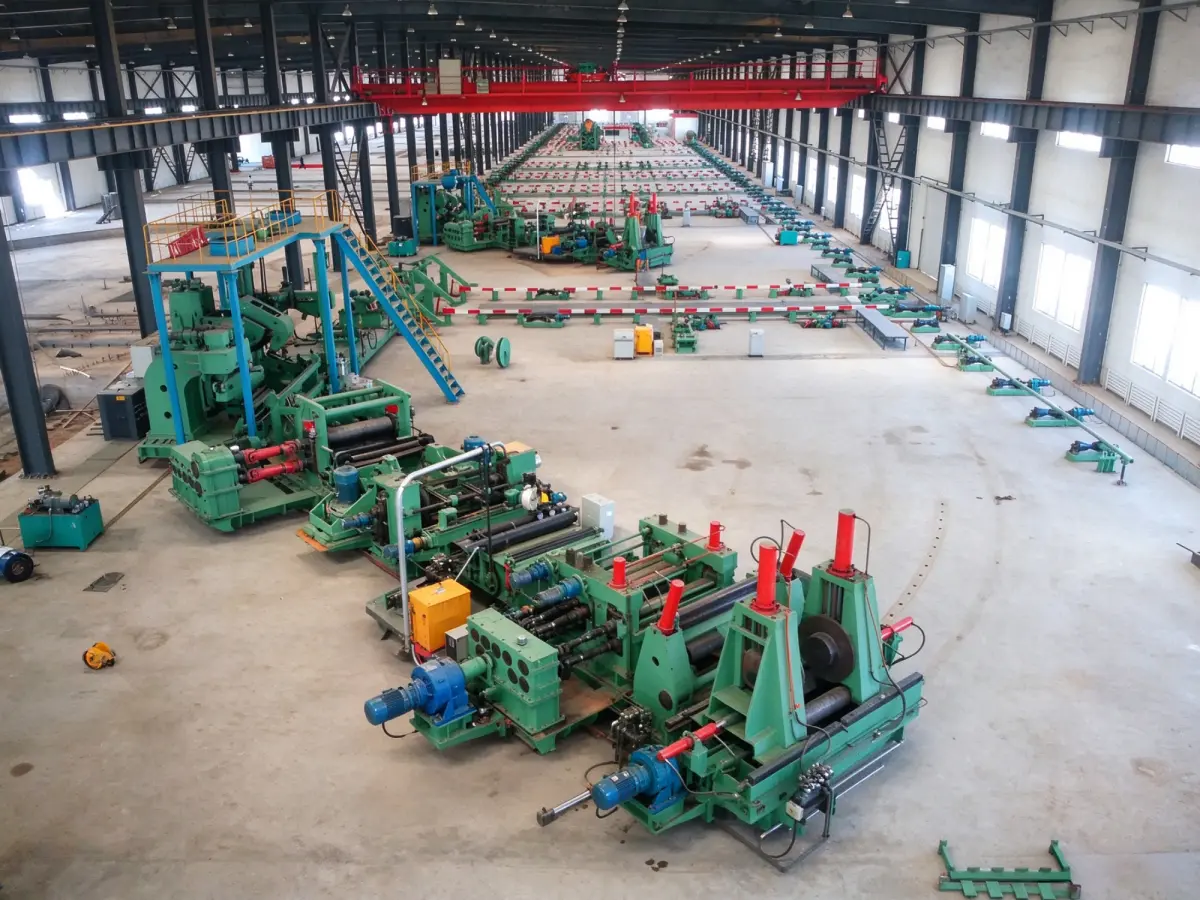 SSAW Spiral Welded Pipe Mill
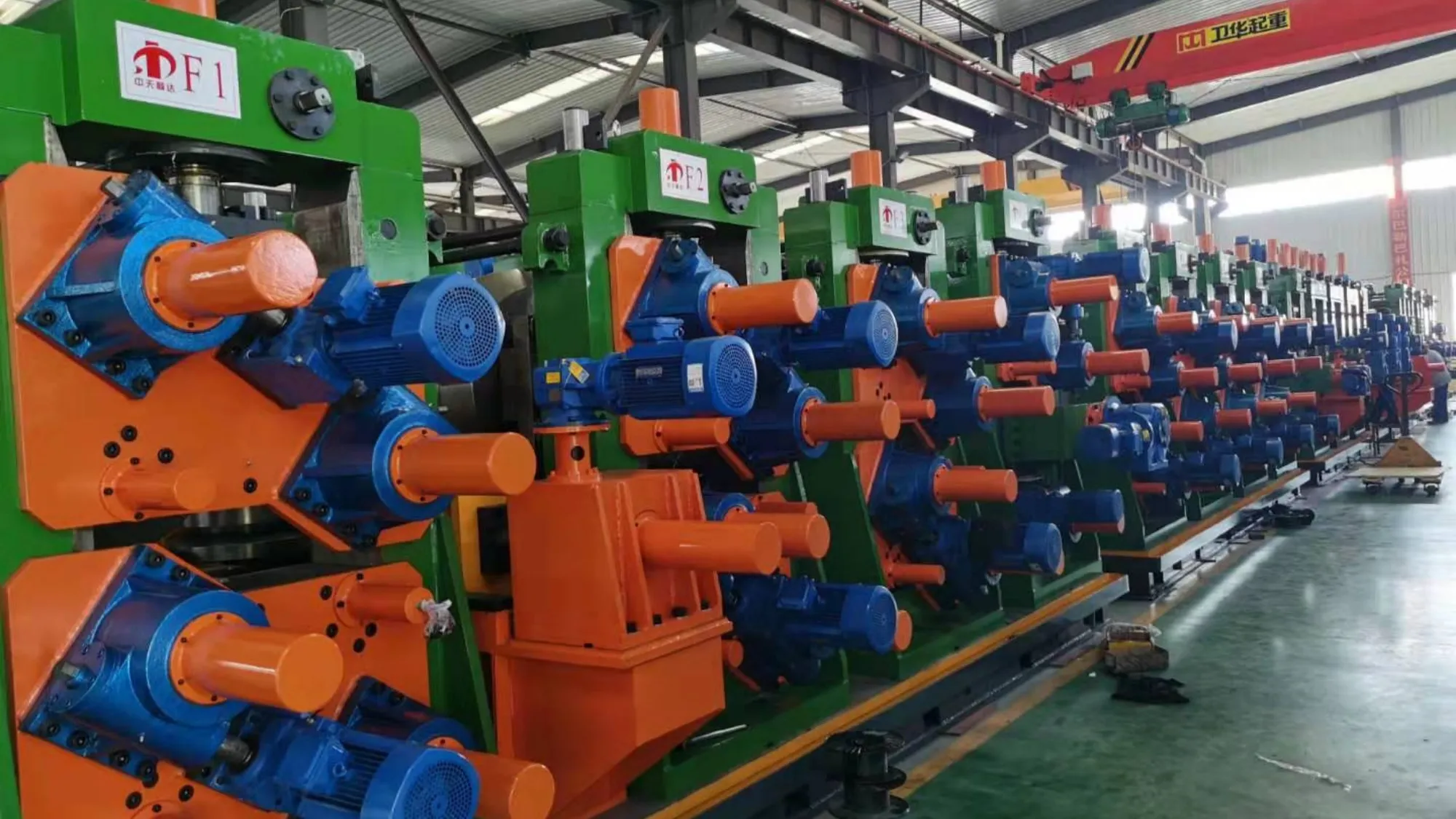 Direct-Forming Square Tube Mill
Send Your Enquiry
Tell us the pipe outside-diameter range, the wall thickness and the output you need. An engineer reads every enquiry — it does not land in a general sales inbox.